
How do I add a fixed asset and compute its depreciation?
A fixed asset is something you buy to use for years rather than to sell: a vehicle, a machine, furniture, equipment. It is not recorded as a one-off expense; its cost is spread across its useful life — and that is depreciation.
Steps
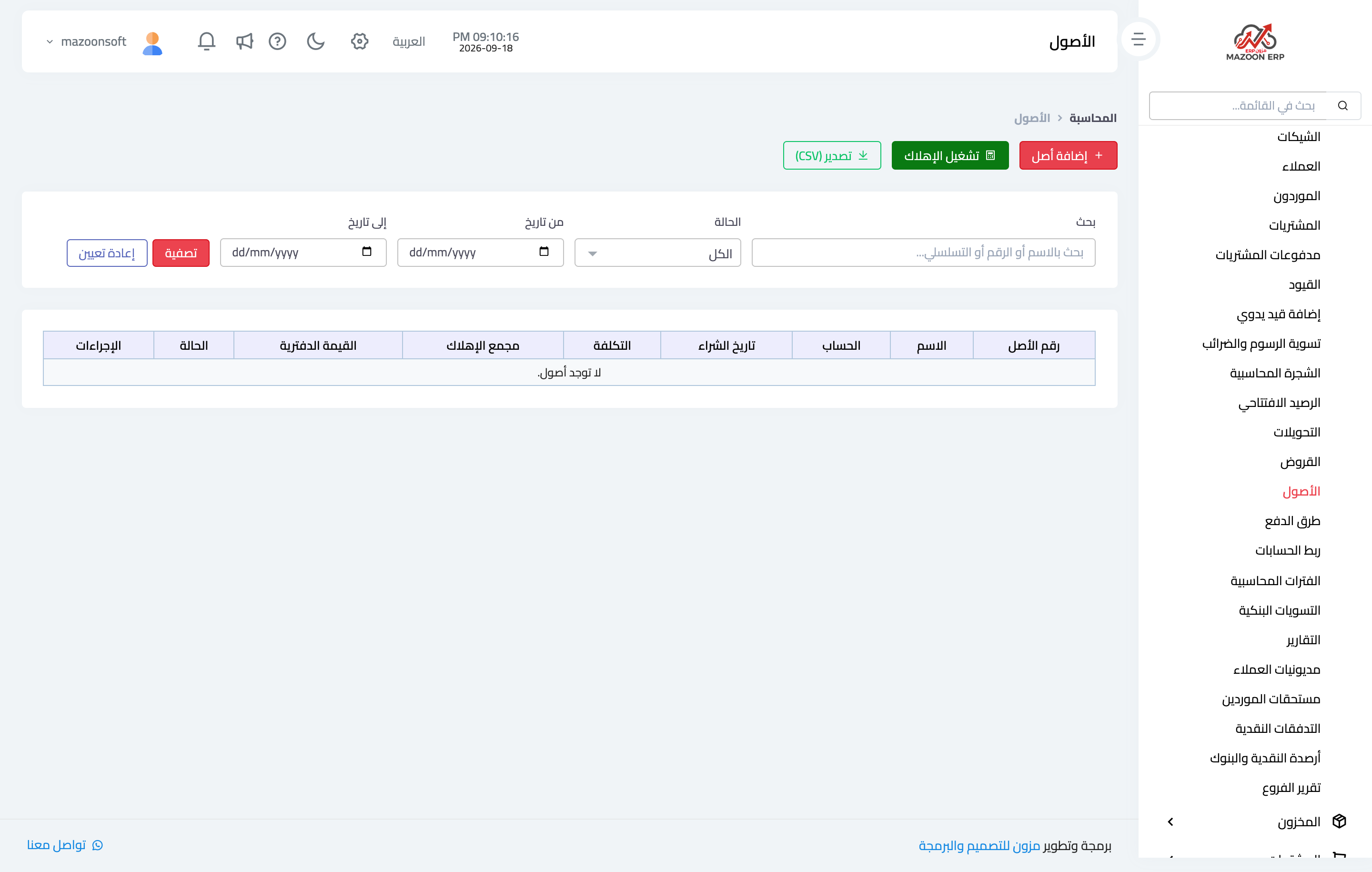
- Open Accounting → Assets — Figure 1 — then Add asset.
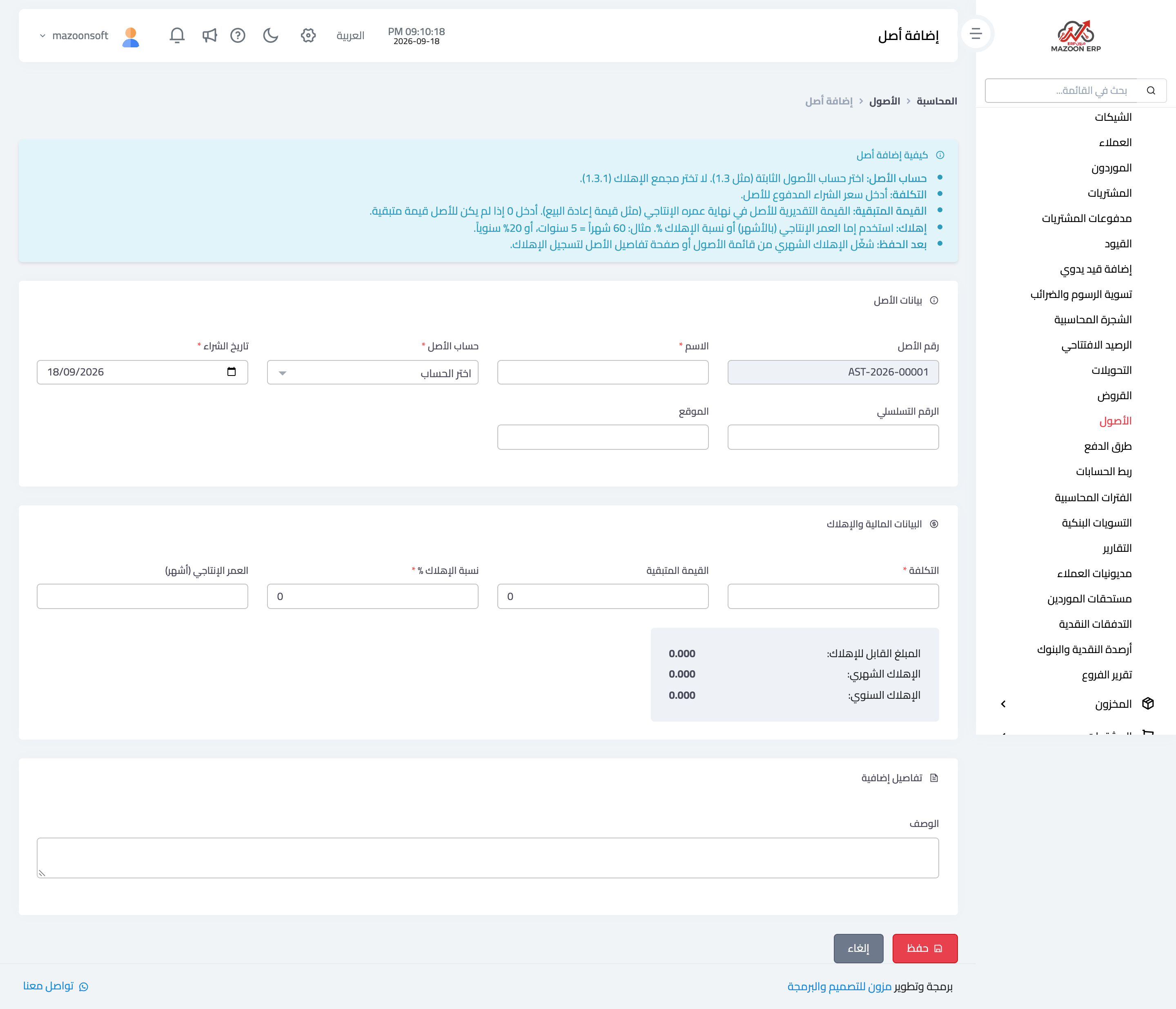
- Enter the asset name, the purchase cost, and the purchase date — Figure 2.
- Set the useful life in years, and the salvage value if you expect to sell it at the end of its life.
- Tie it to the asset account, the accumulated depreciation account, and the depreciation expense account.
- Save. The system shows the monthly depreciation schedule computed out to the end of the life.
How depreciation is computed
By the straight-line method: (cost − salvage value) ÷ the number of months of useful life. So a vehicle at 12,000 with a five-year life and a salvage value of 2,000 depreciates 166.67 a month.
The monthly depreciation entry
At each month end an entry is recorded: debit depreciation expense / credit accumulated depreciation. The expense rises in the income statement and the asset’s book value falls in the balance sheet — the original cost is never touched.
Notes
- Do not record the purchase of an asset as a payment voucher against an expense; the first year then looks like a loss and the following ones like a profit, neither of them true.
- Assets already owned at start-up are entered at their current book value and their remaining life, not at their old purchase cost.
- A small purchase (a cheap printer) does not deserve to be an asset; set a minimum threshold and hold to it.
- When an asset is sold do not delete it; record the sale so its accumulated depreciation closes and the resulting gain or loss appears.
Screenshots
Try what you just read on your own data
Open a free 7-day trial — no credit card, with your own company link in minutes.