
Collection, security deposits, and violations
Losses in a rental office rarely come from the price. They come from three things: a payment never collected, a deposit released too early, and a fine that arrives after the customer has gone. Each has its own screen.
Contract payments
A payment is recorded from the financials tab inside the contract with its amount, date, and method, and a contract accepts several payments.
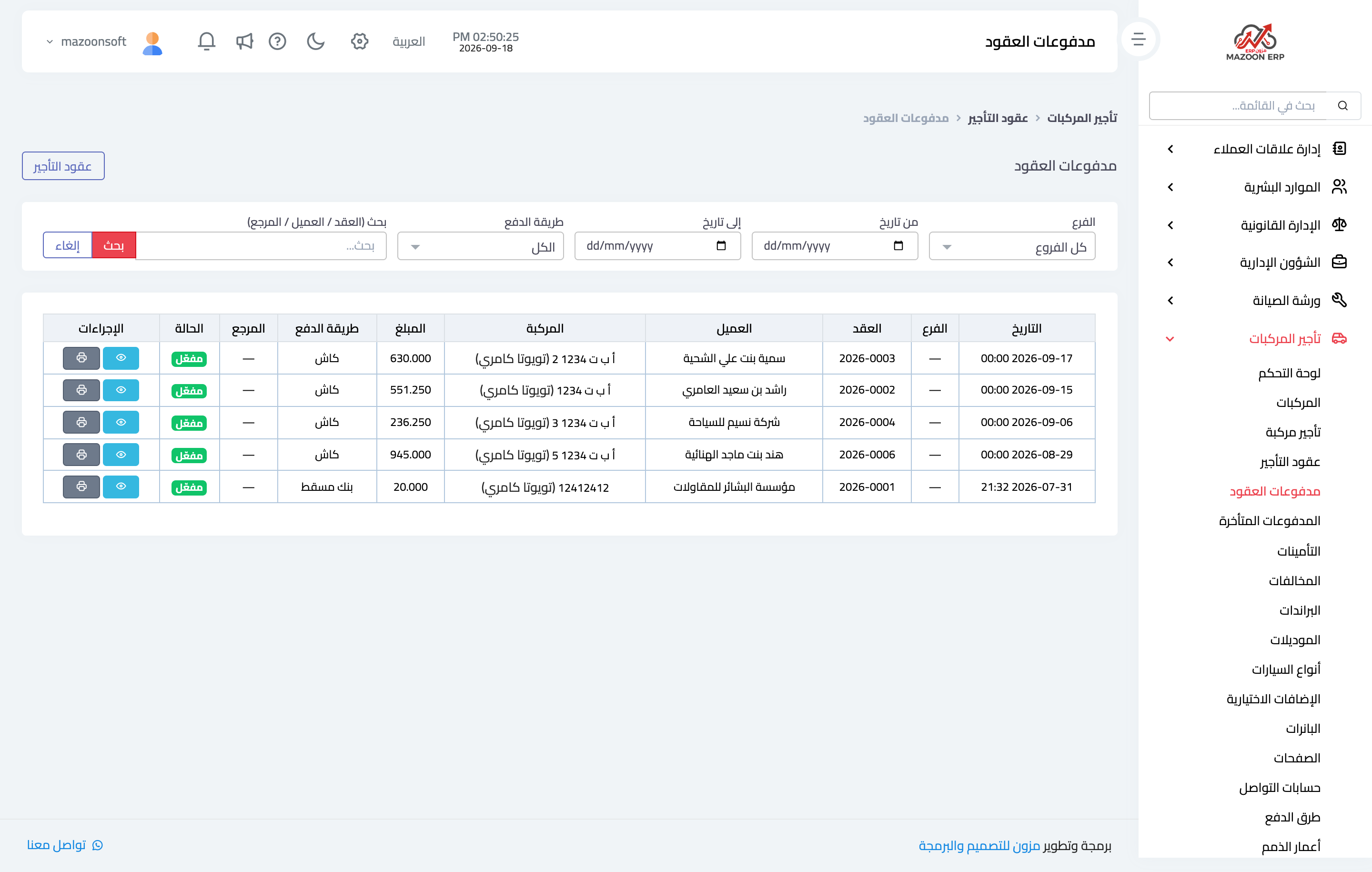
The Contract payments screen — Figure 1 — gathers everything collected in the office whatever contract it belongs to: date, contract, customer, amount, payment method, and reference. It is the cash review screen, with filtering and export.
Outstanding payments
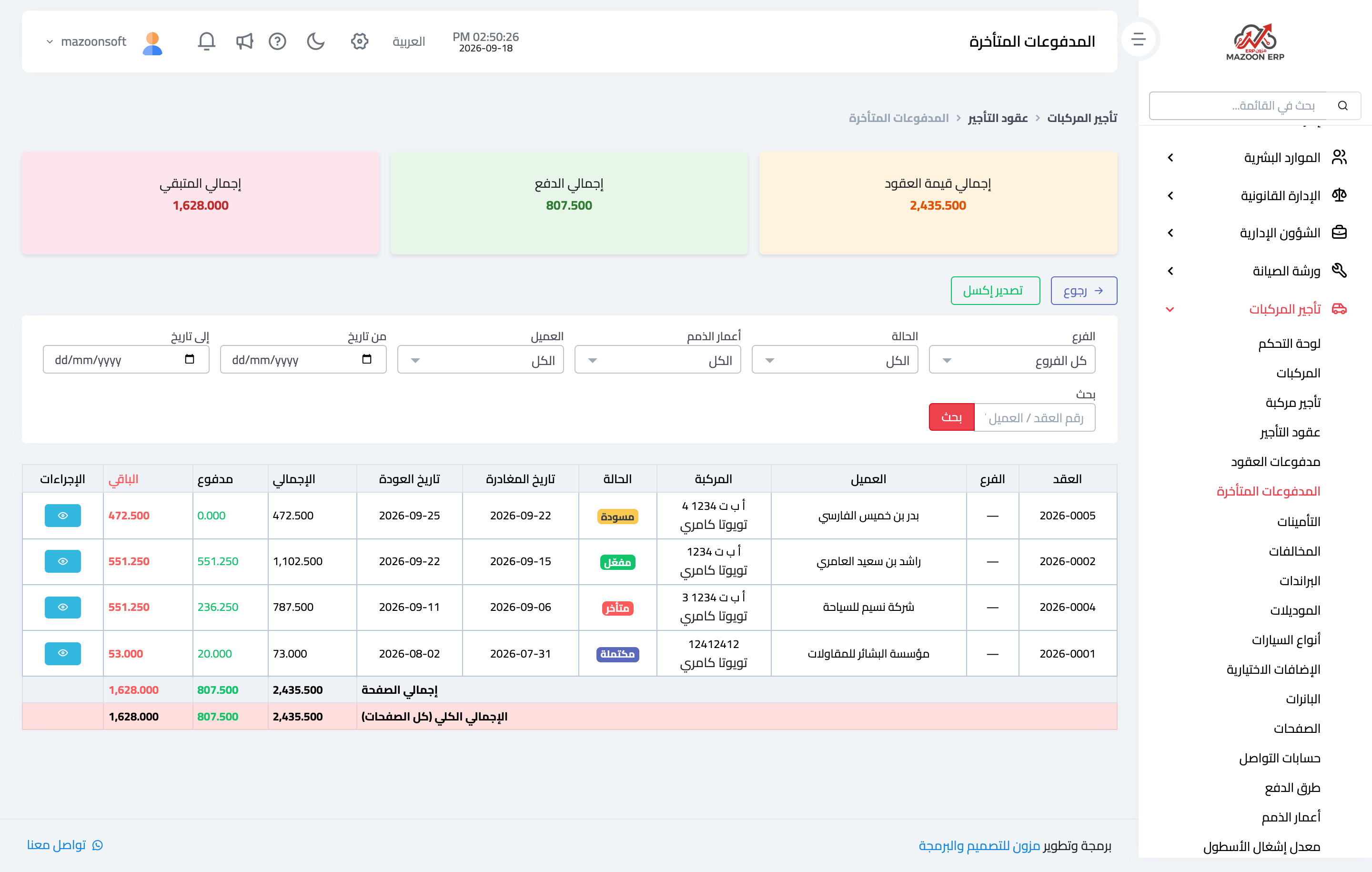
Outstanding payments — Figure 2 — is the other face of it: every contract with a balance, ordered by what is owed, with the customer’s phone and a WhatsApp button to reach them directly.
Working through this screen once a week usually returns more than a price increase would.
Instalments
For long contracts — monthly and above — the Instalments button at the top of the contract page splits the amount into payments with due dates, so it is clear which instalment has fallen due and which is late, instead of one opaque figure.
Security deposits
A deposit is money taken from the customer but not owned: it is a guarantee, refunded when the vehicle comes back sound, or reduced by the cost of damage or a fine, or forfeited entirely in extreme cases.
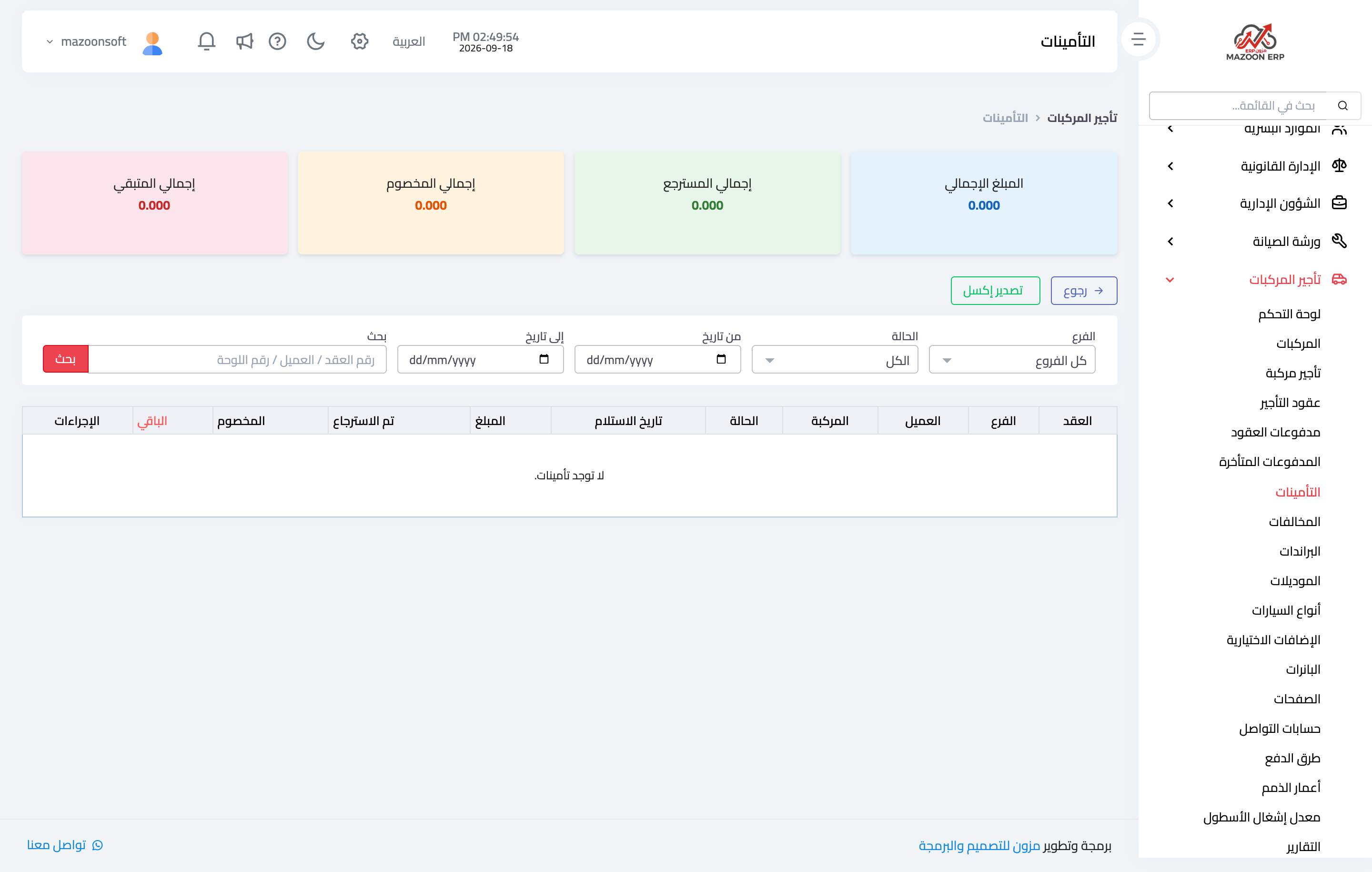
A deposit is opened from the Deposit button at the top of the contract page, and the Security deposits screen — Figure 3 — gathers all of them with each one’s state: held, refunded, or partially deducted.
Every movement on a deposit is recorded with its reason, so no argument arises over an amount deducted without explanation.
Violations
A traffic fine reaches the office in its own name, because the office owns the vehicle, but whoever incurred it was the renter at the time. Hence the problem: how do you know who was driving on a given day?
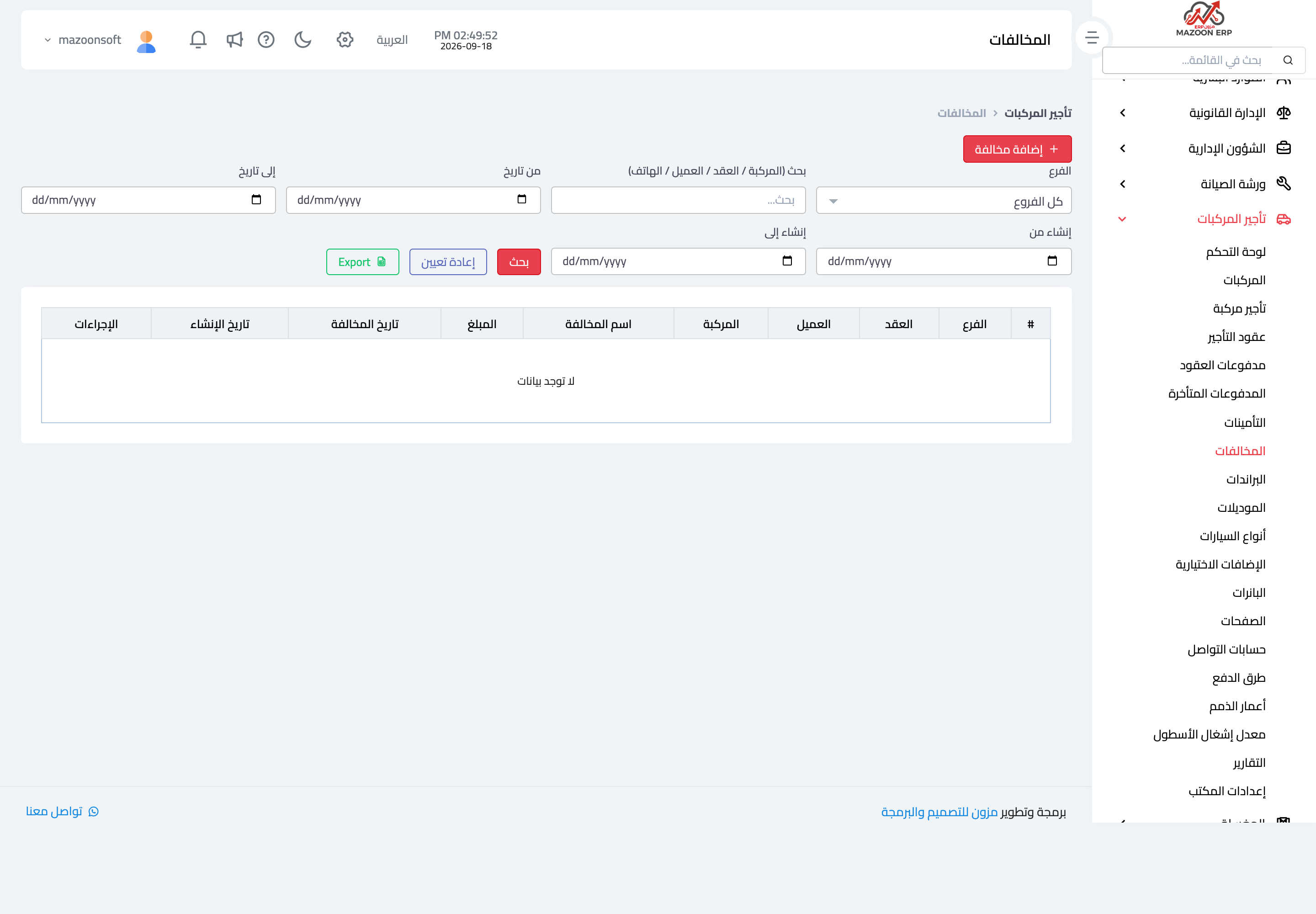
The Violations screen — Figure 4 — solves it: record the fine with its number, date, amount, and vehicle, and the system ties it to the contract open on that date, so it appears on the contract’s violations tab and is added to its total.
The fine is thereby charged to whoever incurred it, either collected in the final settlement or deducted from the deposit.
Notes
- Do not refund the deposit on the day of return; a fine can arrive a week later, and waiting the customary period is safer.
- Record the reason for every deduction at the time of deduction, not a week later.
- Review outstanding payments weekly; a recent arrear is collectable, and grows harder the longer it sits.
Screenshots
Try what you just read on your own data
Open a free 7-day trial — no credit card, with your own company link in minutes.