
Where does an item’s cost come from, and why does it change?
You open the balance report and see an average cost that does not match the last price you paid. That is not an error — it is how stock is valued.
The source: unit cost on the goods receipt
Every figure you type into the unit cost box on a goods receipt feeds the item's cost. That is where your stock cost is decided — not the purchase price on the item card, and not the purchase order price alone.
The weighted average
The system does not keep the last price but a weighted average: each incoming quantity at its price blends with the existing balance to produce a new average.
An example: you hold 100 pieces at a cost of 10 and receive 100 at 20. You now have 200 pieces at an average of 15 — not 20. Sell one tomorrow and its cost is 15, not 20.
Where the effect shows
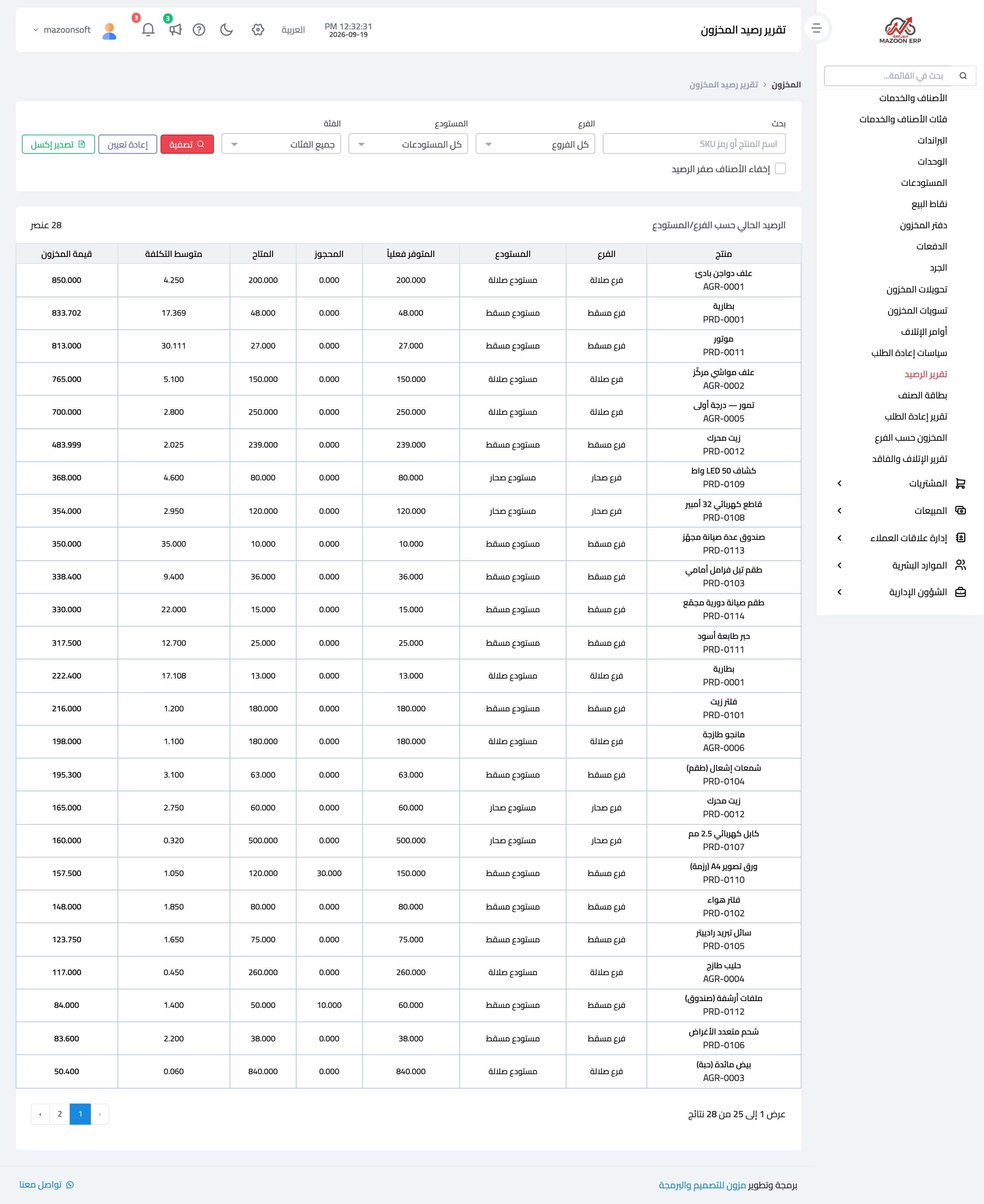
- Stock value in the balance report = quantity × average cost — image 1.
- Cost of goods sold when sales invoices are approved.
- Stock count and scrap values — both are valued at average cost.
- Deal profit — the gap between the selling price and the average cost, not the last purchase price.
Common mistakes
- Opening stock at zero cost. It drags the average down for months and makes your profits imaginary. Fix it on day one.
- Typing the selling price into the cost box on a goods receipt — a recurring error that inflates stock value.
- Forgetting freight and customs — if they are part of your real cost, build them into the unit cost.
- The wrong unit — a carton's cost in the per-piece box multiplies your stock value by twelve.
Notes
- Check the unit cost before approving a goods receipt — after approval it is part of the average, and the only way back is cancelling the receipt.
- An item showing zero average cost in the balance report entered at zero cost — check its opening stock or its goods receipt.
- The purchase price on the item card is indicative and for display; the calculation uses the average.
- Trace one item's cost history from Inventory → Stock Card.
Screenshots
Try what you just read on your own data
Open a free 7-day trial — no credit card, with your own company link in minutes.