
Goods receipts and supplier bills
This is where goods meet stock, and a financial claim meets the supplier's account. Keeping the two apart is what lets you pay for what you actually received rather than what you were billed.
Goods receipts
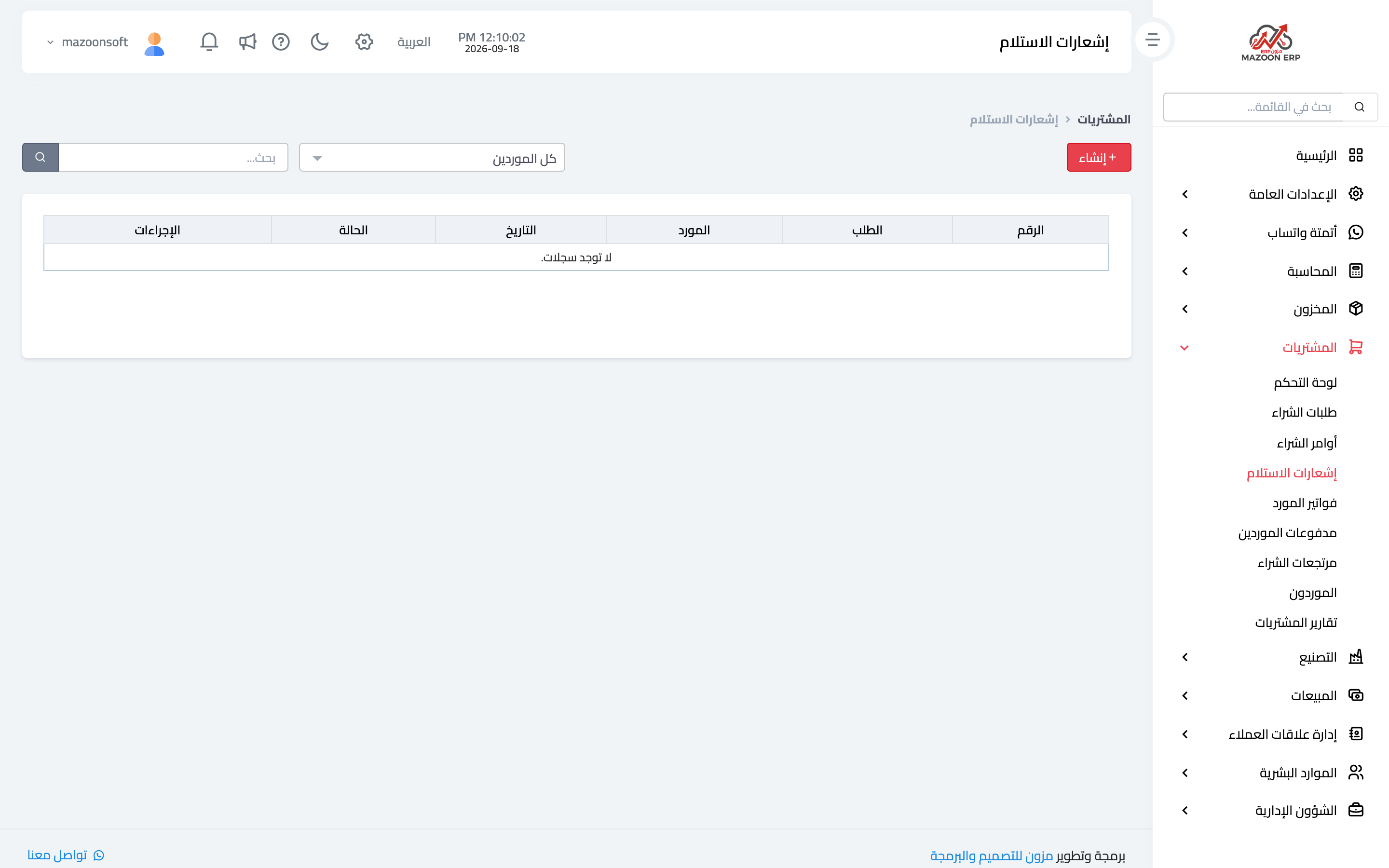
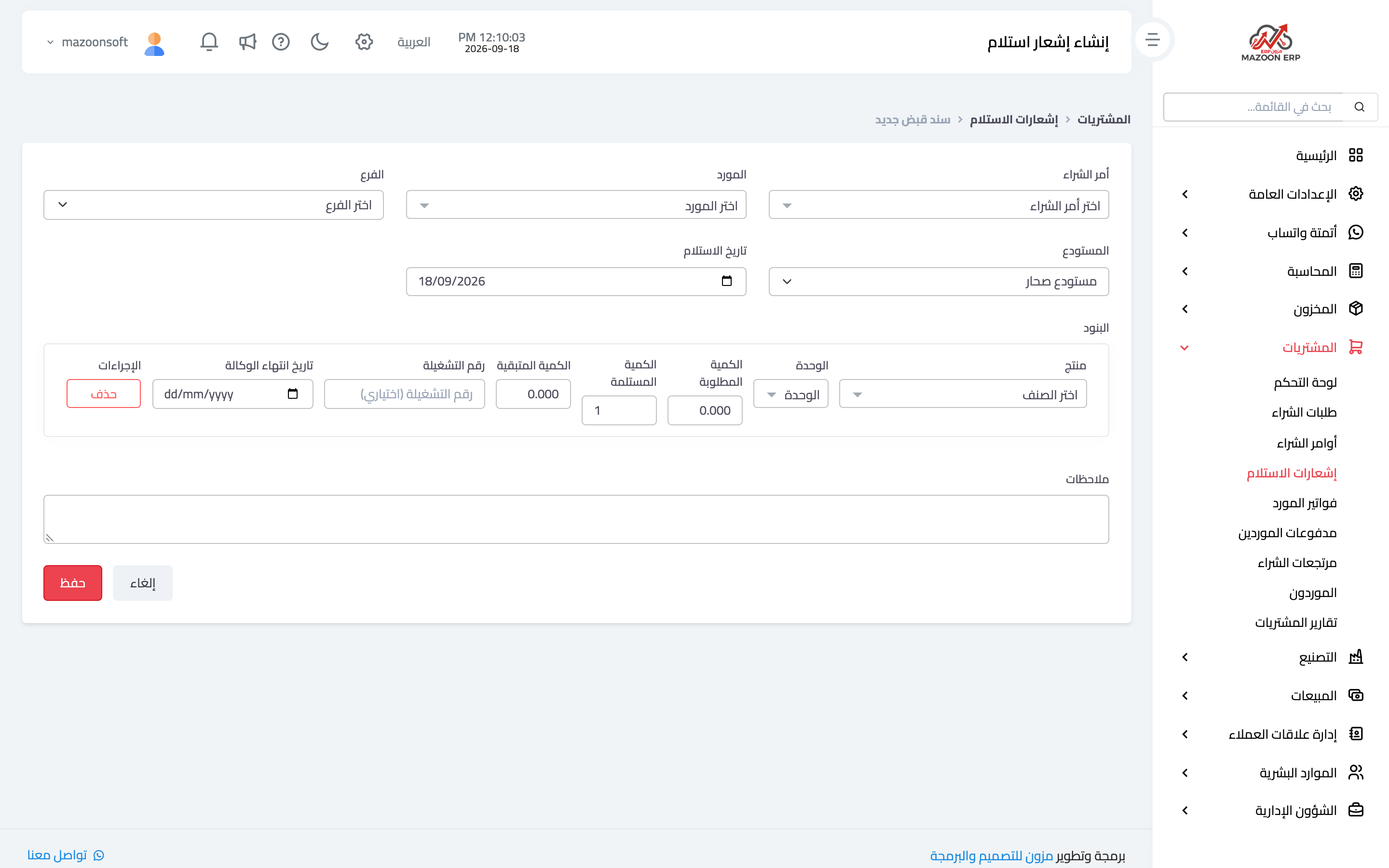
When goods arrive, record a receipt. From the purchasing dashboard open the Goods Receipts card — image 1 — then Add as in image 2:
- The related purchase order — its lines are pulled in automatically.
- Supplier, receipt date and warehouse.
- The quantities actually received per line — and this is the crux: record what arrived, not what was ordered.
On approval, stock increases in the chosen warehouse and the movement appears in the stock ledger with its reference.
Partial receipts
If part of an order arrives, record only that part; the order stays open for the remainder. When the rest arrives, record a second receipt against the same order. This is more accurate than waiting for the shipment to complete, because the balance reflects reality as it happens.
Supplier bills
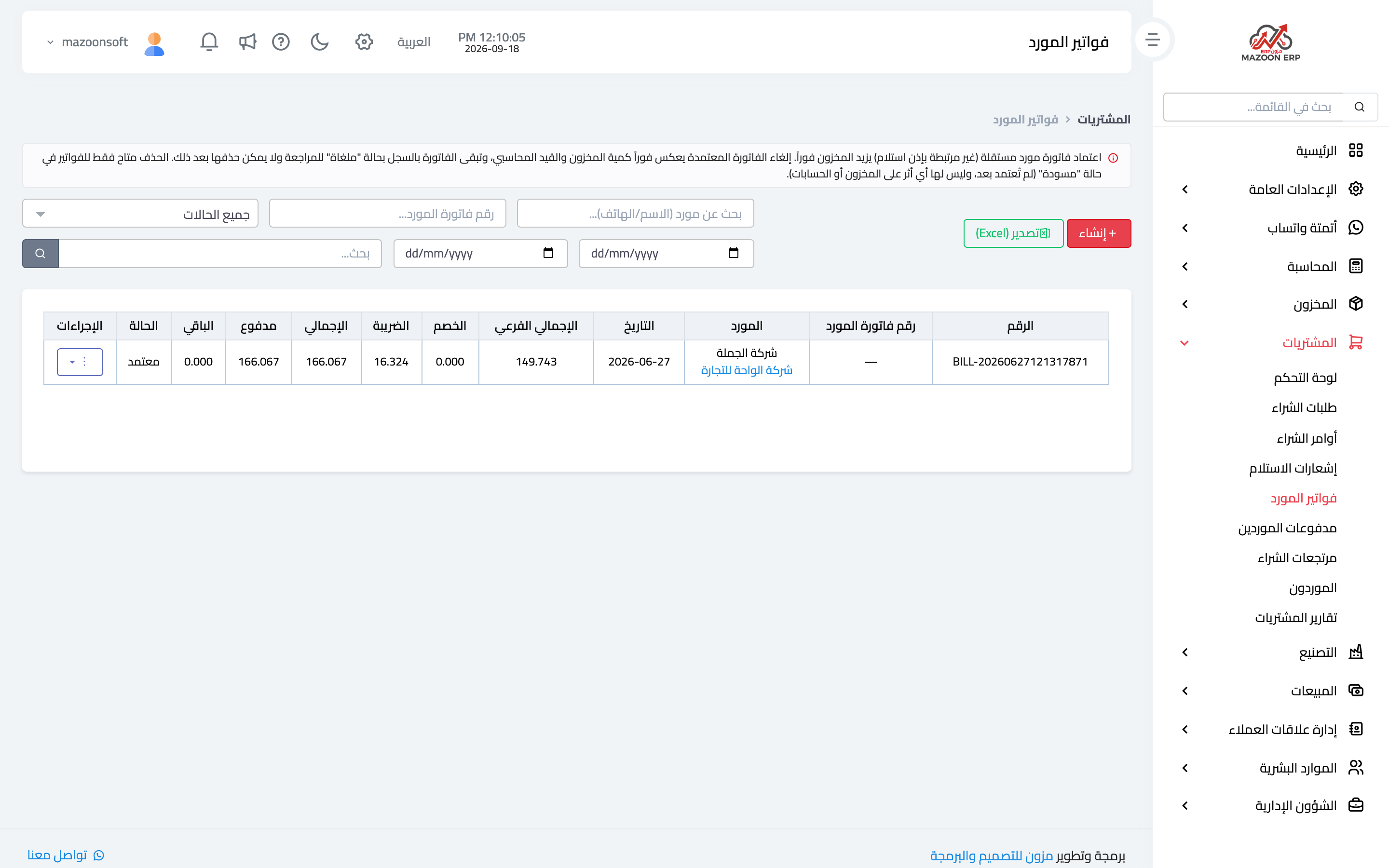
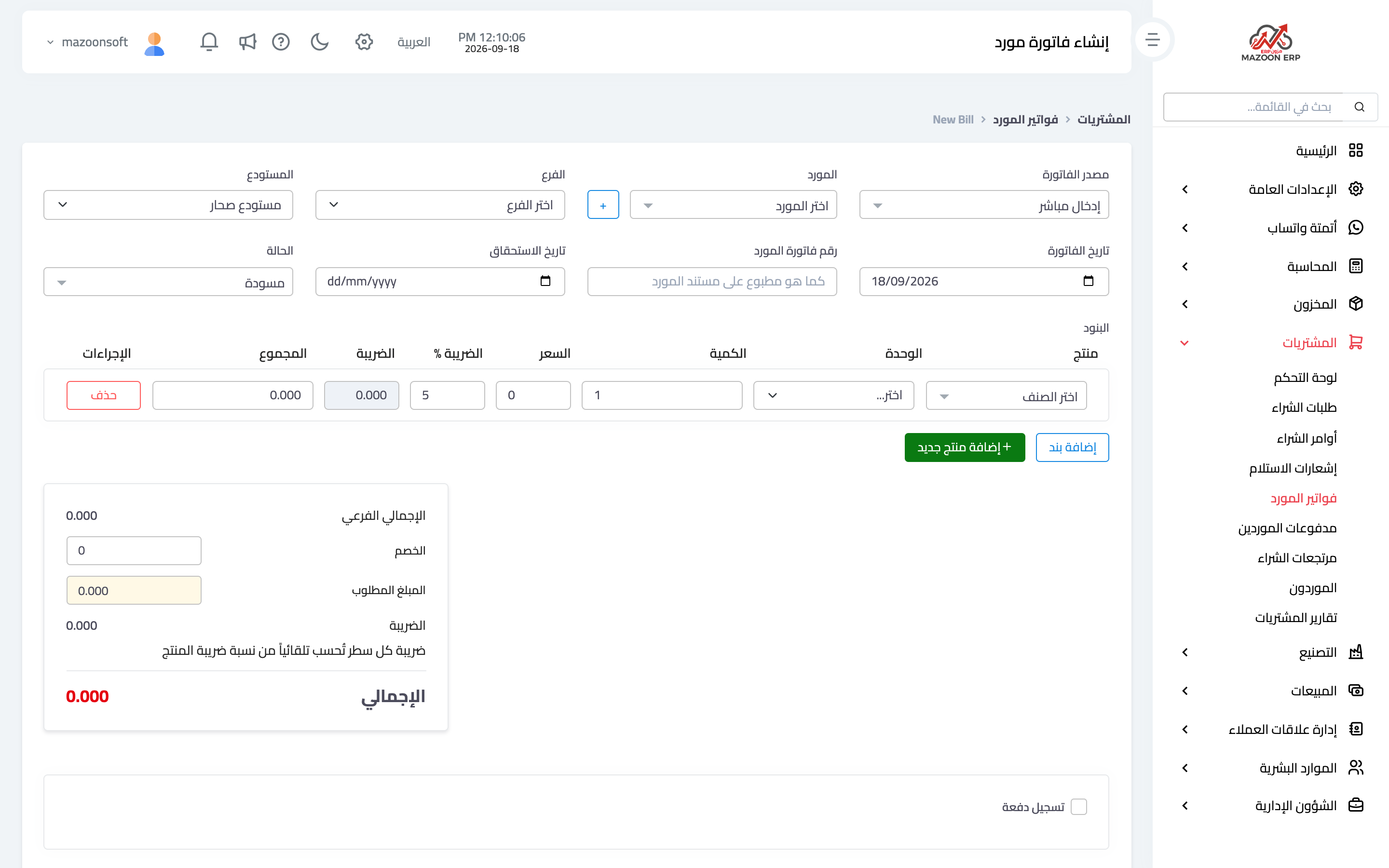
The bill is the supplier's financial claim. From the Supplier Bills card — image 3 — press Add as in image 4: supplier, their invoice number, its date and due date, the lines with prices and taxes, and an attachment of the invoice itself.
Saving it creates the accounting effect: a liability to the supplier, and the bill appears among unpaid bills until it is settled.
Match before you pay
Before approving any bill, compare it against three things:
- The purchase order — is the price what was agreed?
- The goods receipt — are the billed quantities the ones actually received?
- Tax and discounts — were they applied as agreed?
Most costly differences are caught at this step: an item billed but never delivered, a price above the order, or a quantity counted twice.
Preventing duplicate bills
The system blocks recording a bill with the same supplier invoice number for the same supplier twice, as long as the first is not cancelled. So always record the supplier invoice number exactly as printed — it is your first line of defence against paying twice.
Screenshots
Try what you just read on your own data
Open a free 7-day trial — no credit card, with your own company link in minutes.