
Poultry farms: flocks, feed, vaccination, and output
The unit of work on a poultry farm is the flock, not the bird. Feed, vaccination, mortality, and weight are all recorded against the flock, and from them you know its profit at marketing.
The dashboard
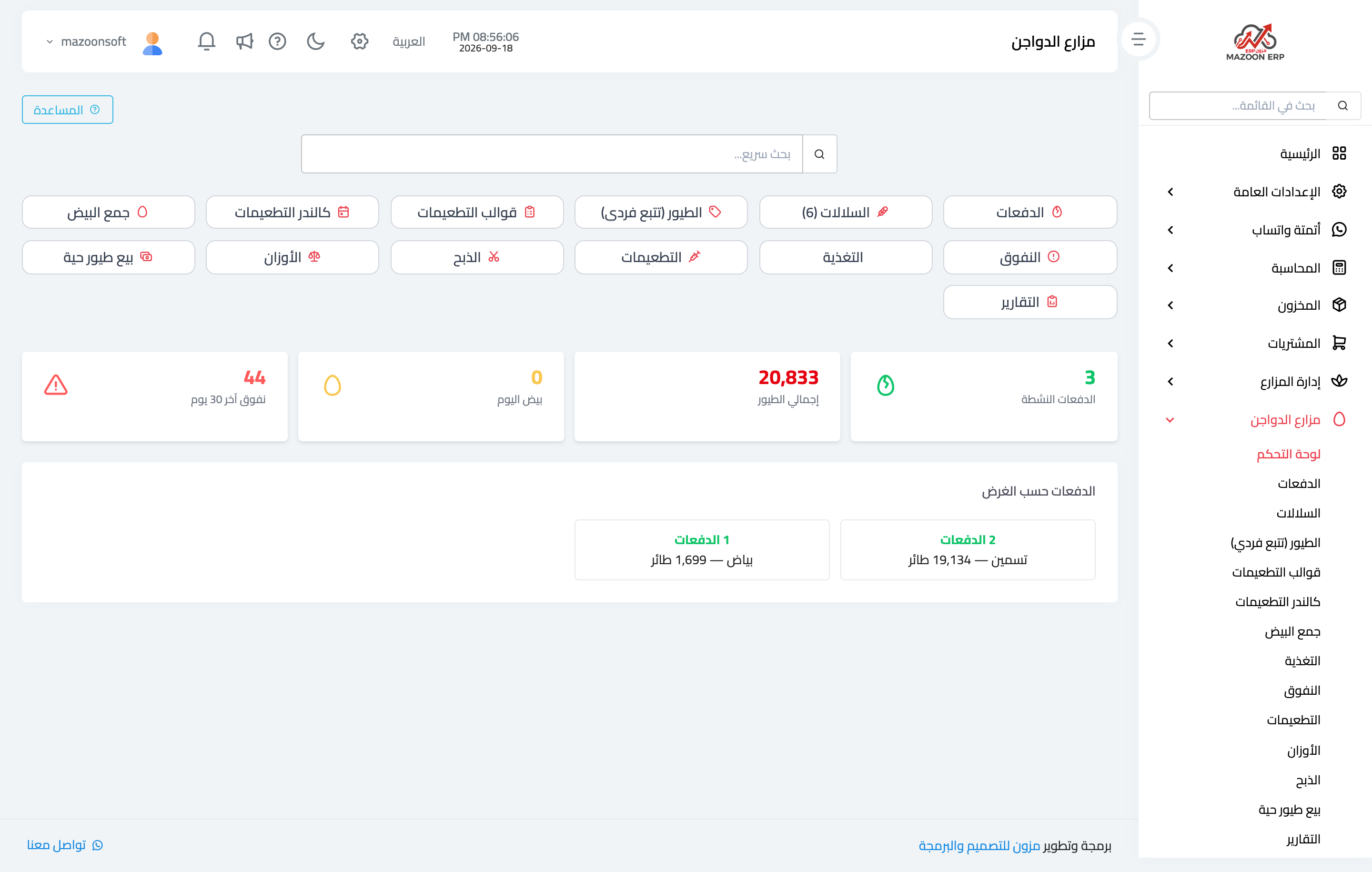
The poultry dashboard — Figure 1 — shows the active flocks and their counts, the mortality rates, and the vaccinations falling due soon.
Flocks
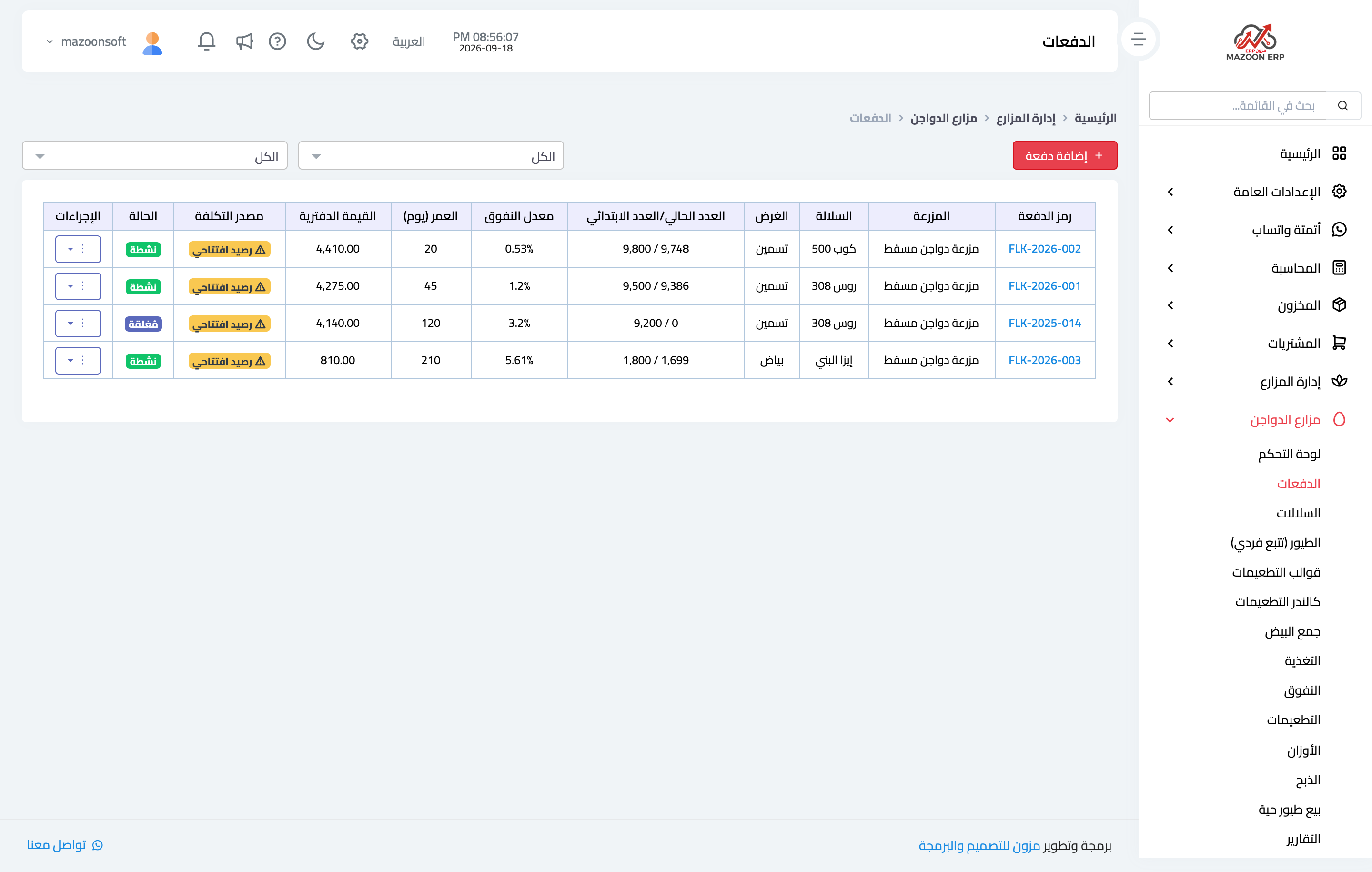
Each flock — Figure 2 — has a code, a farm, a house, a breed, a purpose (broiler, layer, breeder), an initial count, and a start date.
The two most telling columns are current / initial count and mortality rate. The age in days is computed from the start date, and on it rest the vaccination programme and the growth curve.
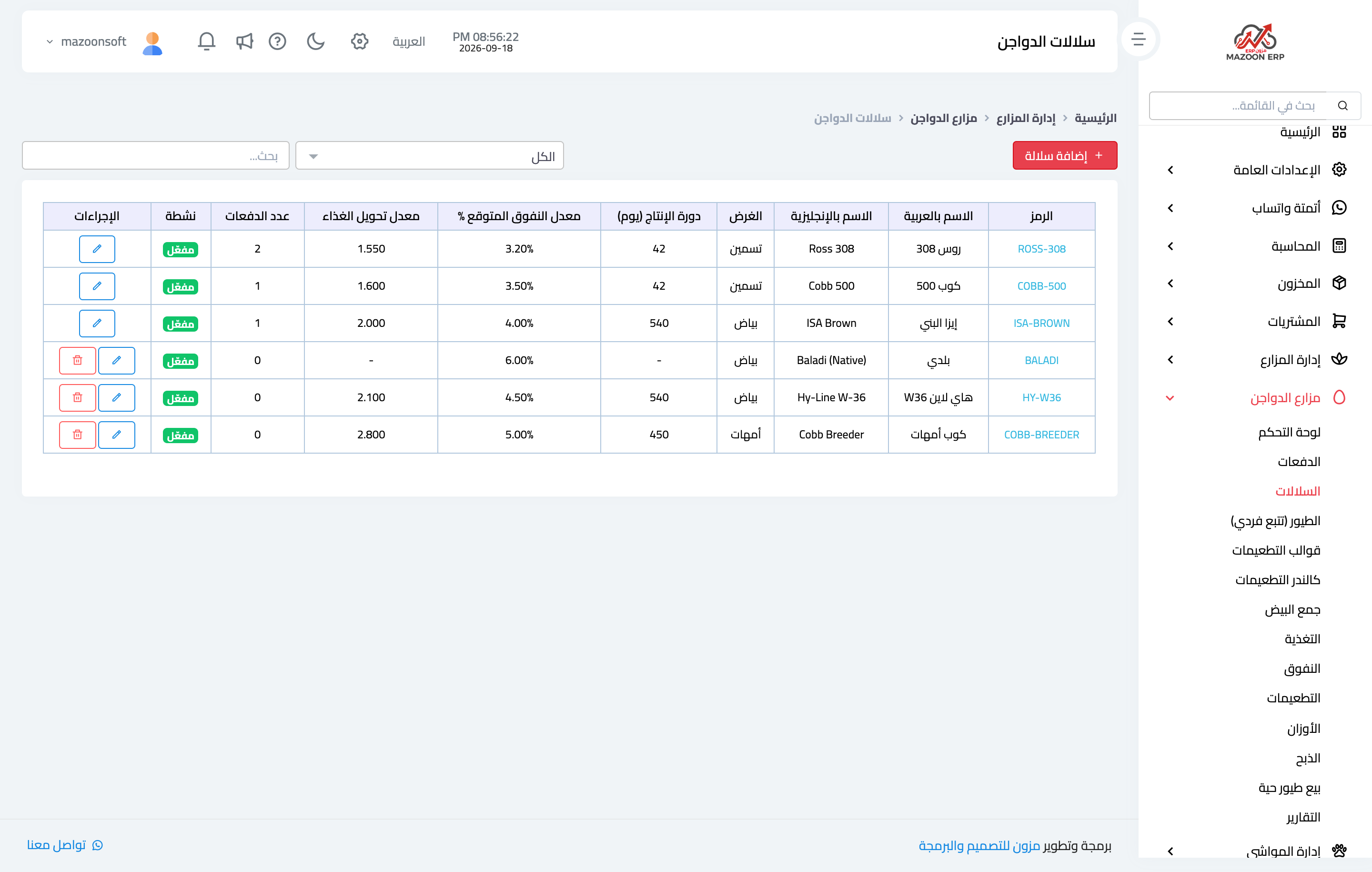
The breeds — Figure 3 — carry the expected standard: cycle length, acceptable mortality, and feed conversion ratio. Comparing actual against standard tells you whether the flock is on track.
Feeding
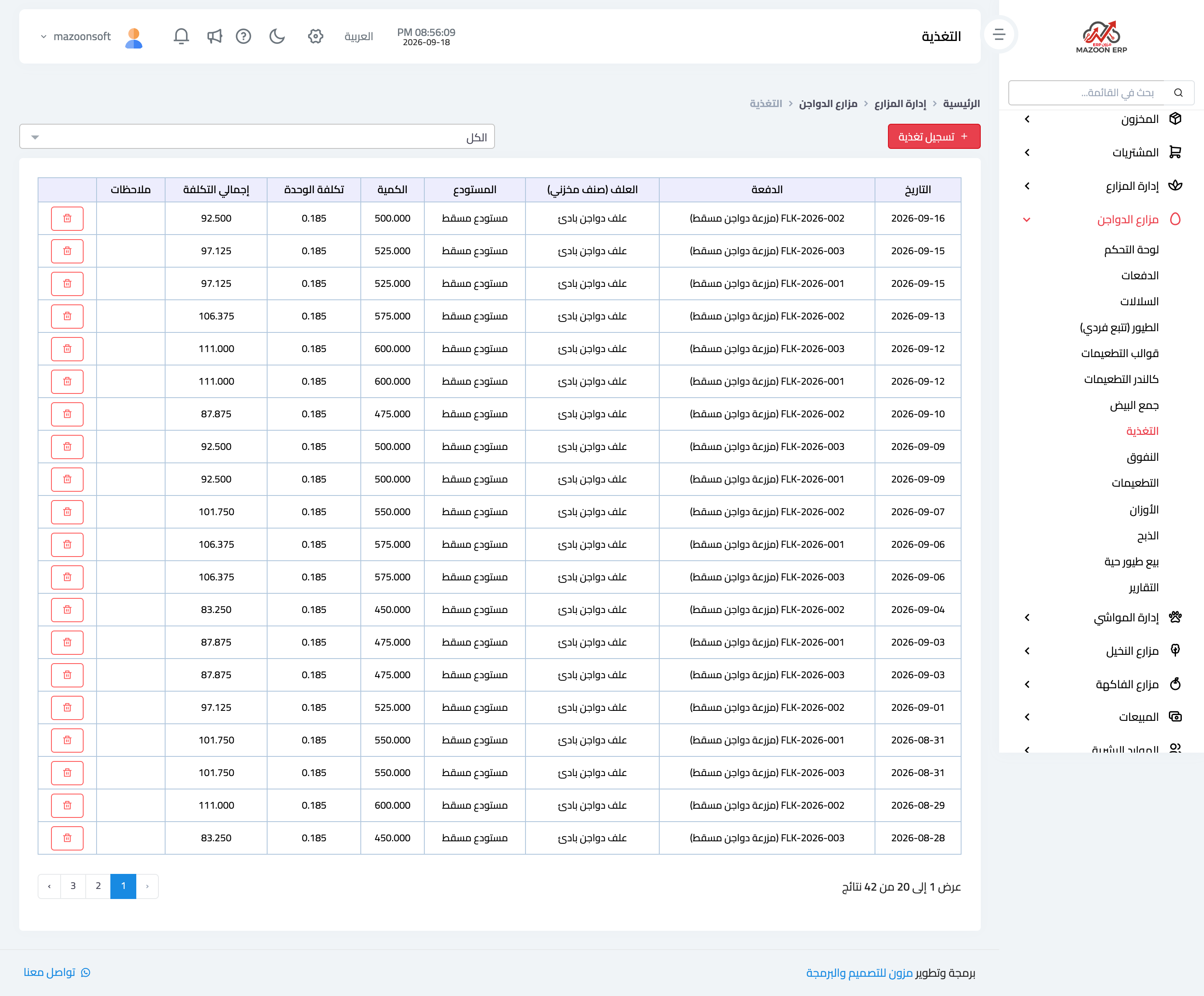
Every feeding is recorded — Figure 4 — with the flock, date, item, and quantity, so the feed leaves the store and lands as a cost on the flock. Feed is far and away the largest cost line in poultry.
Egg collection
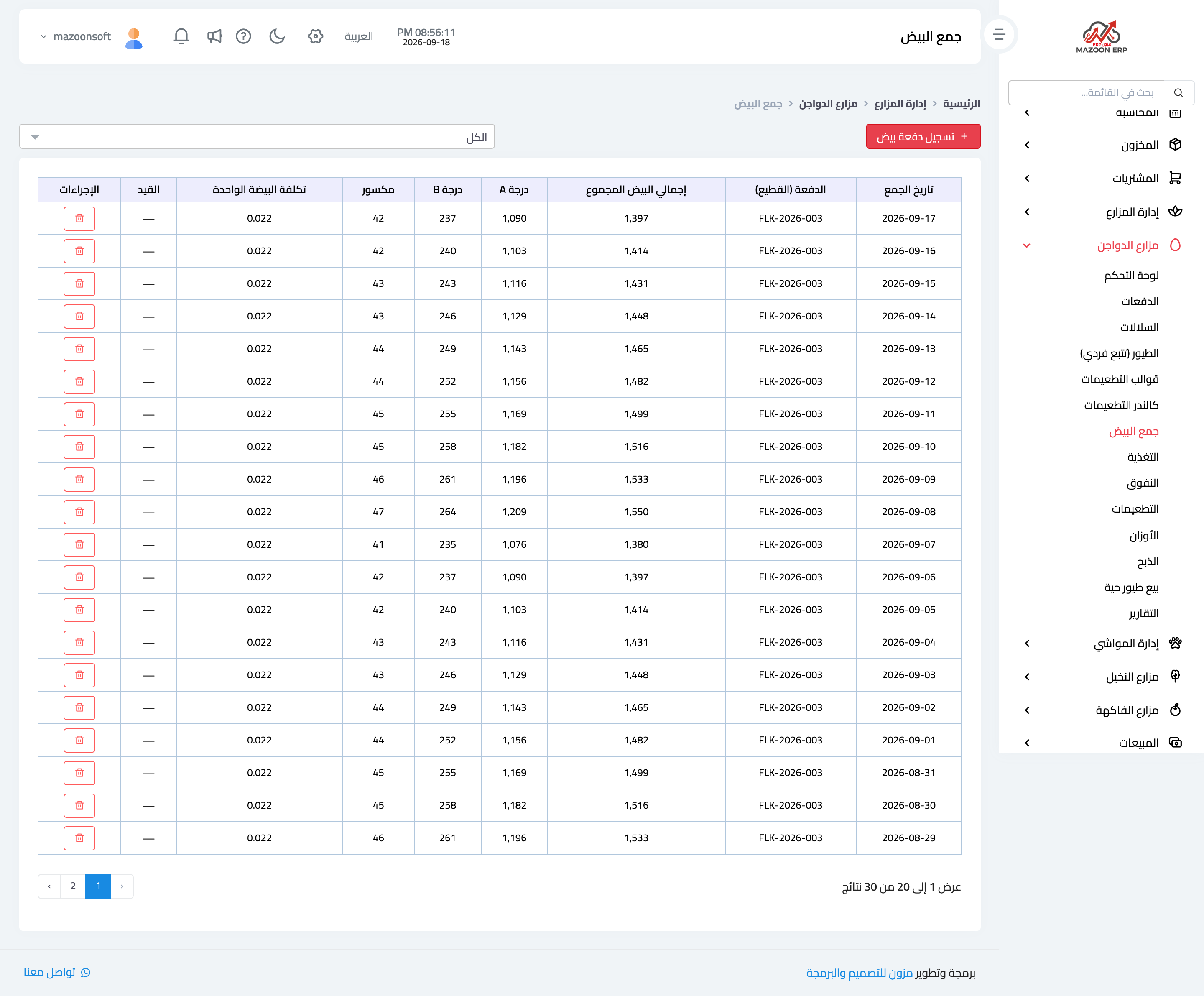
For layer flocks — Figure 5 — the collection is recorded daily in detail: total, grade A, grade B, broken, and infertile. The stored eggs enter as an item ready to sell.
Vaccinations
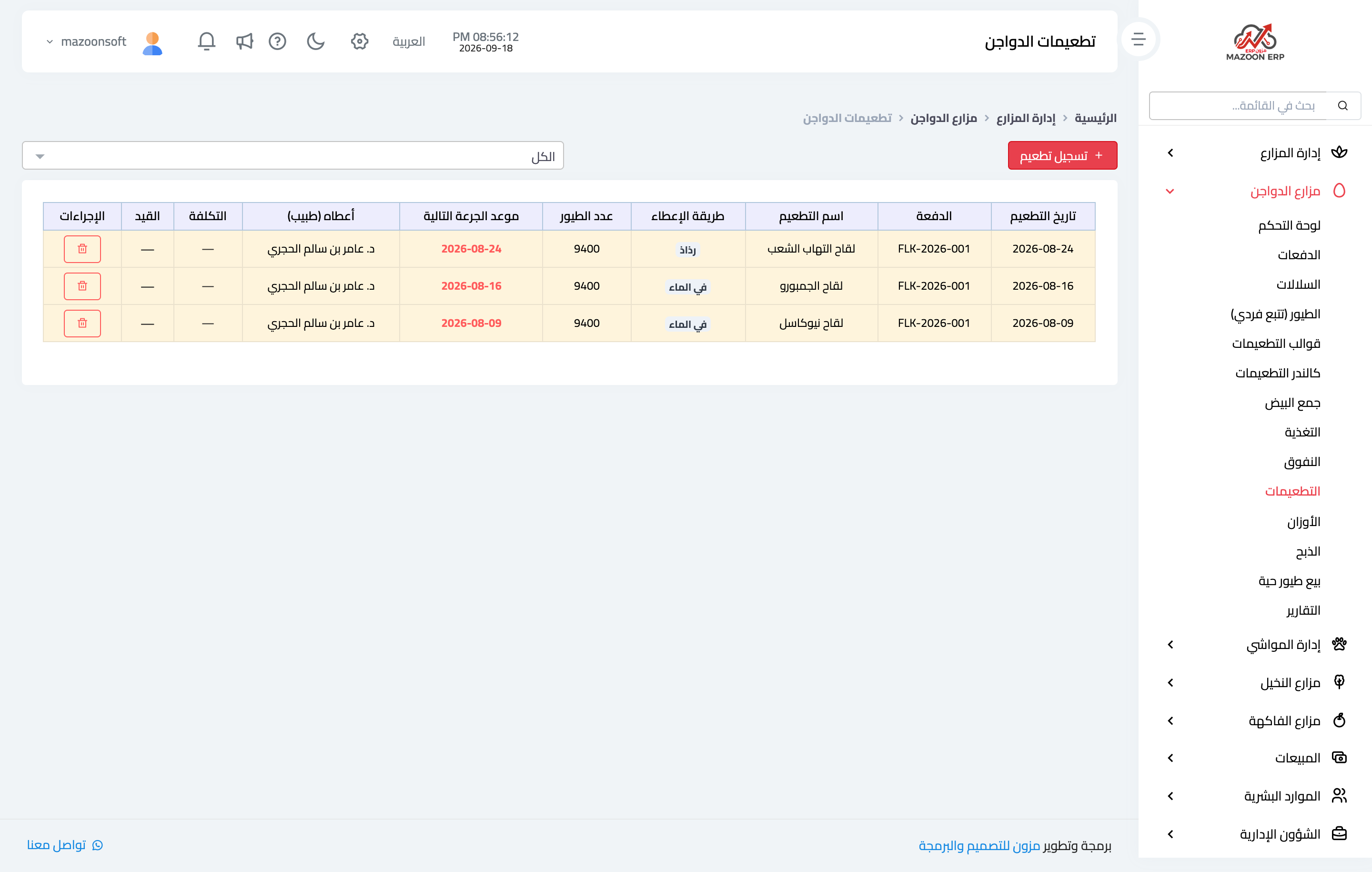
Every vaccination — Figure 6 — is recorded with the vaccine name, the route (drinking water, spray, injection, eye drop), the bird count, and who administered it.
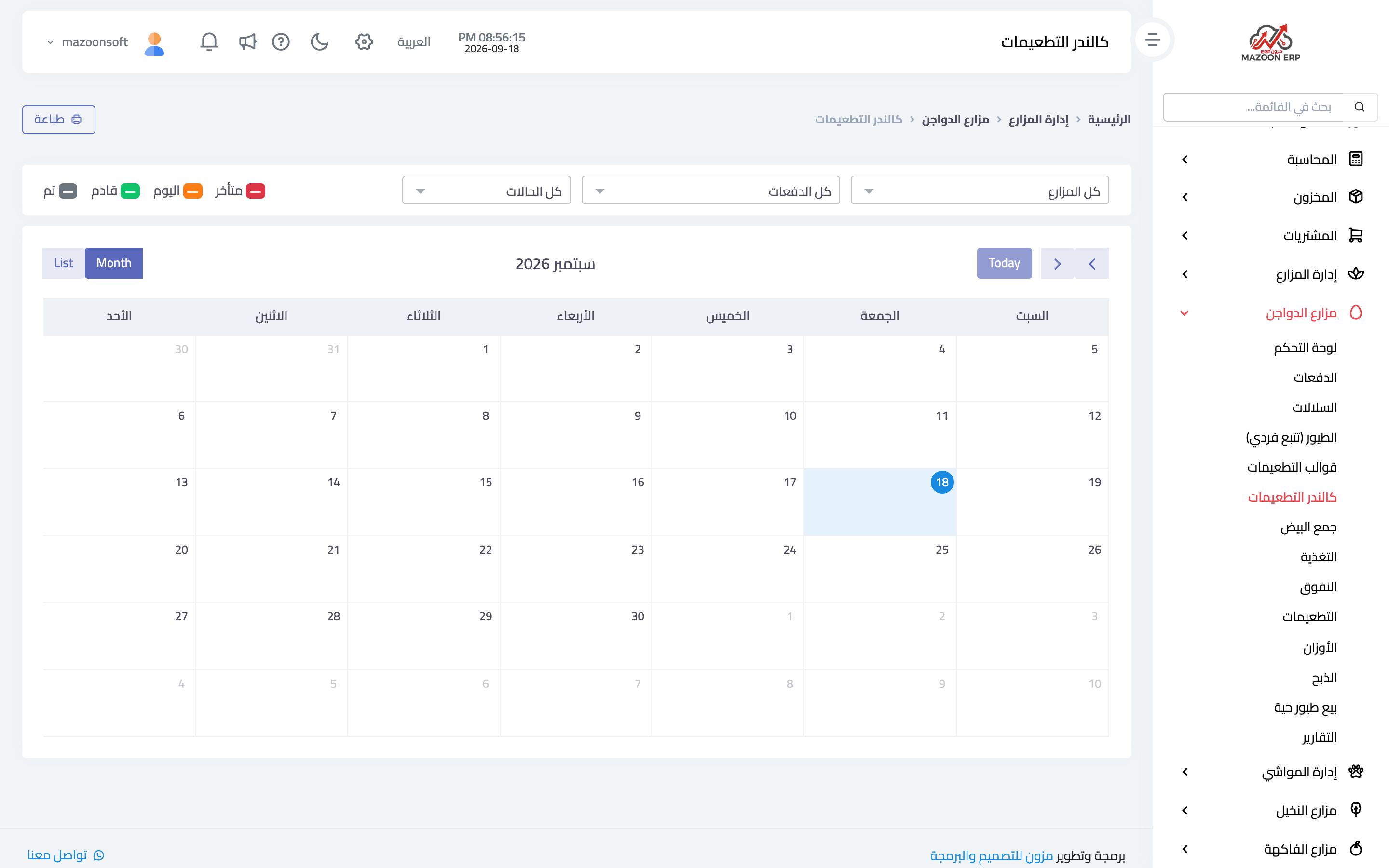
The important part is the vaccination calendar — Figure 7 — which generates each flock’s dates from the vaccination protocols according to its age, warns you before they fall due, and shows the overdue ones. This alone saves a whole cycle.
Mortality and weights
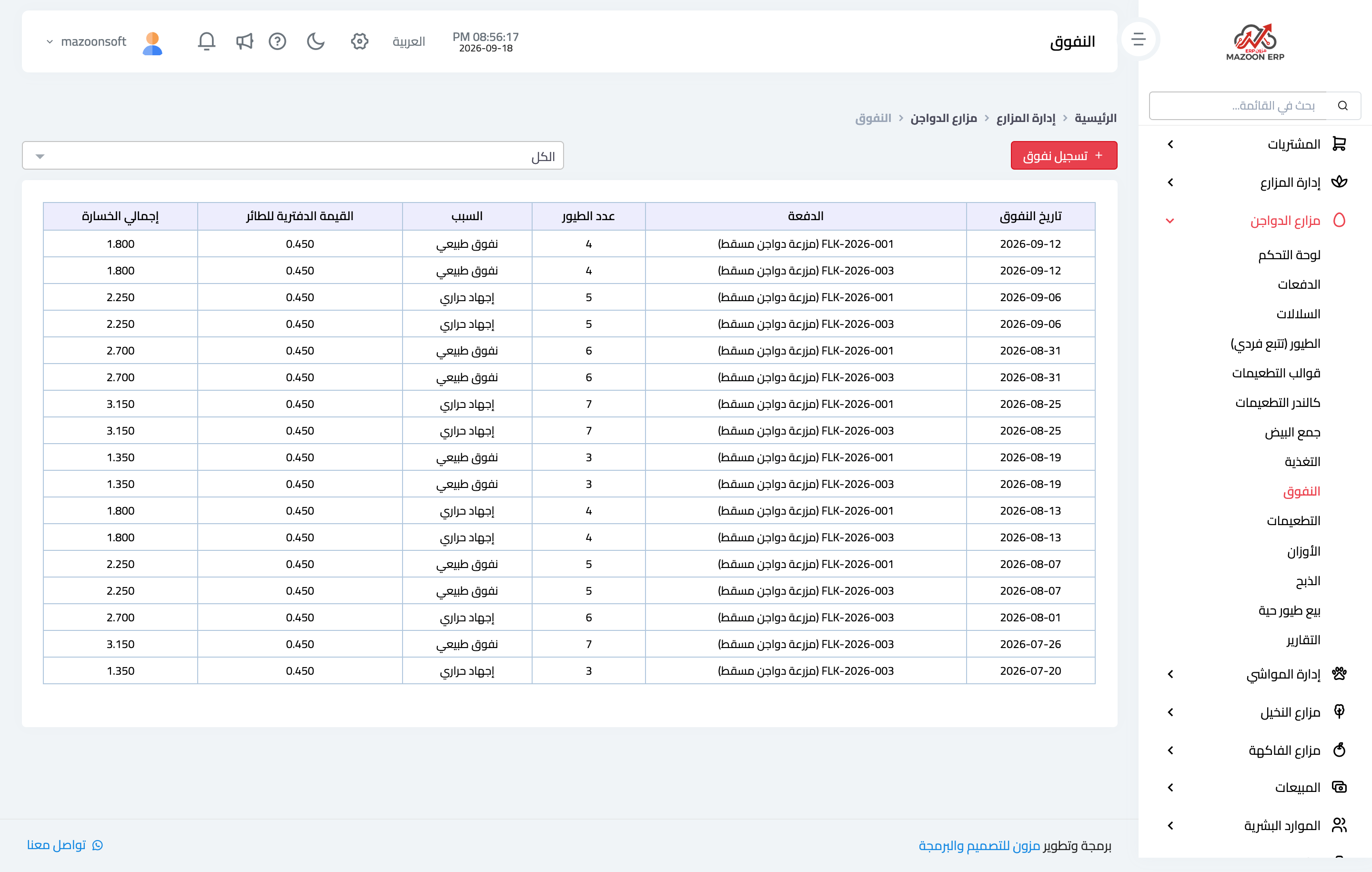
Mortality is recorded — Figure 8 — with its count, cause, and date; it comes off the flock count and its book value is charged as a loss.
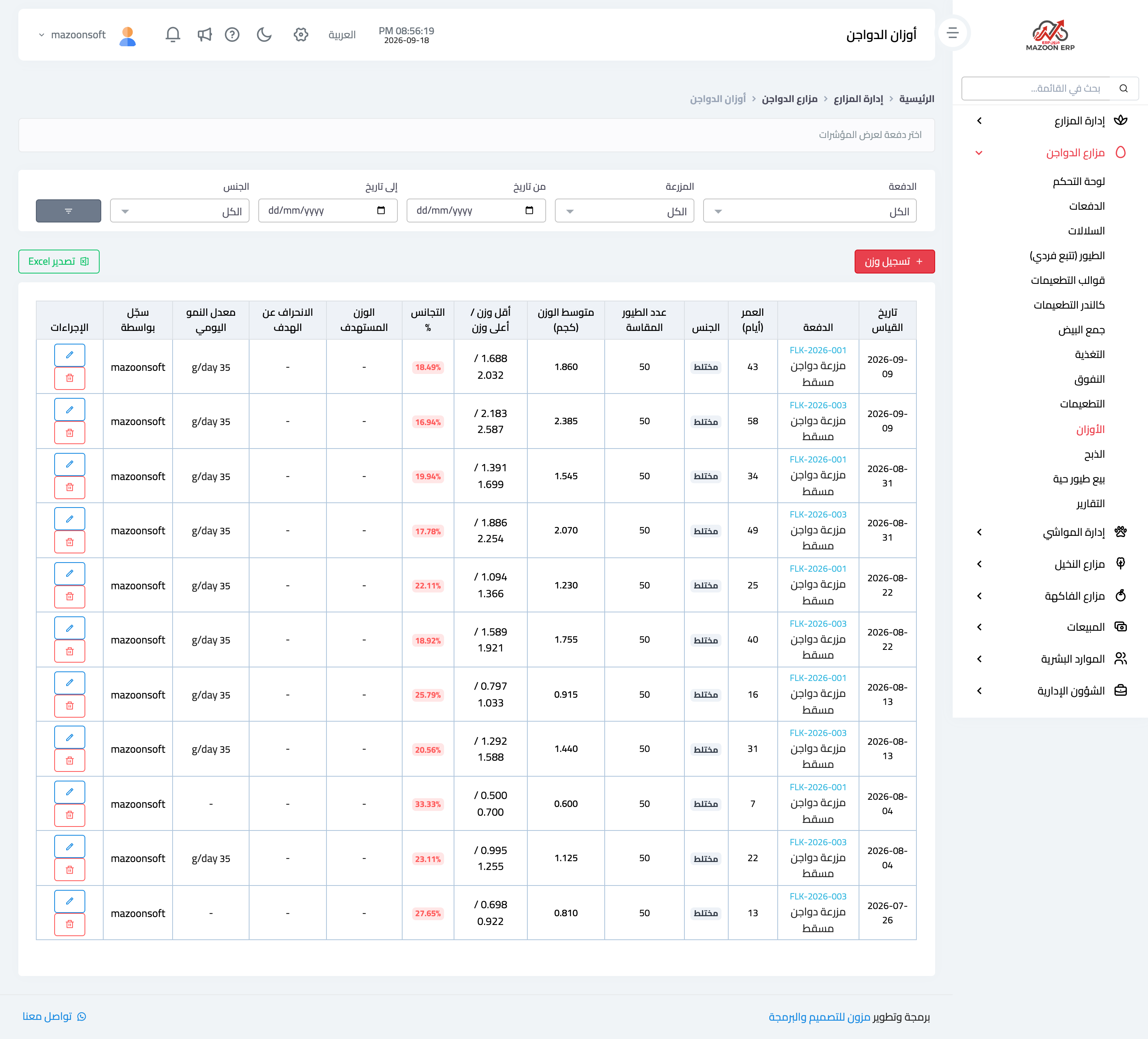
Weights — Figure 9 — are taken by sample: weigh fifty birds and enter the total, and the system computes the average and plots the growth curve against the standard.
Live bird sales
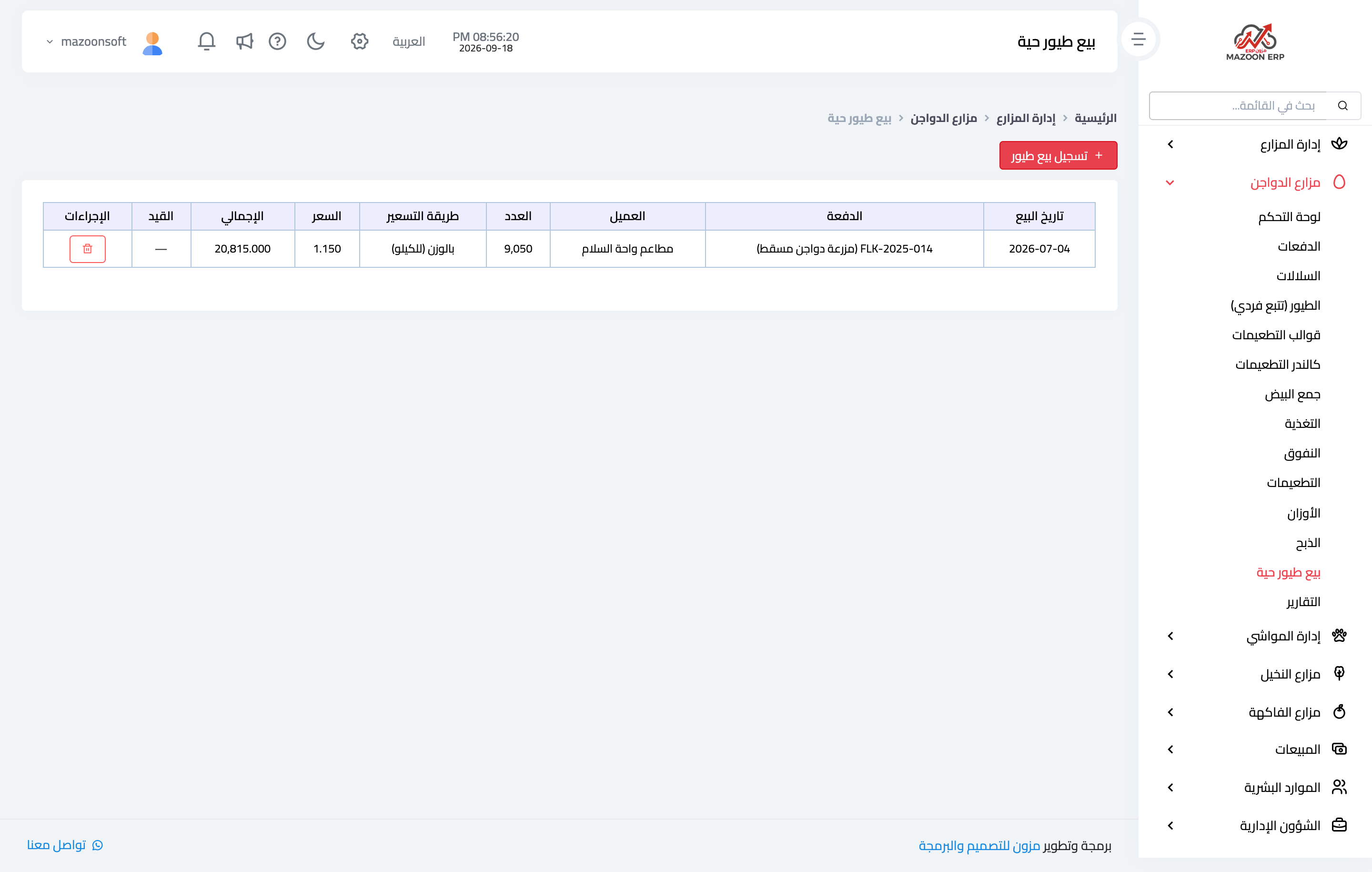
At marketing — Figure 10 — you record the sale per bird or per kilogram; the system takes the count off the flock and computes the cost of sales from its book value.
Notes
- Record mortality daily even for a single bird; the mortality rate is the first indicator that exposes disease before it spreads.
- Do not mix two flocks in one house; overlapping ages ruin the vaccination and blur the cost.
- Close the flock once it is fully marketed; an open flock with no birds clutters the dashboard.
- Set the vaccination protocols once per breed, then let the calendar do the remembering.
Screenshots
Try what you just read on your own data
Open a free 7-day trial — no credit card, with your own company link in minutes.