
Livestock: animals, milk, health, and breeding
Unlike poultry, the unit of work in livestock is the individual animal with its tag, name, and history. Each head has a file gathering its weight, milk, treatment, and births.
The dashboard
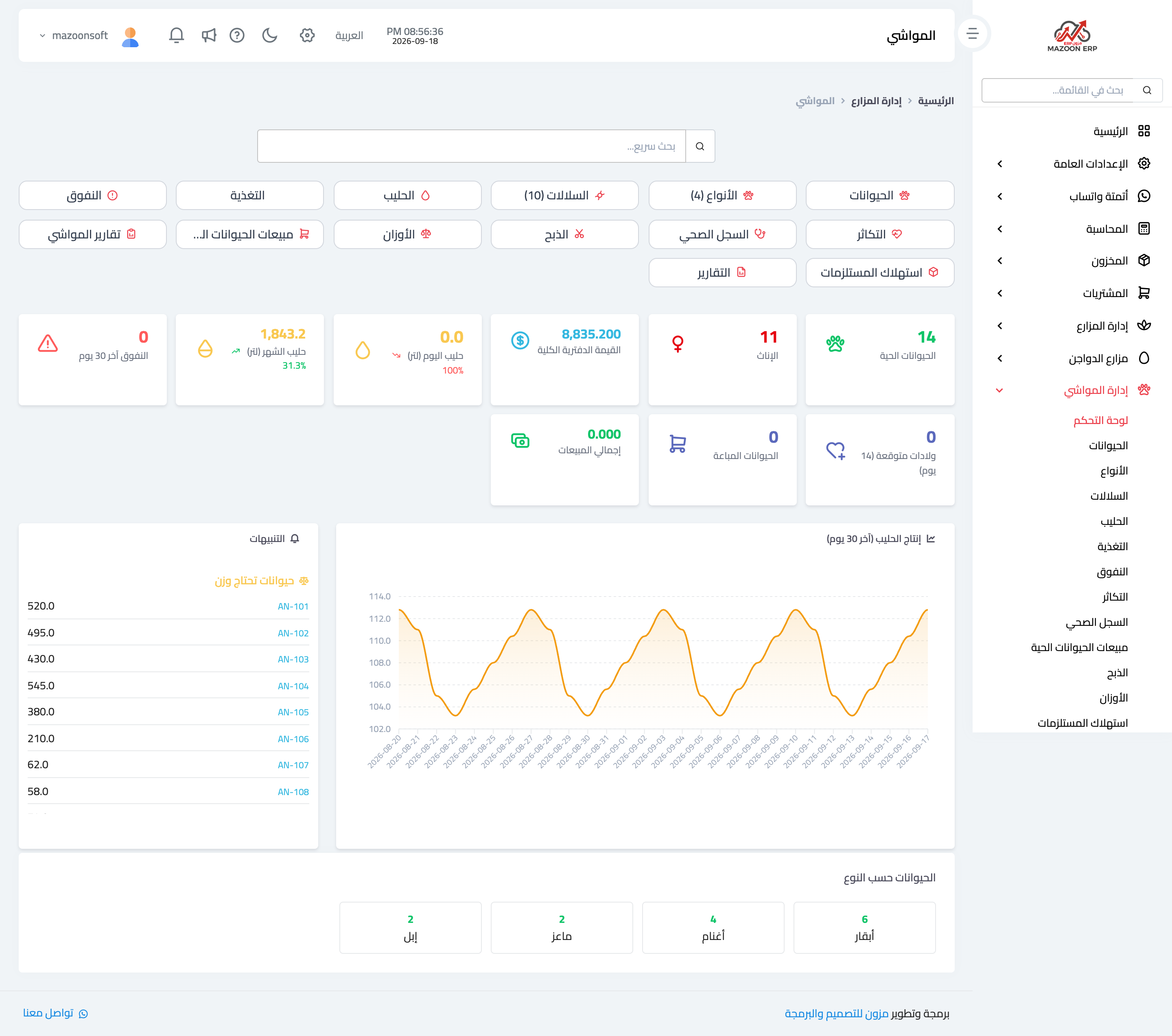
The livestock dashboard — Figure 1 — shows the live head count, the females, the book value, today’s and the month’s milk with a thirty-day curve, the expected births, and alerts for animals due a weighing.
Animals
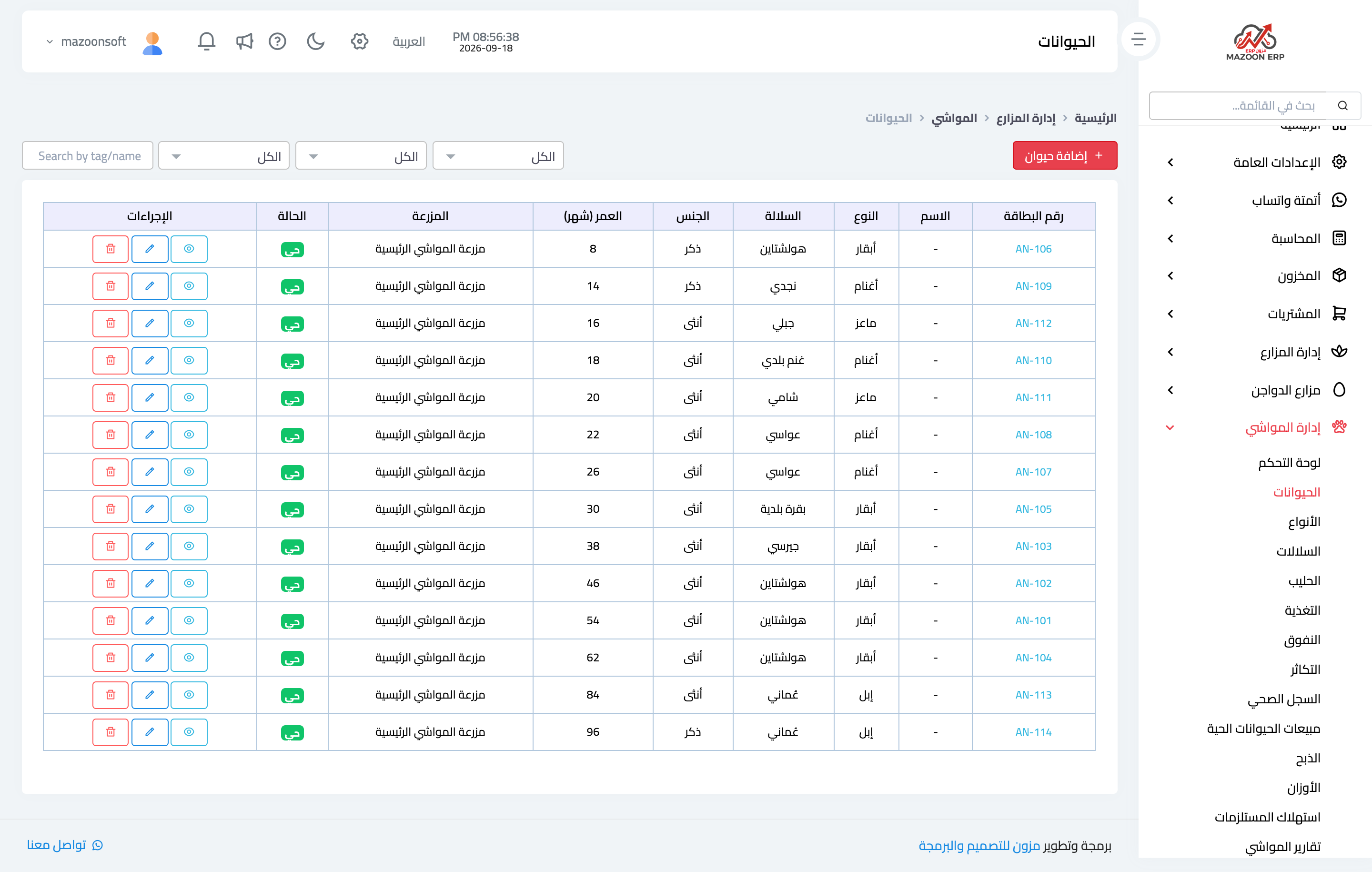
Each animal — Figure 2 — has a tag, a species, a breed, a sex, a birth date, a location, a source (born on the farm or purchased), and a book value.
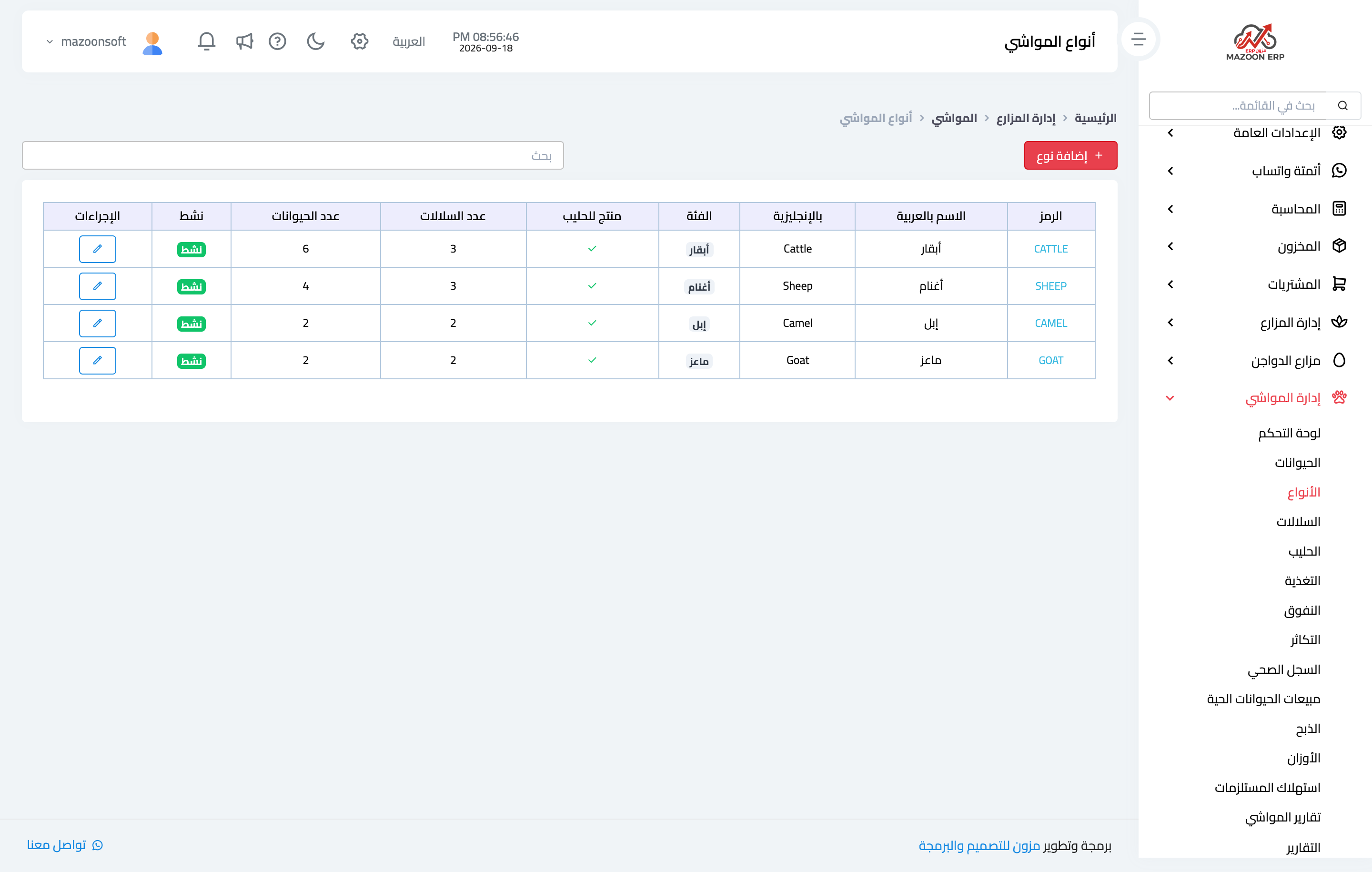
The species and breeds — Figure 3 — come preconfigured (cattle, sheep, goats, camels) and each breed carries an average milk yield and a mature weight.
Milk production
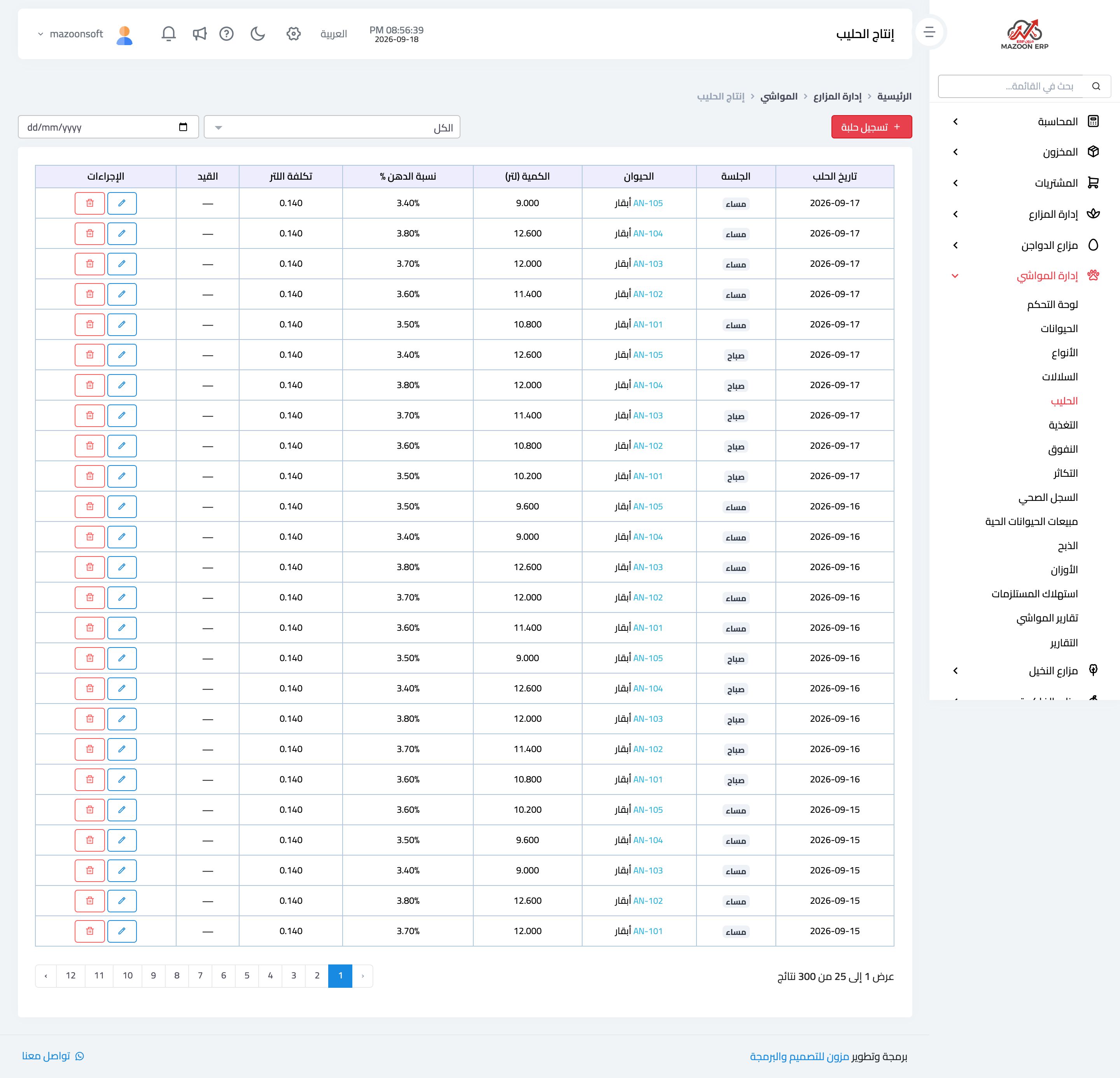
Milk is recorded — Figure 4 — per animal and per milking (morning and evening) in litres, with the fat percentage if you measure it. The stored milk enters as an item ready to sell.
Recording it head by head is what reveals the cow whose yield does not cover her feed — a culling decision that should never rest on a hunch.
Feeding
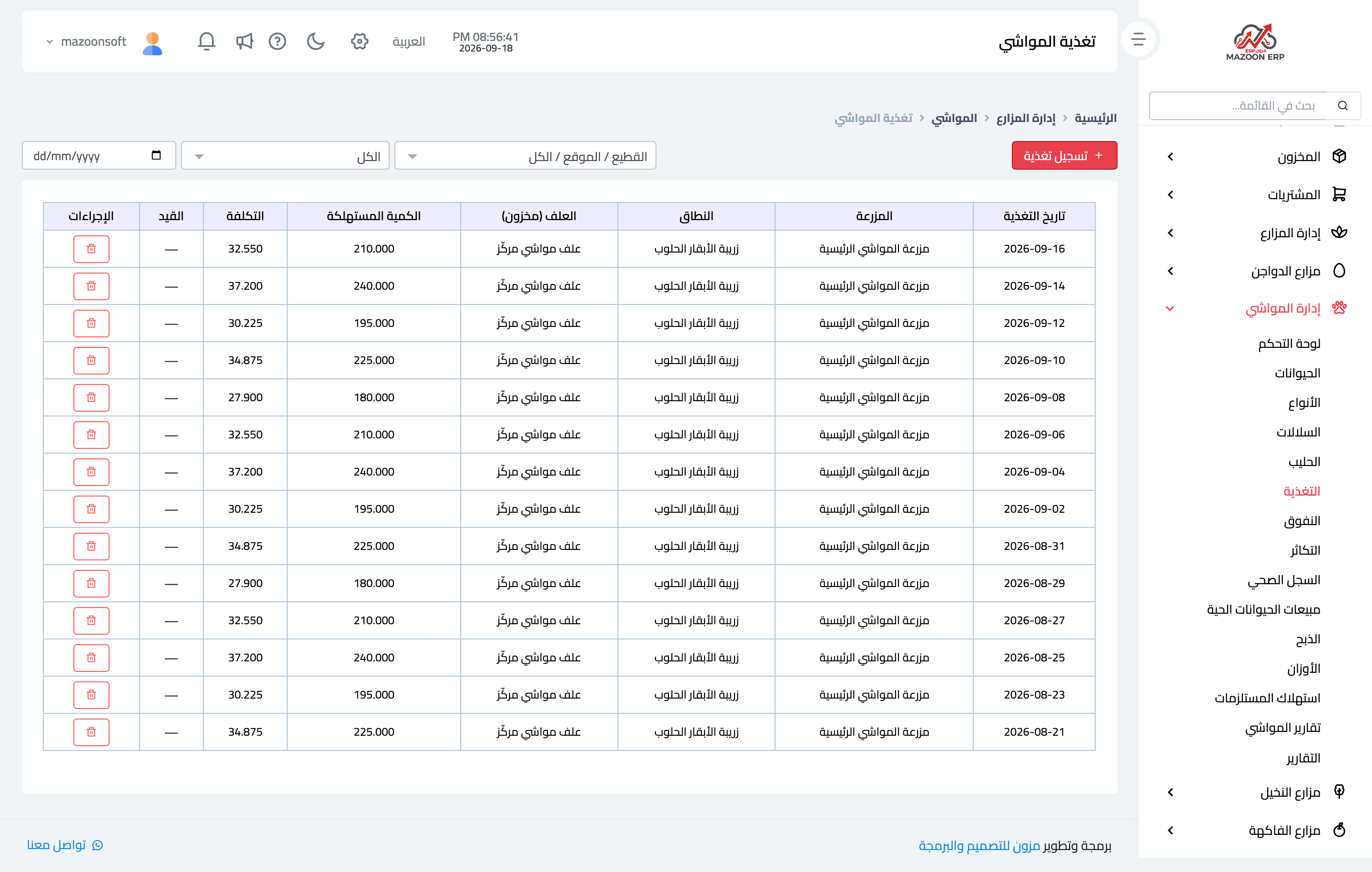
Feeding is recorded — Figure 5 — at the location level (a whole pen) or for a single animal, each record with its item, quantity, and cost.
Health record
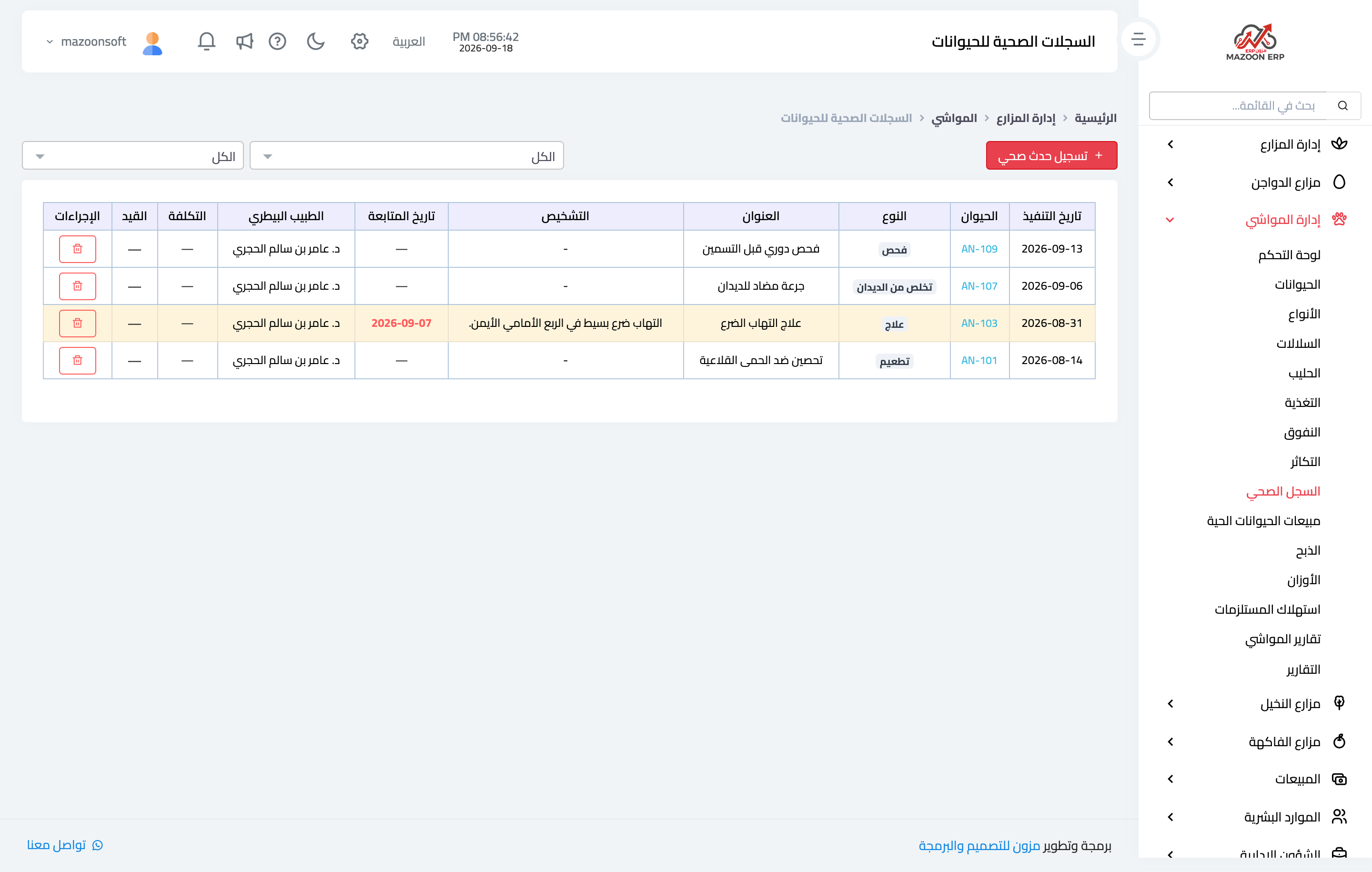
Every health event — Figure 6 — is recorded by type: vaccination, treatment, routine check, deworming, surgery. With it come the diagnosis, the vet, and the follow-up date — that last one is what stops the second dose being forgotten.
Breeding
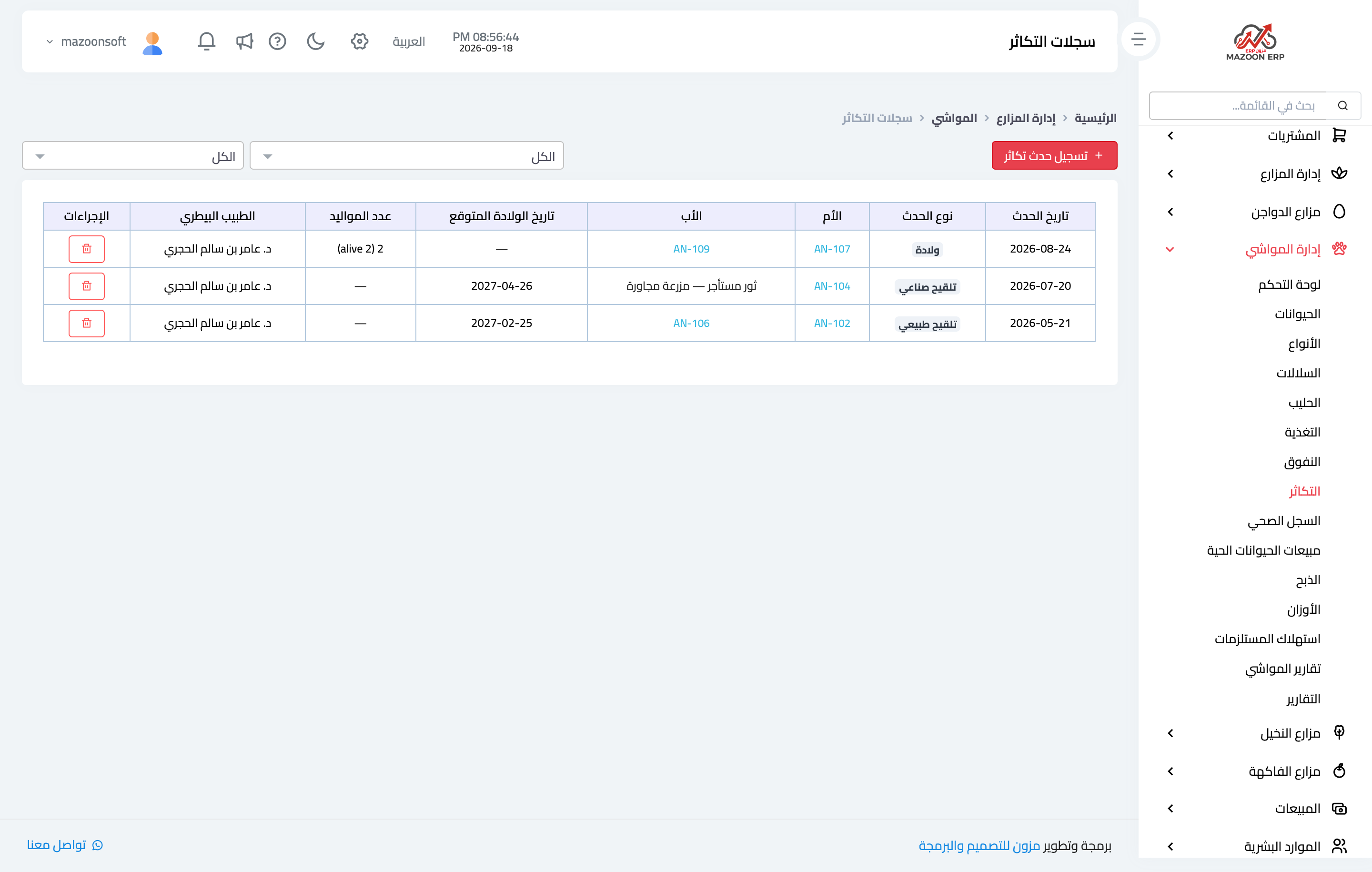
The breeding cycle — Figure 7 — is recorded as events: mating or artificial insemination, then pregnancy check, then birth or abortion, then weaning.
From the expected birth date the system builds the dashboard alerts, so you can prepare the place and the vet before the day arrives.
Reports
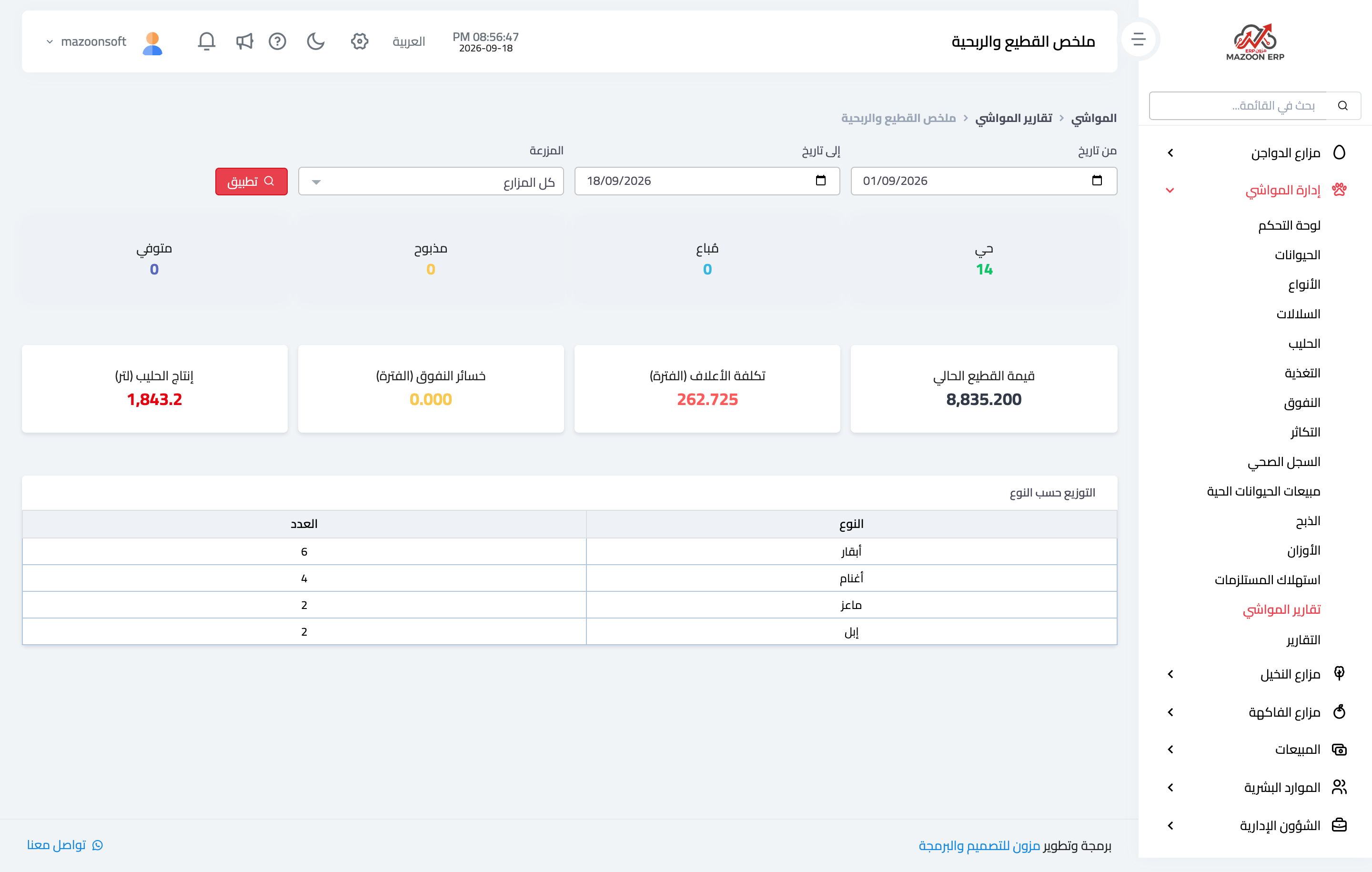
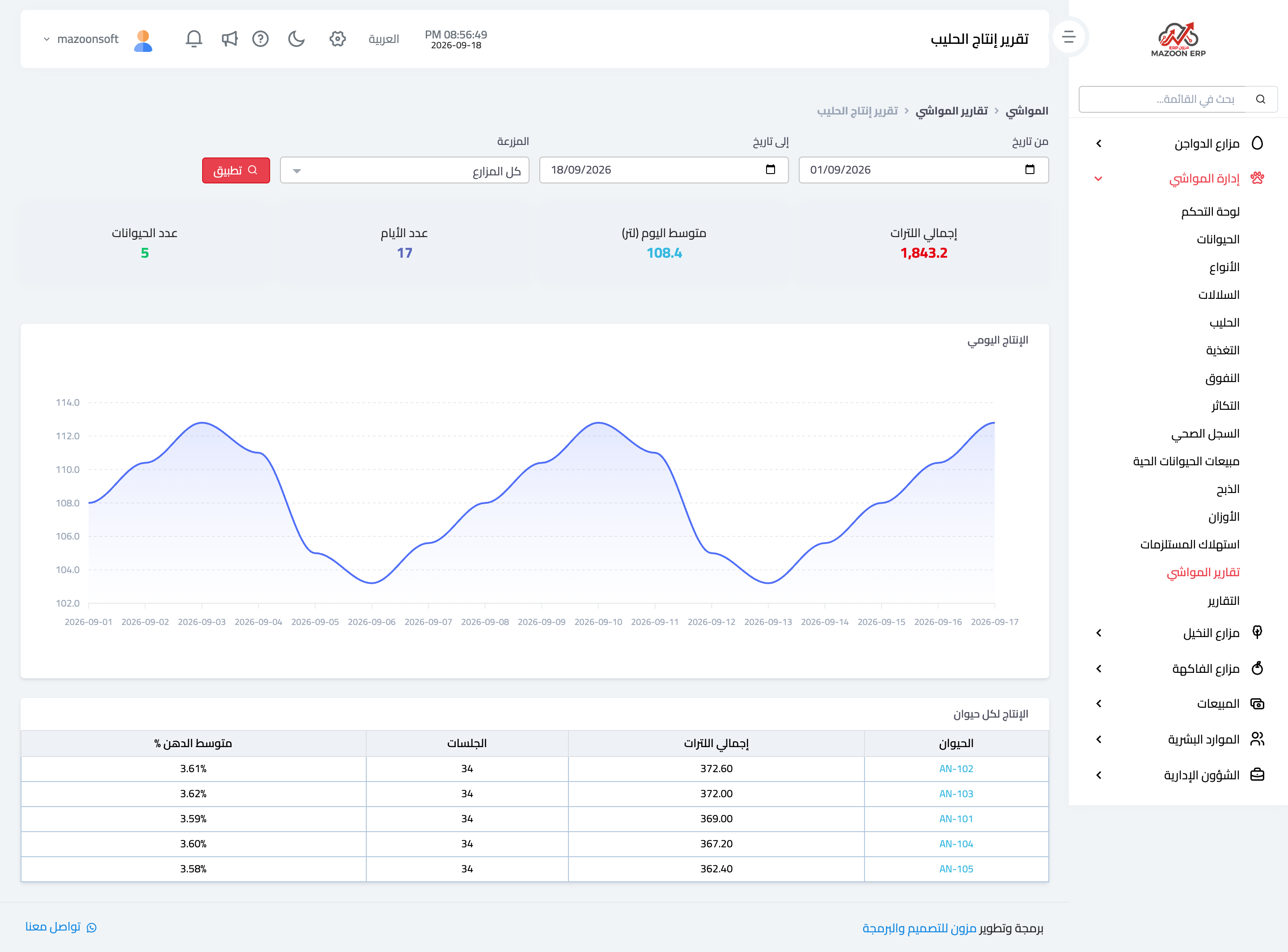
The herd report — Figure 8 — shows the composition of the herd by species, sex, and age. The milk report — Figure 9 — compares the animals’ output against each other over a period you choose.
Notes
- Tag the animals clearly and keep the number in the system identical to the ear tag; without that, individual recording is meaningless.
- Record the milk after each milking rather than at the end of the day; estimates ruin the comparison between head and head.
- Do not delete an animal that was sold or died; change its status instead, so its history and output stay in the reports.
- Set the follow-up date on every treatment; it is the difference between a course completed and one abandoned halfway.
Screenshots
Try what you just read on your own data
Open a free 7-day trial — no credit card, with your own company link in minutes.