
Palm and fruit farms: trees, seasons, and harvest
Palm and fruit farms work on the same logic: a numbered tree inside an orchard, then a season that is opened and against which the harvest accumulates, and treatments recorded through the year.
The dashboards
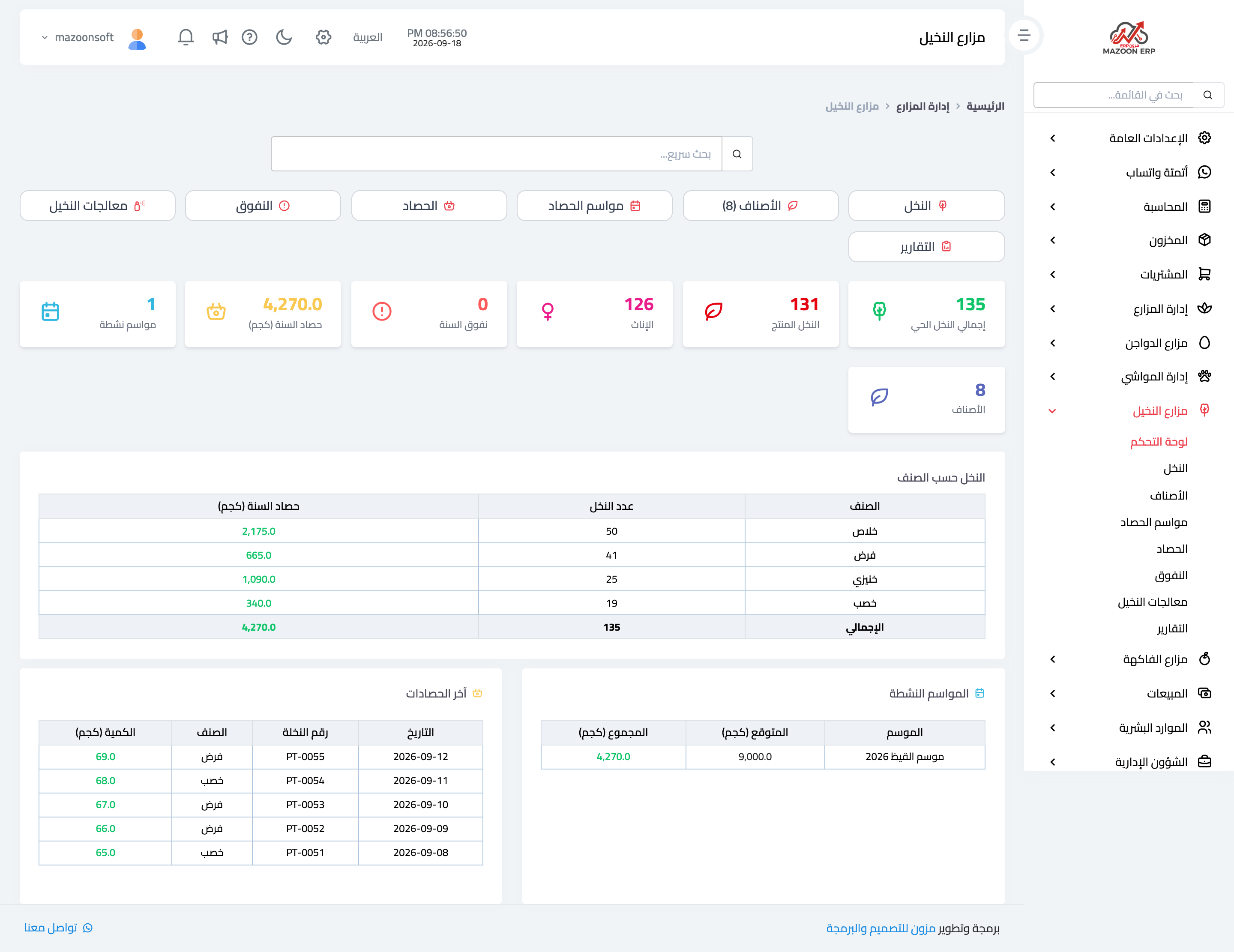
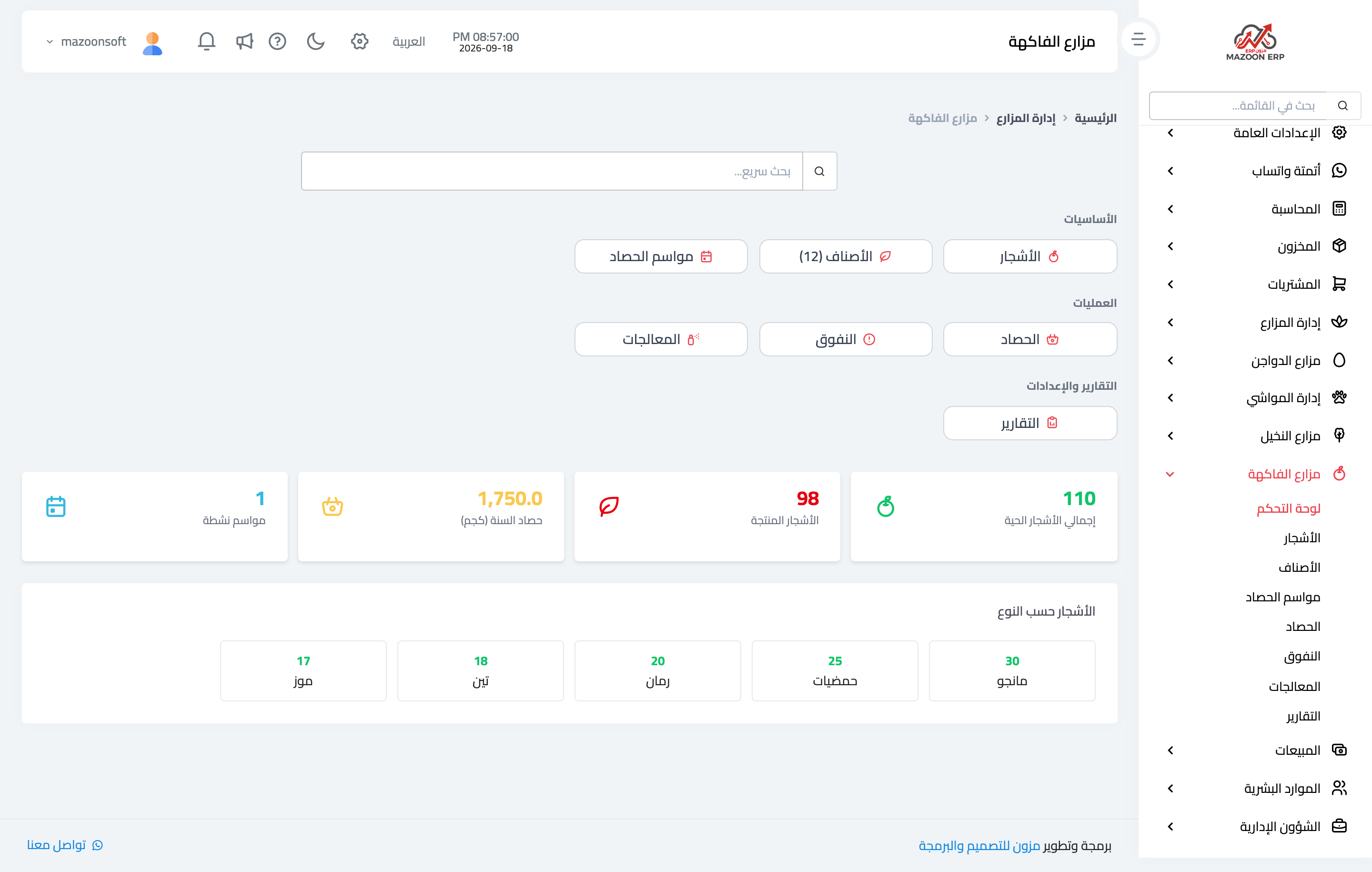
Each has its own dashboard — Figure 1 for palms and Figure 6 for fruit — showing the productive and young tree counts, the open season, and what has been gathered so far against what was expected.
Trees
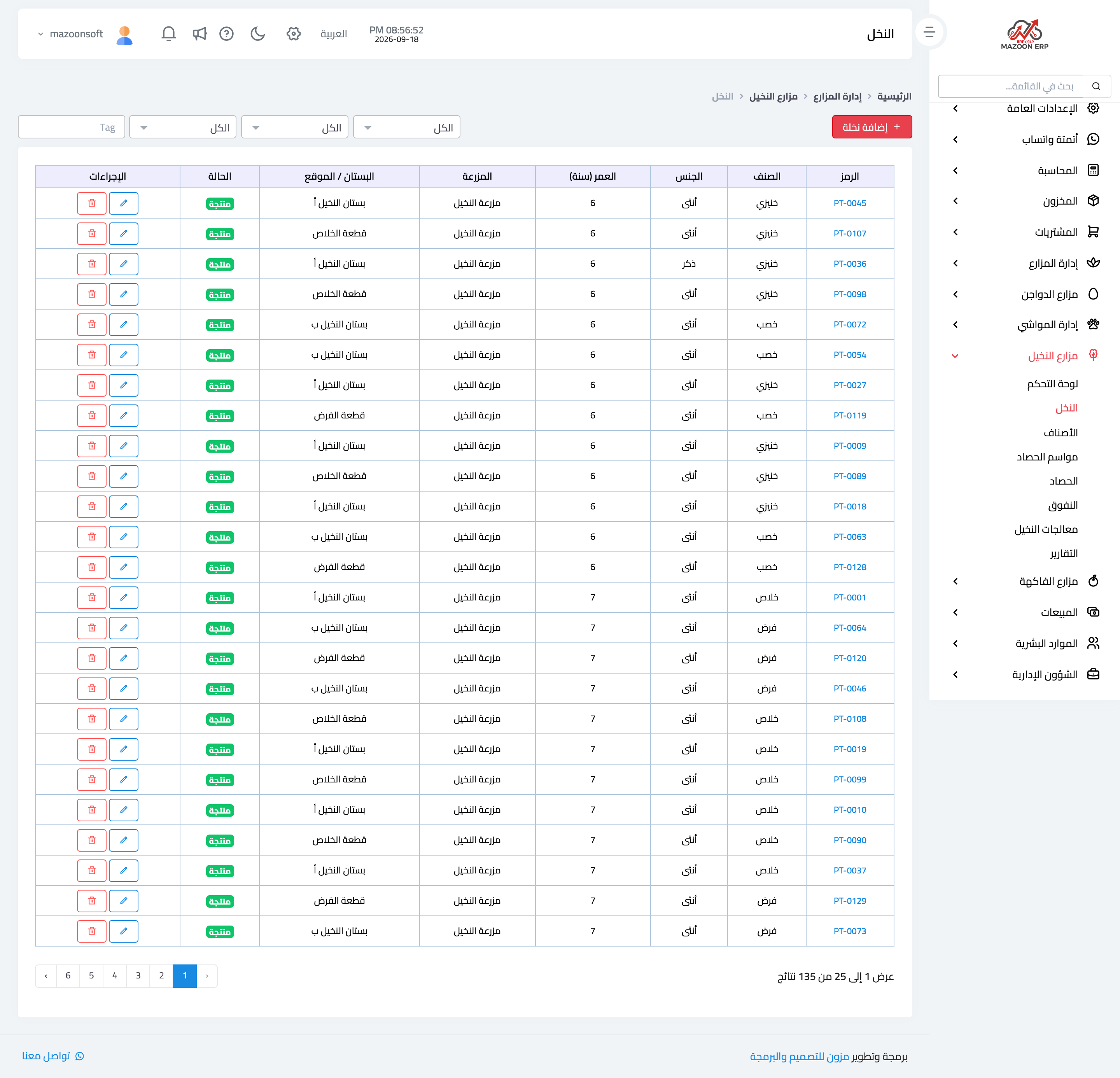
Each palm — Figure 2 — has a tag, a variety (Khalas, Fardh, Khunaizi, Naghal), a plot, a planting date, a sex (male for pollination or fruiting female), and a status (productive, young, dead, replaced).
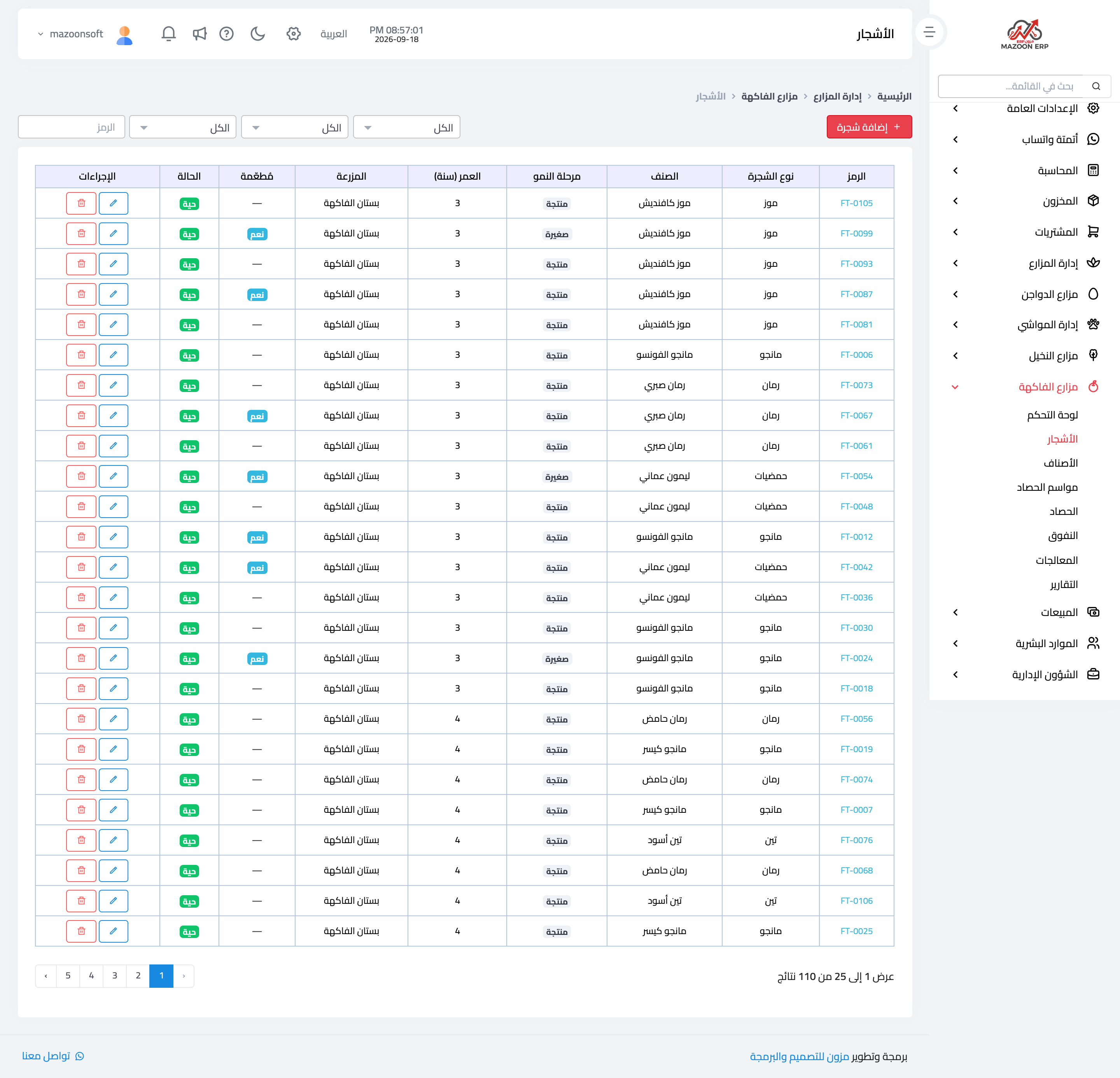
Fruit trees — Figure 7 — are the same, but carry a growth stage (sapling, juvenile, productive, aged) and a grafted switch.
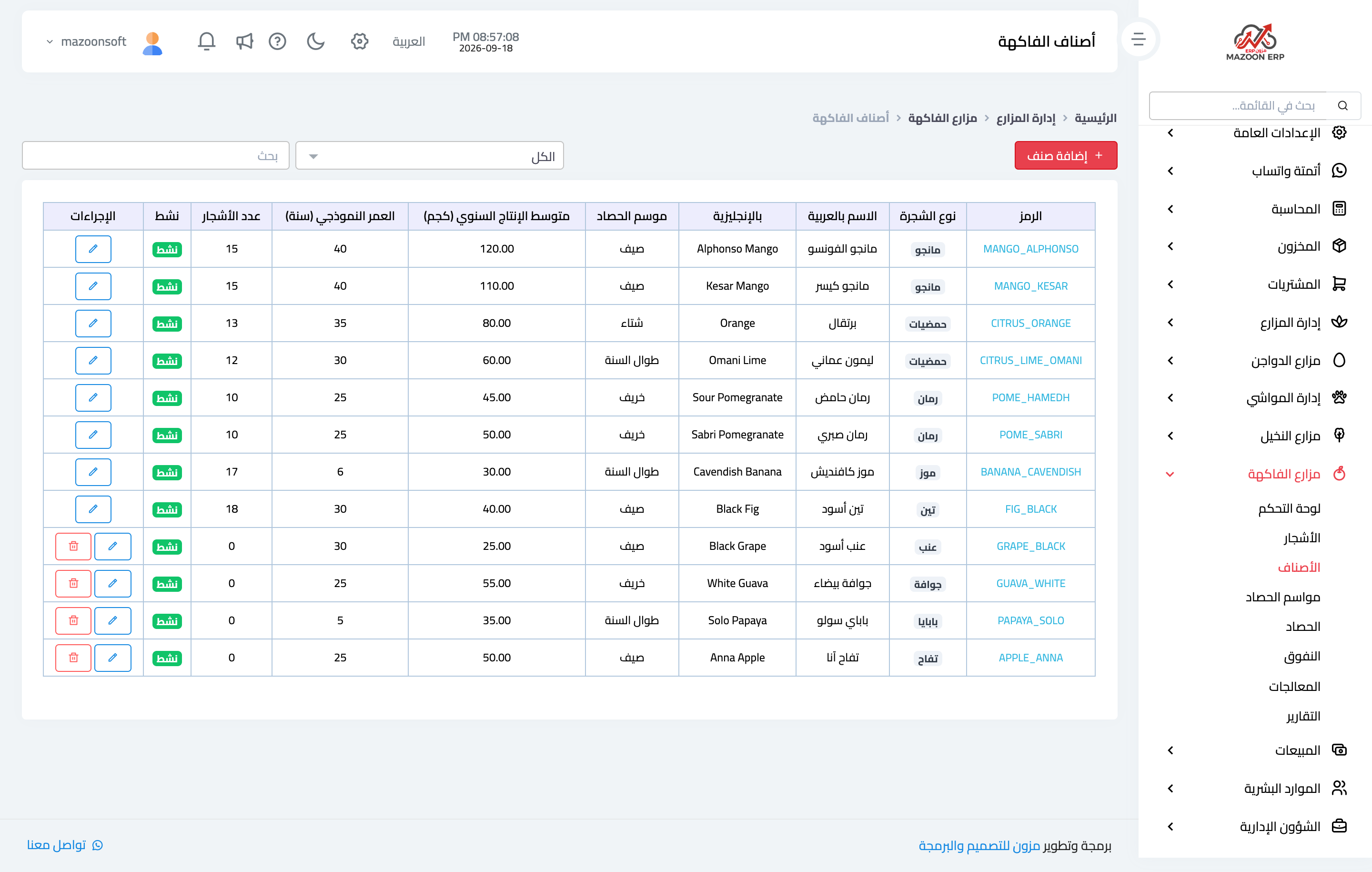
Each has its own varieties screen — Figure 10 shows the fruit varieties and the palms have the same — preseeded with the local varieties.
Seasons
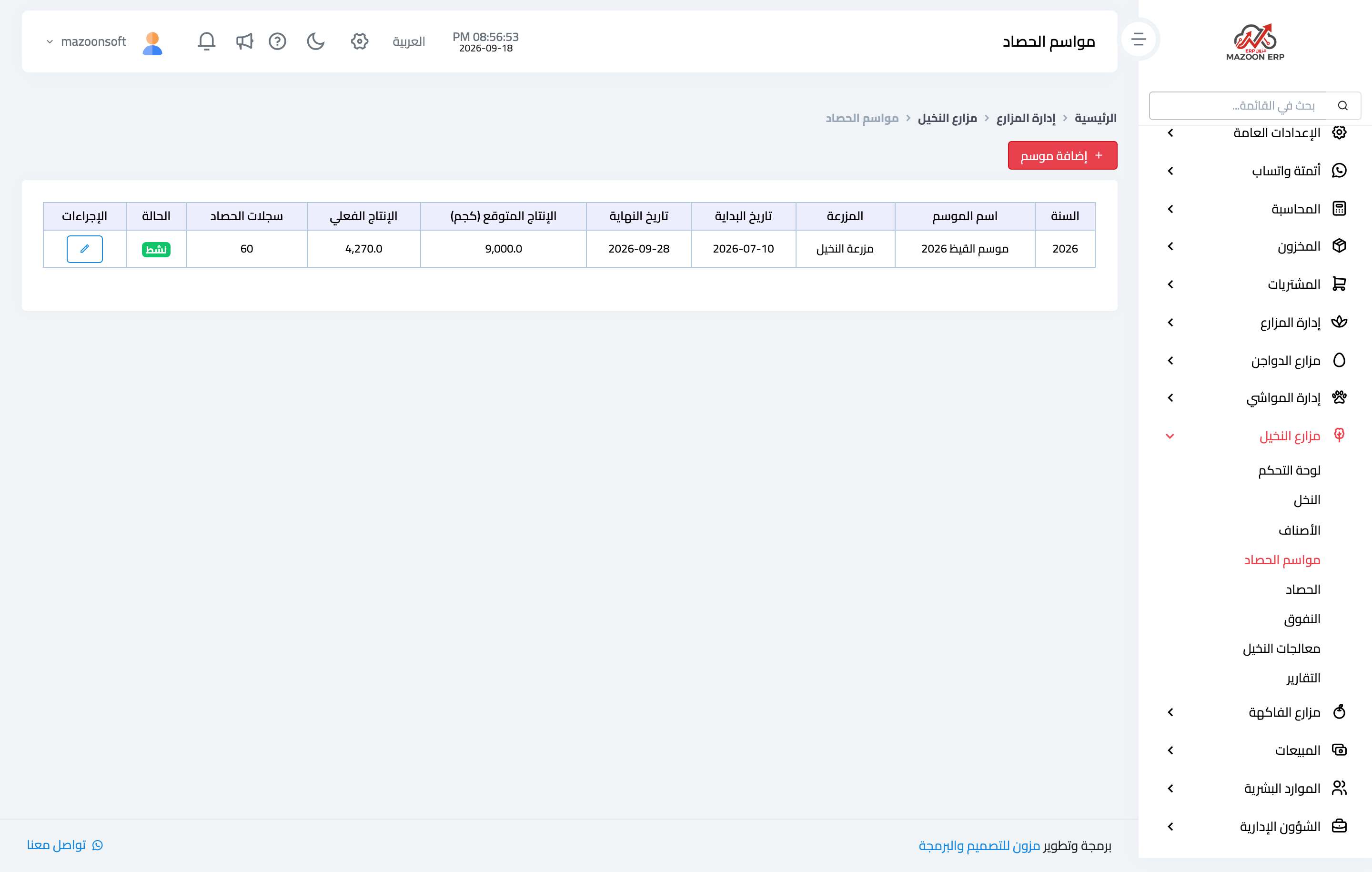
A season — Figure 3 — is a time container with a year, a name, start and end dates, and an expected yield. Every harvest is assigned to it, and the actual yield accumulates inside it.
Comparing actual against expected is the first benefit of a season; and year on year it tells you the effect of what you changed in irrigation or fertilising.
The harvest record
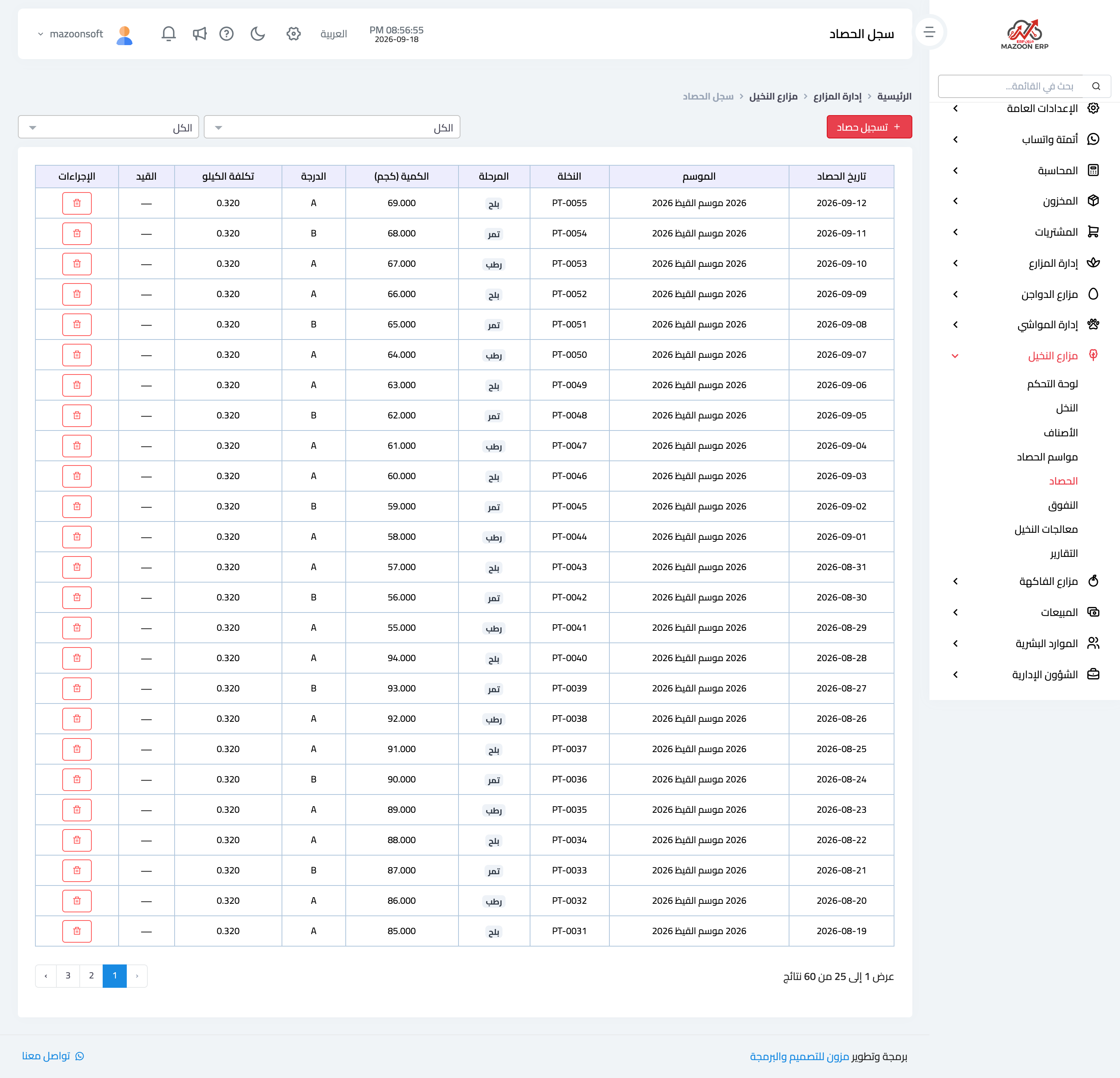
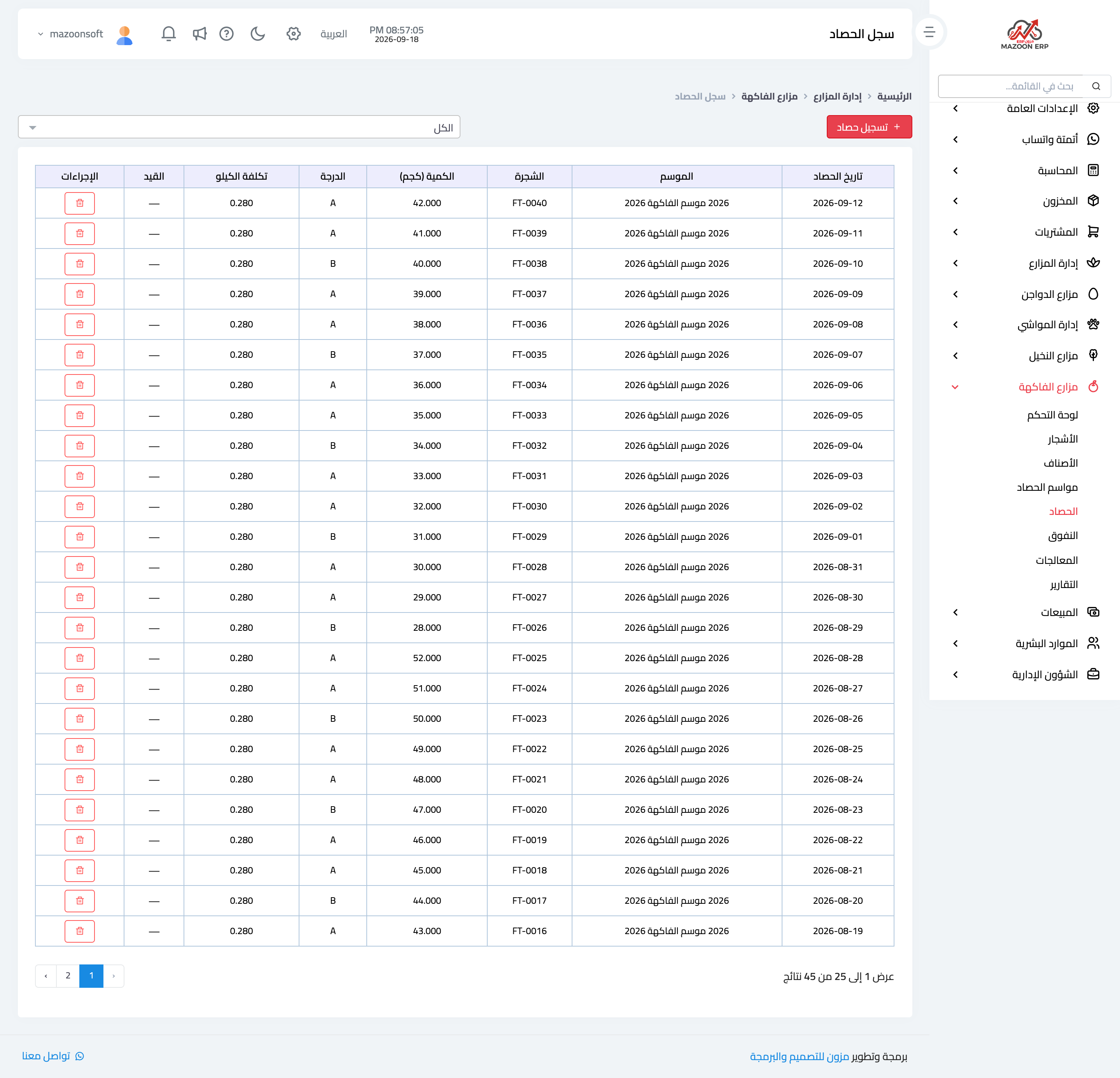
Every picking is recorded — Figure 4 for palms and Figure 8 for fruit — with the tree, the date, the quantity in kilograms, and the grade. For palms you also set the fruit stage: khalal, rutab, tamr — each with its own price and market.
The crop enters stock as an item at its cost, and is sold from the usual sales screens.
Agricultural treatments
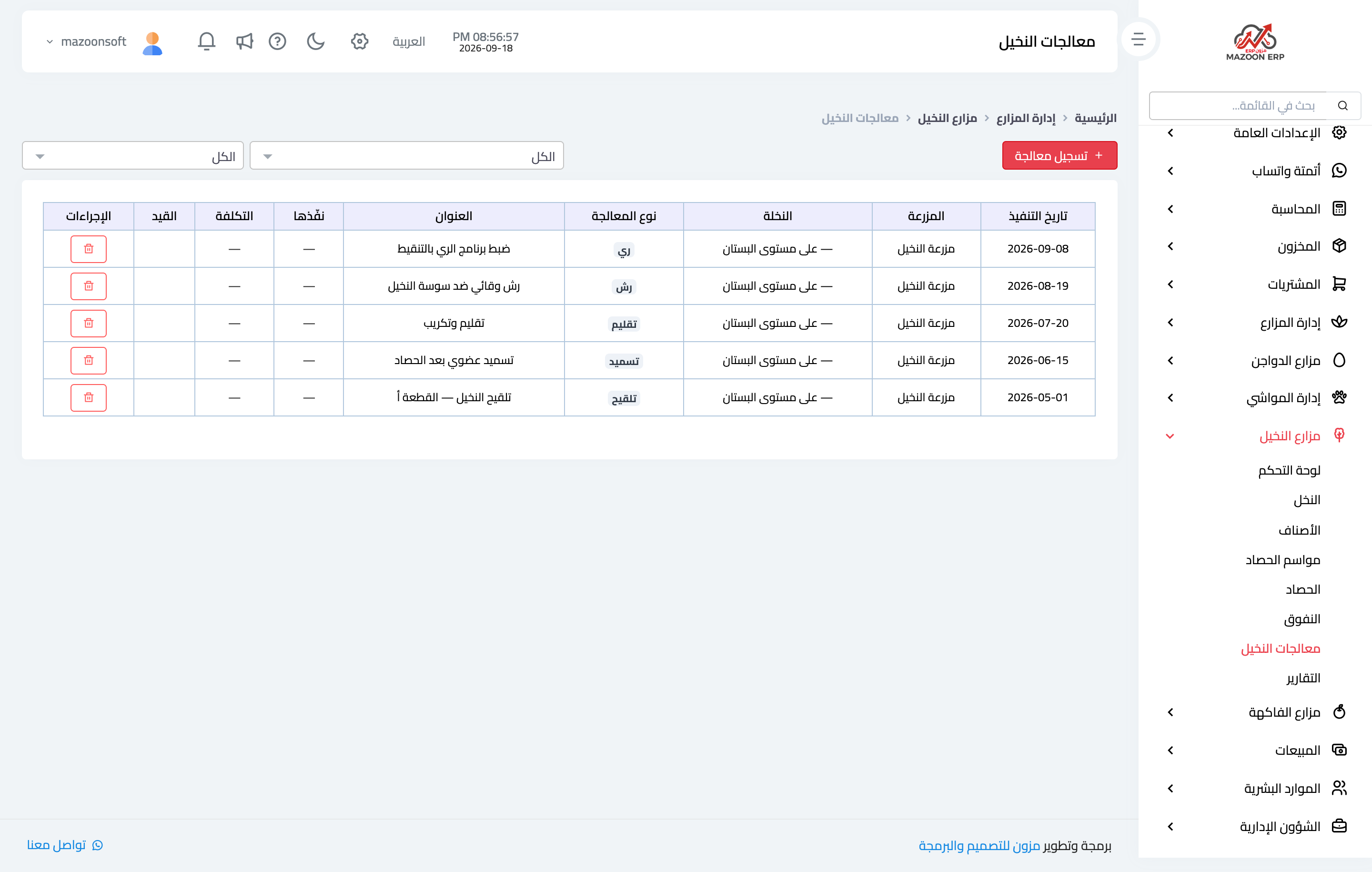
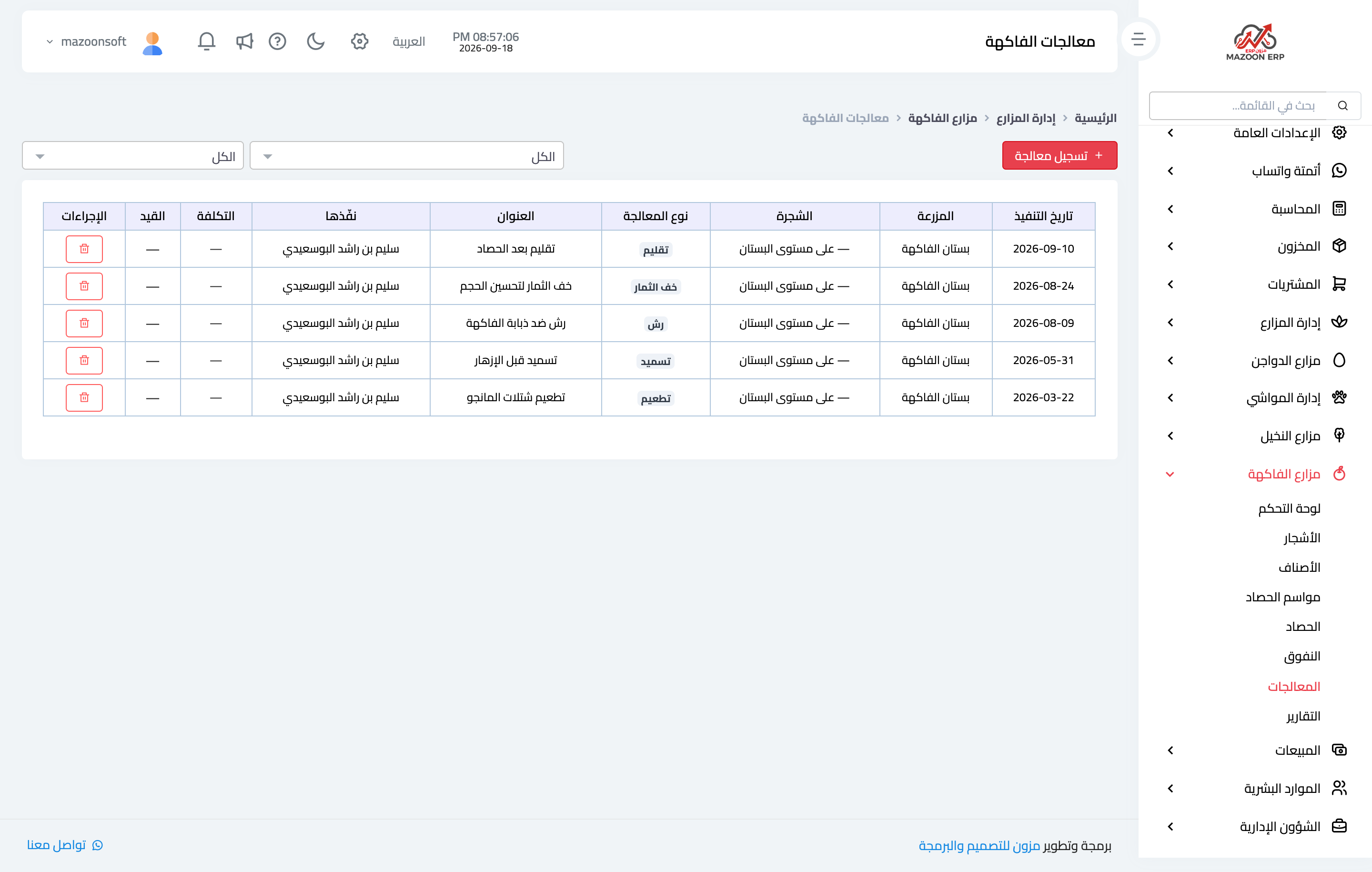
Every operation carried out on the trees is recorded — Figure 5 for palms and Figure 9 for fruit — by type: for palms pollination, pruning, fertilising, spraying, irrigation, fruit thinning, and for fruit grafting is added.
Each treatment carries who performed it, its date, and the fertiliser or pesticide consumed — and from these you know the cost of a single tree, not just of the farm.
Notes
- Number the trees in the field with small tags matching the system; without them, tying a harvest to a tree becomes guesswork.
- Open a new season each year rather than adding to an old one; comparing season with season is what helps you most.
- Record the pollination when it happens; it is the first thing you go back to if the crop comes in weak.
- Update a tree’s status to “dead” or “replaced” as it happens; the productive count is the basis for estimating next season.
Screenshots
Try what you just read on your own data
Open a free 7-day trial — no credit card, with your own company link in minutes.