
The purchase deal: from agreement to owning the vehicle
The purchase deal is what turns a recorded vehicle into one you actually own. It is not a "purchase price" field on the car's card — it is a document in its own right, with a number, stages, payments and an accounting entry.
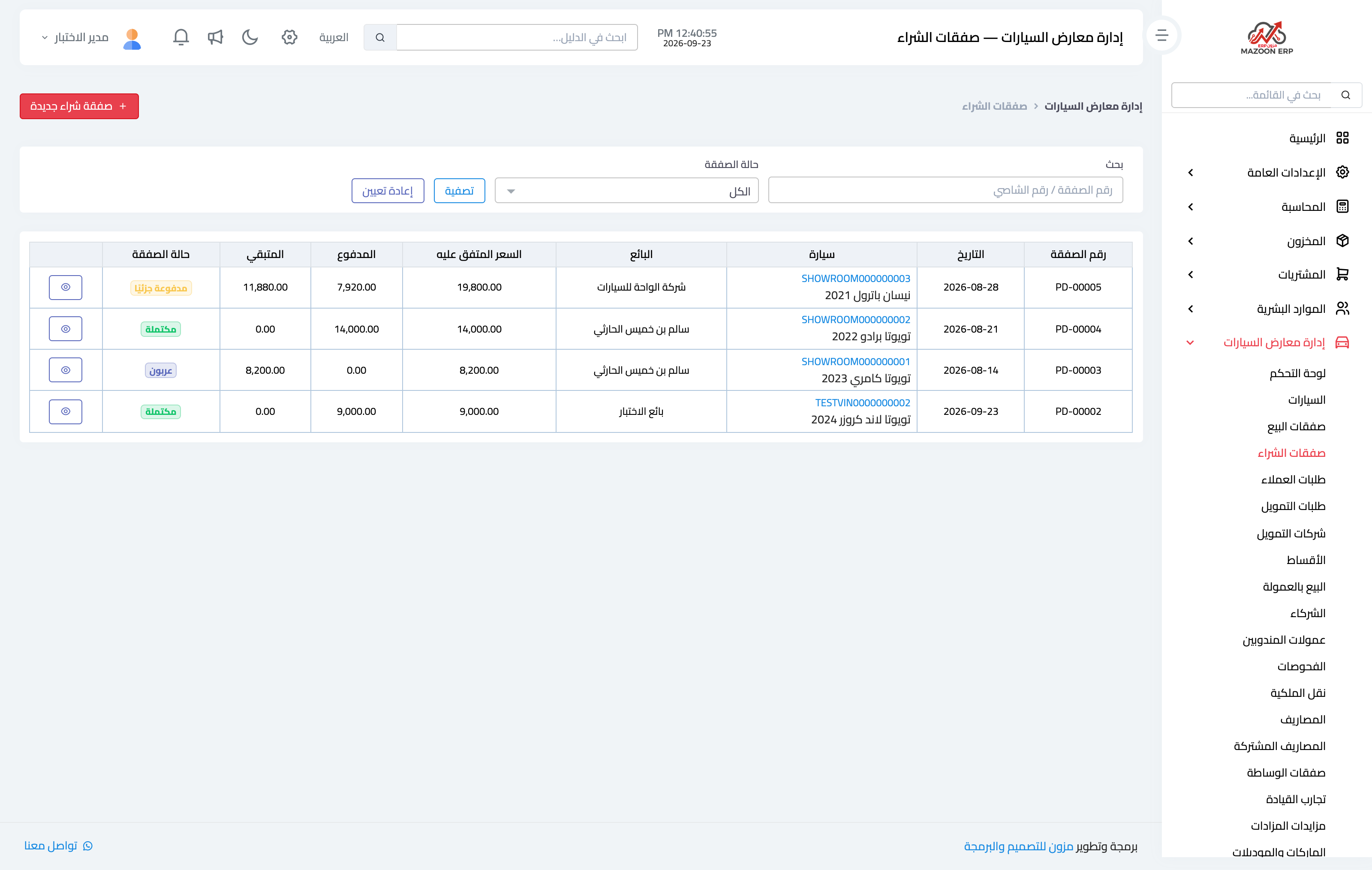
Image 1 — the purchase deals screen.
Purchase source
You record where the vehicle came from: an individual, a company, or an auction. The source is more than archival detail; it appears in the reports and shows you which buying channel brings you the best margin.
The three stages
- Open: a price has been agreed and not yet paid in full. The vehicle is recorded, but the deal is still outstanding against you.
- Payments: each payment is recorded with its date and method (cash, bank, cheque), and the system shows the remaining balance after each one.
- Completed: once payment is complete the deal closes, the vehicle enters your stock at its cost, and the accounting entry posts.
An important rule: a deal cannot be completed before the full amount is paid. If you try, the system tells you exactly what is still outstanding. This stops a vehicle entering stock at a cost that was never actually paid, which would make your profit look larger than it is.
Cancelling
A completed deal cannot be cancelled. An open one can, recording the reason, who cancelled it and when, and reversing its payments. The strictness exists because cancelling a deal whose cost is already in stock corrupts both the stock and the profit figures.
What changes after completion?
- The vehicle's total cost is calculated: purchase price plus the expenses the showroom bears.
- The days in stock counter starts.
- The vehicle is ready to move to "available" and be published to the site.
Screenshots
Try what you just read on your own data
Open a free 7-day trial — no credit card, with your own company link in minutes.