
Inspections and test drives: documentation that protects you
Both screens serve one purpose: giving you a written record of a vehicle's condition and of who had it and when. That is what settles any later dispute with a buyer or with the owner of a consigned car.
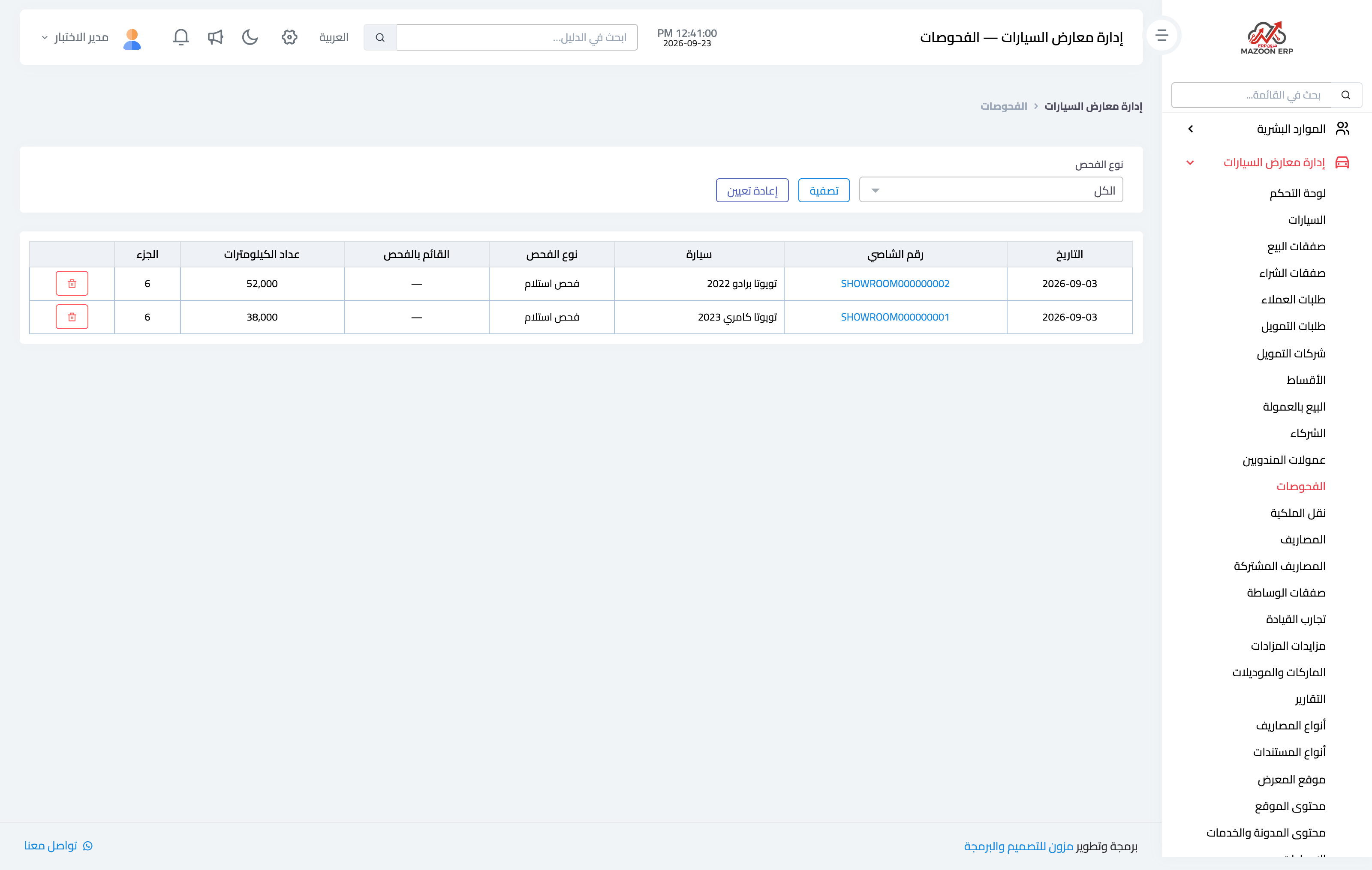
Image 1 — the inspections screen.
Technical inspection
An inspection is recorded against the vehicle with its date and odometer reading, then the car's areas are rated one by one: engine, transmission, brakes, suspension, electrical, body. Each area takes one of four ratings — good, fair, poor, damaged — with a note where needed.
The two inspection types
- Intake inspection: when the vehicle arrives. Its odometer reading updates the car's own mileage, so the record stays accurate without double entry.
- Delivery inspection: before handing the car to the buyer. It documents the condition at handover, so a buyer cannot return a week later with a fault that was — or was not — there.
Inspection results appear on the vehicle's page and can be printed, with the official inspection certificate attached alongside.
Test drives
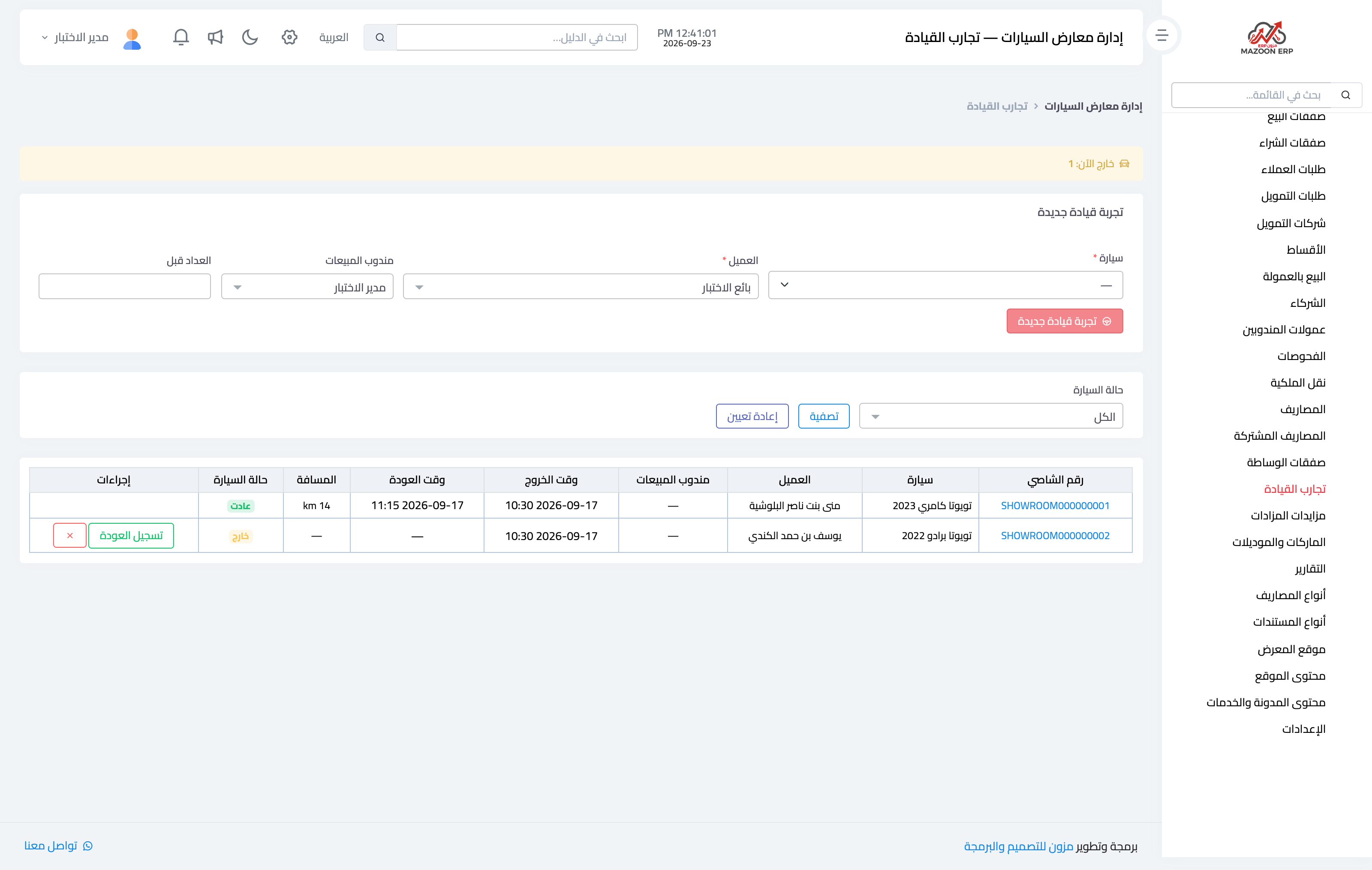
Image 2 — the test drives screen.
A drive is recorded with the customer's name, the time out and the odometer reading, then closed on return with the time back and the new reading. The system refuses to let the same vehicle go out on two overlapping drives — so you never hand over a car that is already off the premises.
What it gives you in practice
- You know at any moment which vehicles are out and with whom.
- The difference in odometer readings shows the distance covered on the drive.
- The number of drives on a car is a useful signal: one that has been driven often and still has not sold usually has a price problem, not an interest problem.
Screenshots
Try what you just read on your own data
Open a free 7-day trial — no credit card, with your own company link in minutes.