
Receipt and payment vouchers
Vouchers are the actual movement of cash: a receipt voucher documents money in, a payment voucher documents money out. An invoice — sales or expense — establishes the obligation; the voucher records the cash movement itself.
Receipt vouchers
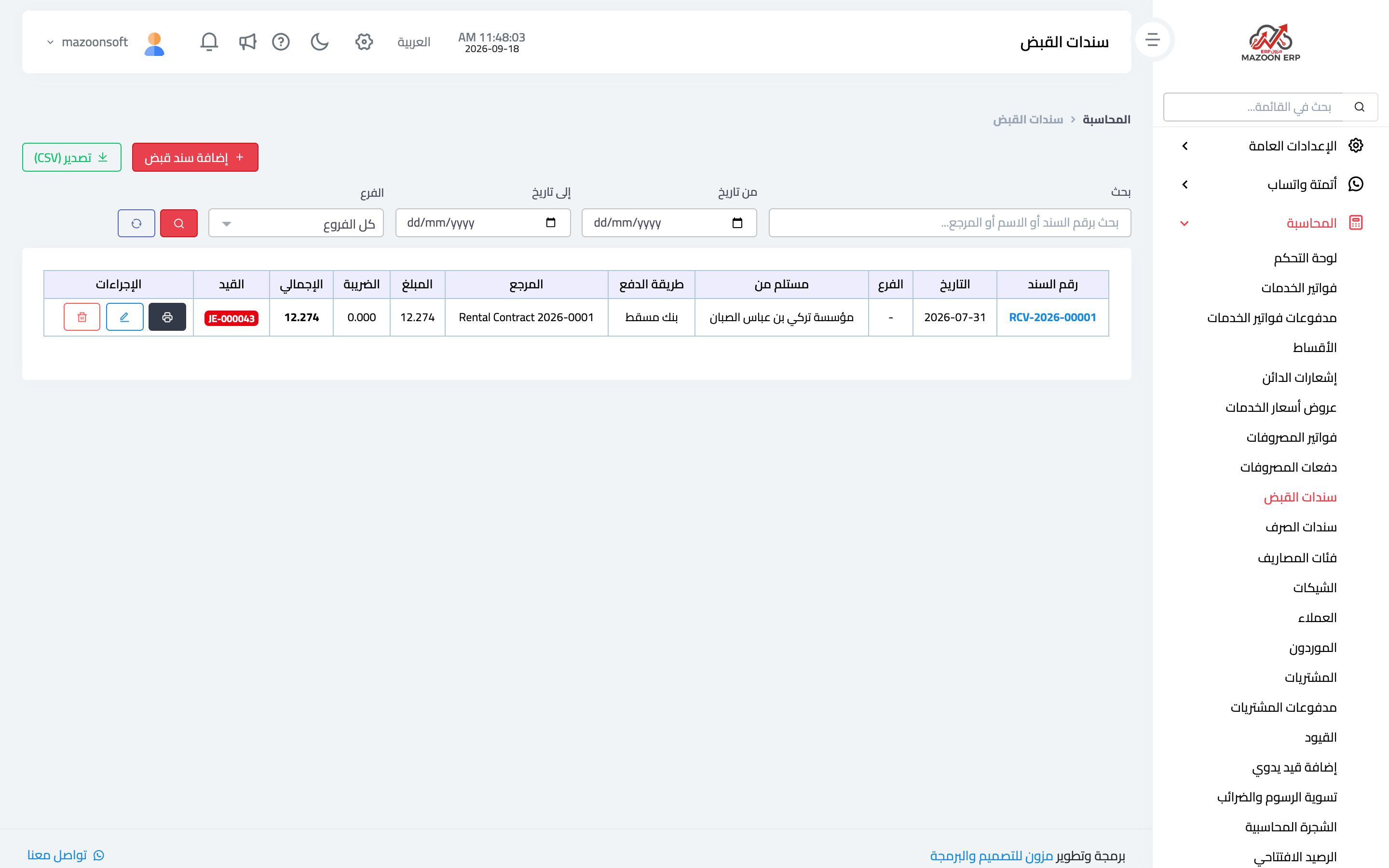
From the Accounting panel open the Receipt Vouchers card. Recorded vouchers appear as in image 1 with their dates, parties, amounts and payment methods.
Recording a receipt voucher
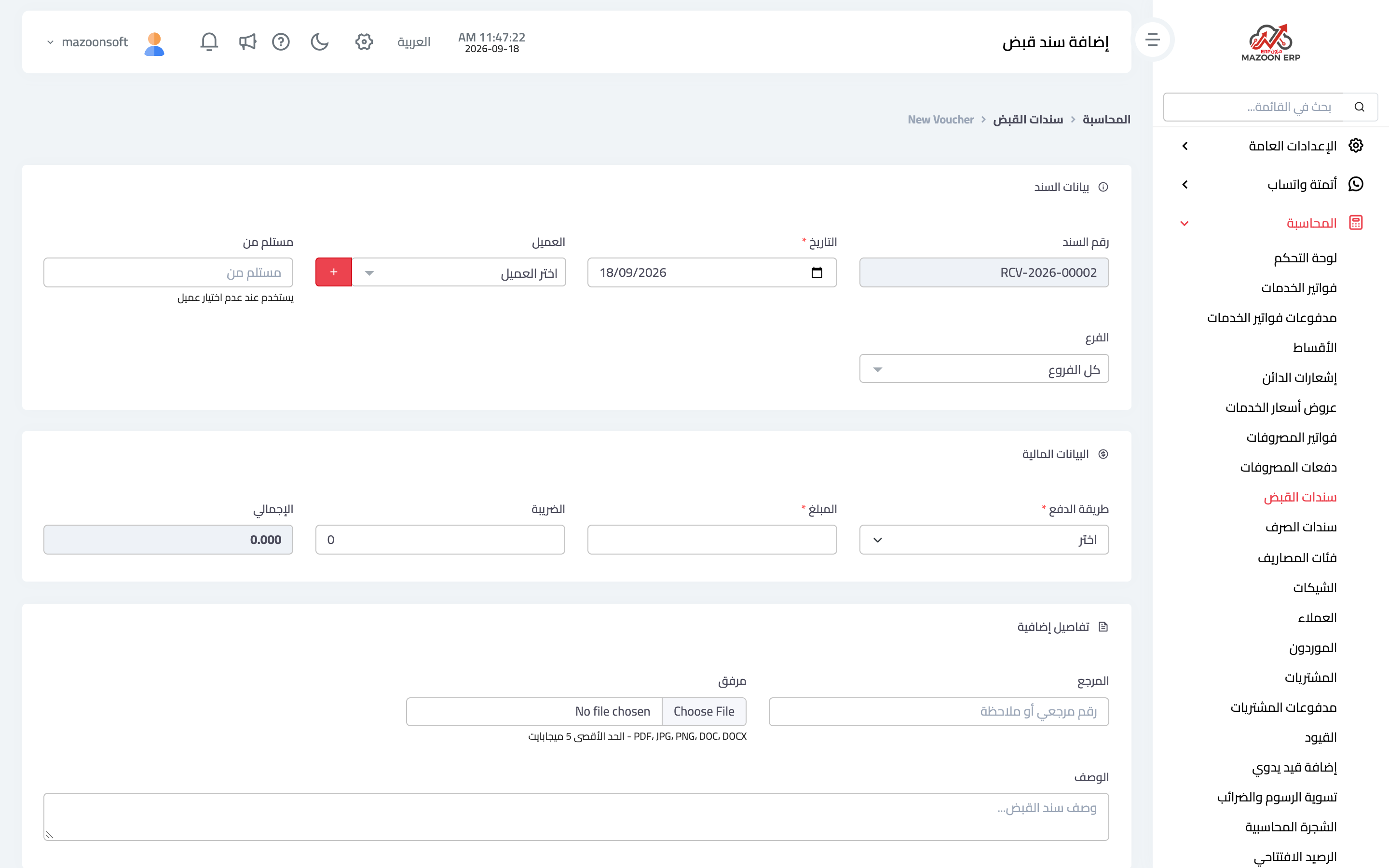
Press Add Receipt Voucher to open the page in image 2, split into three sections:
- Basic details — the customer (or add a new one from the same button), the date, and a description of what the money is for.
- Financial details — the amount and payment method. For a cheque, the cheque fields appear: number, date, deposit bank and status — under collection or cleared.
- Additional details — an attachment (PDF, image or document up to 5 MB), such as a transfer receipt.
On save, the cash box or bank behind the payment method increases and the customer's balance falls by the same amount.
Payment vouchers
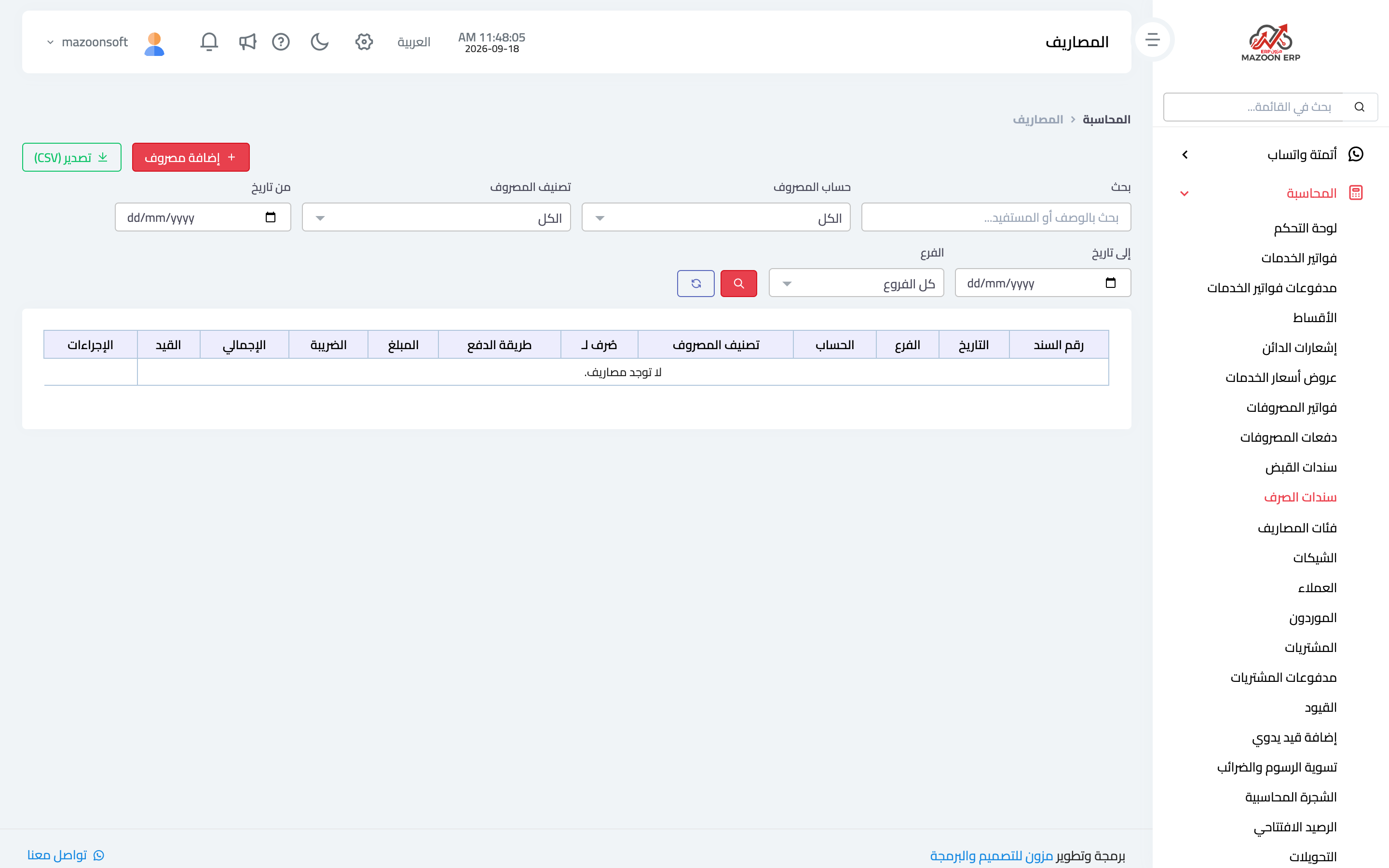
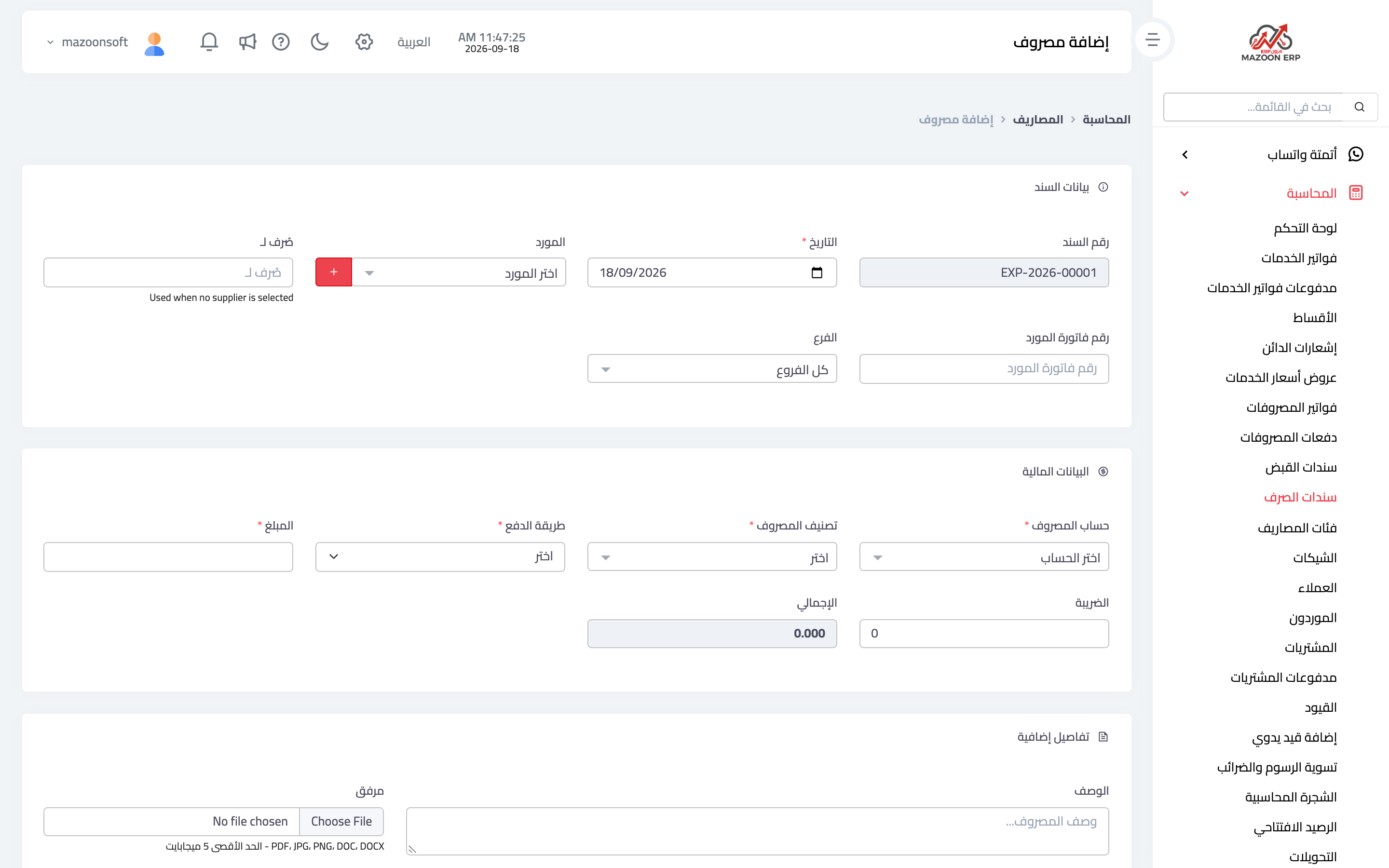
The Payment Vouchers card works the other way round, as in image 3. Adding one — image 4 — you enter:
- Paid to — the supplier or beneficiary, with the option to add a new supplier from the same screen.
- Expense account and expense category — what puts the payment in its right place in the profit and loss statement.
- Amount, payment method, date and description.
- For cheques: cheque number, date, the bank it is drawn on, and its status — not yet disbursed or cleared.
- An optional attachment.
Cheque status, and why it matters
A written cheque is not cash gone yet. Its status is what separates a paper bank balance from a real one: leave it "under collection" or "not yet disbursed" until it actually moves on the bank statement, then update it. Otherwise you read bank balances that do not match your statement, and reconciliation becomes impossible.
When to use a voucher and when an invoice
- A customer paying an existing invoice ⟵ record the collection under service invoice payments so it links to the invoice and its instalments.
- Money in with no invoice behind it (an advance, a miscellaneous amount) ⟵ a receipt voucher.
- An expense with a supplier invoice ⟵ an expense bill, then its payment.
- A direct cash payment with no invoice ⟵ a payment voucher.
This distinction is what keeps aging reports and customer statements correct, instead of showing invoices as unpaid when their money has already arrived.
Screenshots
Try what you just read on your own data
Open a free 7-day trial — no credit card, with your own company link in minutes.