
Loans and fixed assets
Two cards for what outlives the monthly cycle: a loan you repay over years, and an asset whose value is written down over its useful life. Both generate their periodic entries automatically once defined.
Loans
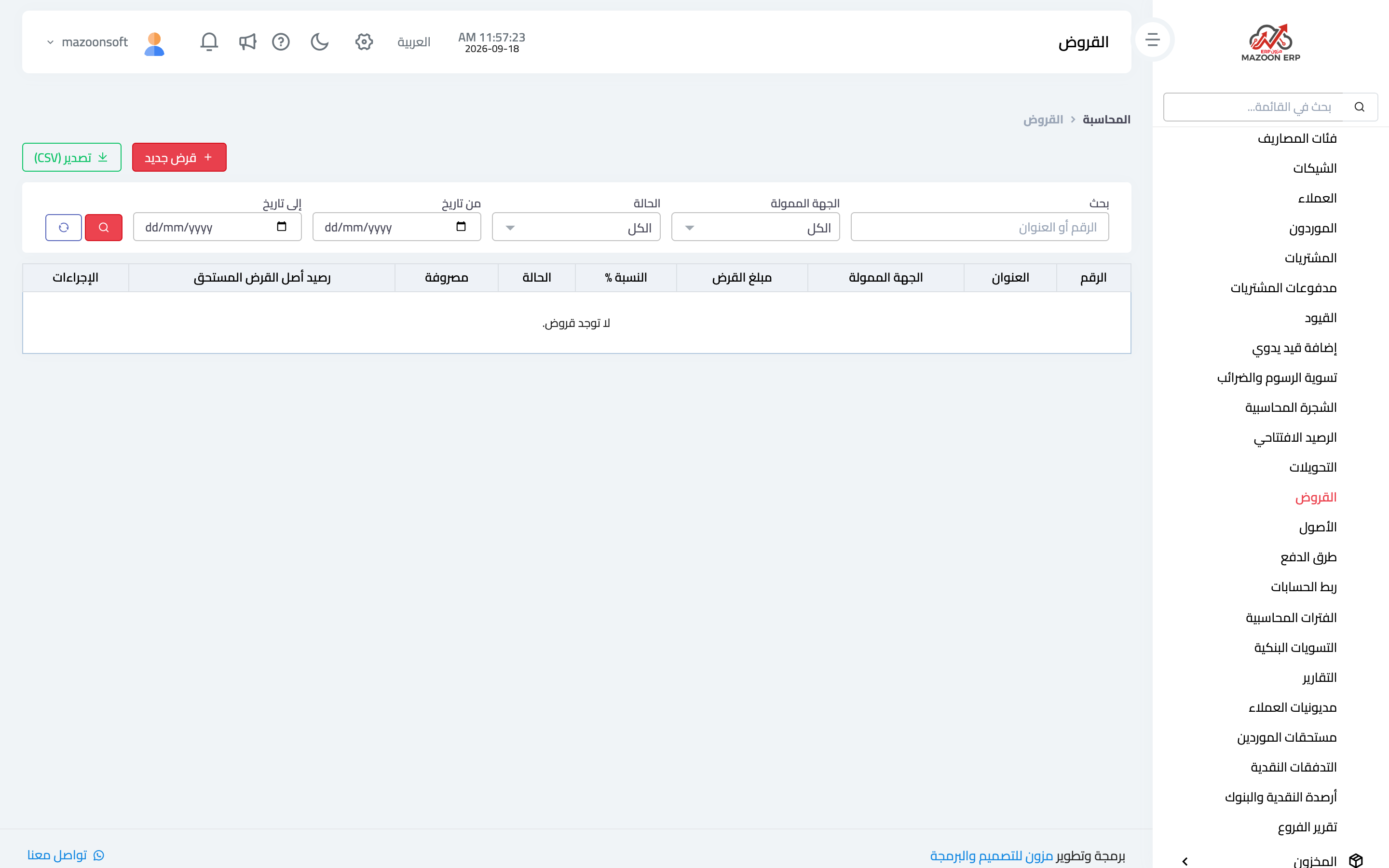
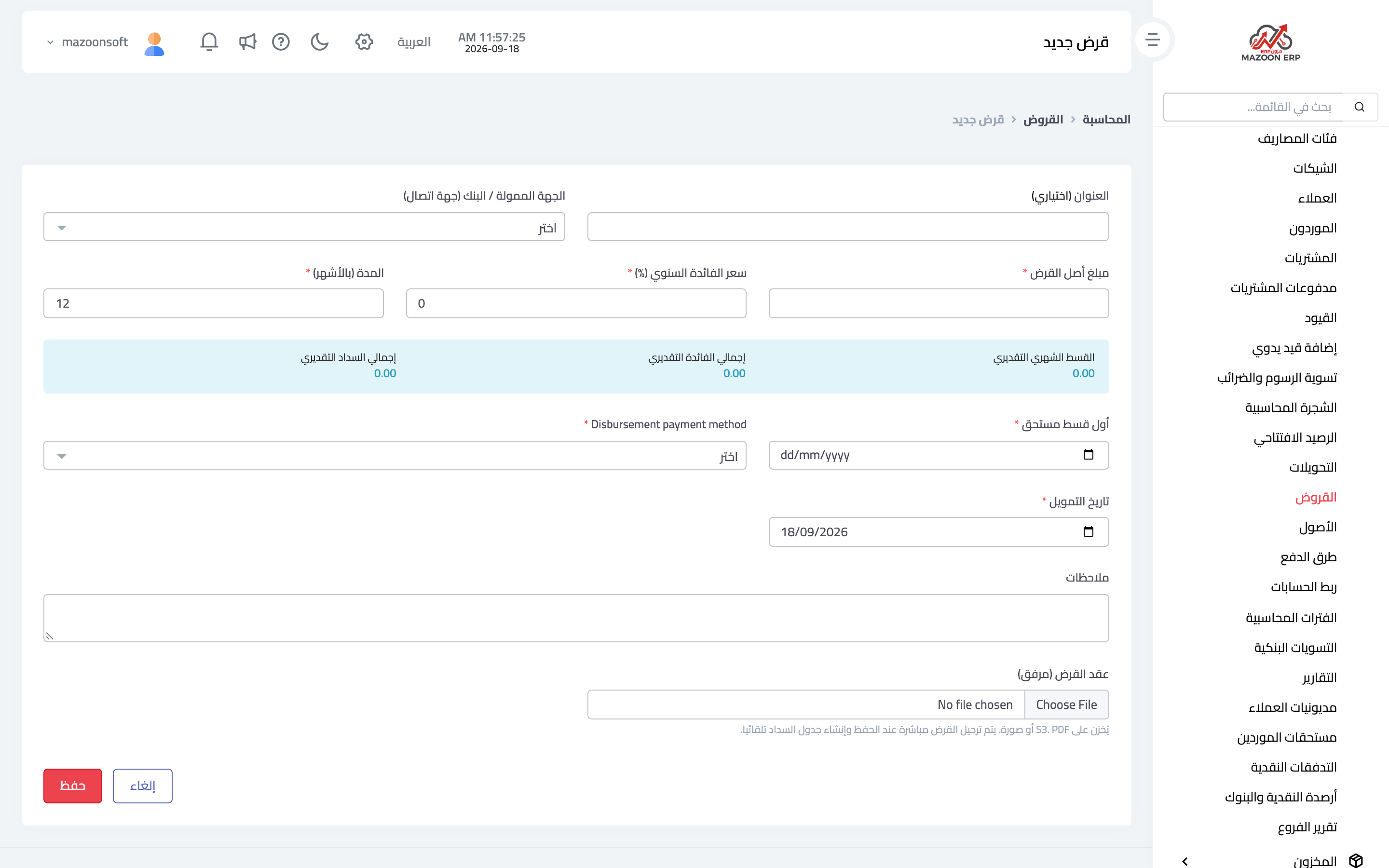
The Loans card — image 1 — lists your loans and outstanding balances. To record a new one — image 2 — you enter:
- Lender — the bank or party, chosen from your contacts.
- Principal amount and annual interest rate.
- Disbursement date and the method it was received by — the account the money landed in.
- First instalment due date and the number of instalments.
- The loan contract as an attachment, and notes.
As you type, the system shows an instant estimate: the expected monthly instalment, total interest and total repayment — so you can check the figures before saving.
On save the loan is posted immediately and the instalment schedule is generated automatically, so you follow repayment from the schedule instead of calculating each instalment by hand. The reports page has a loan reports group: loan statement, upcoming instalments, interest analysis, loan portfolio and loan-to-ledger reconciliation.
Fixed assets
A fixed asset is something you own and use for years: a vehicle, a device, furniture, equipment. It is not treated as an expense in the month of purchase; its cost is spread across its useful life through depreciation.
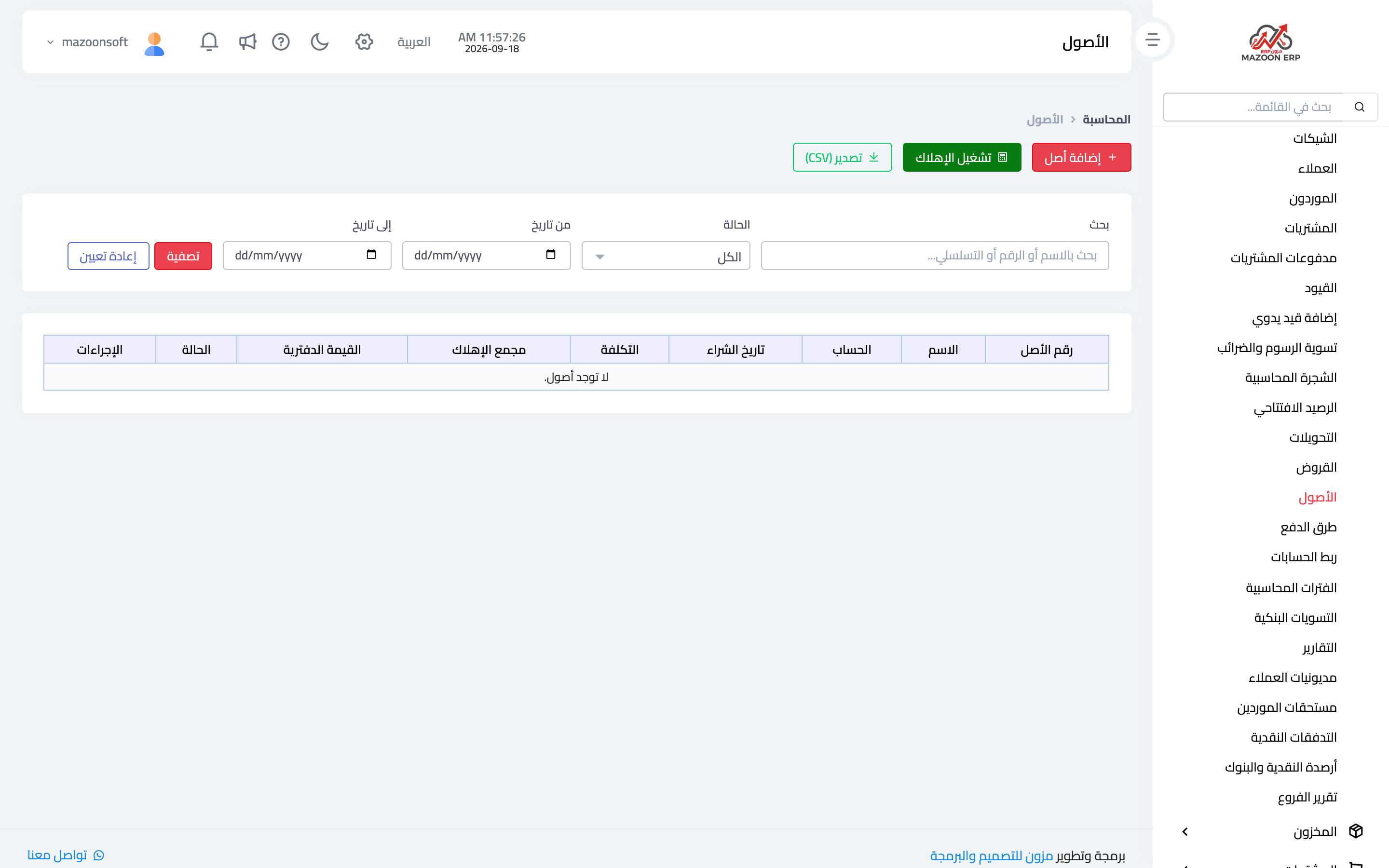
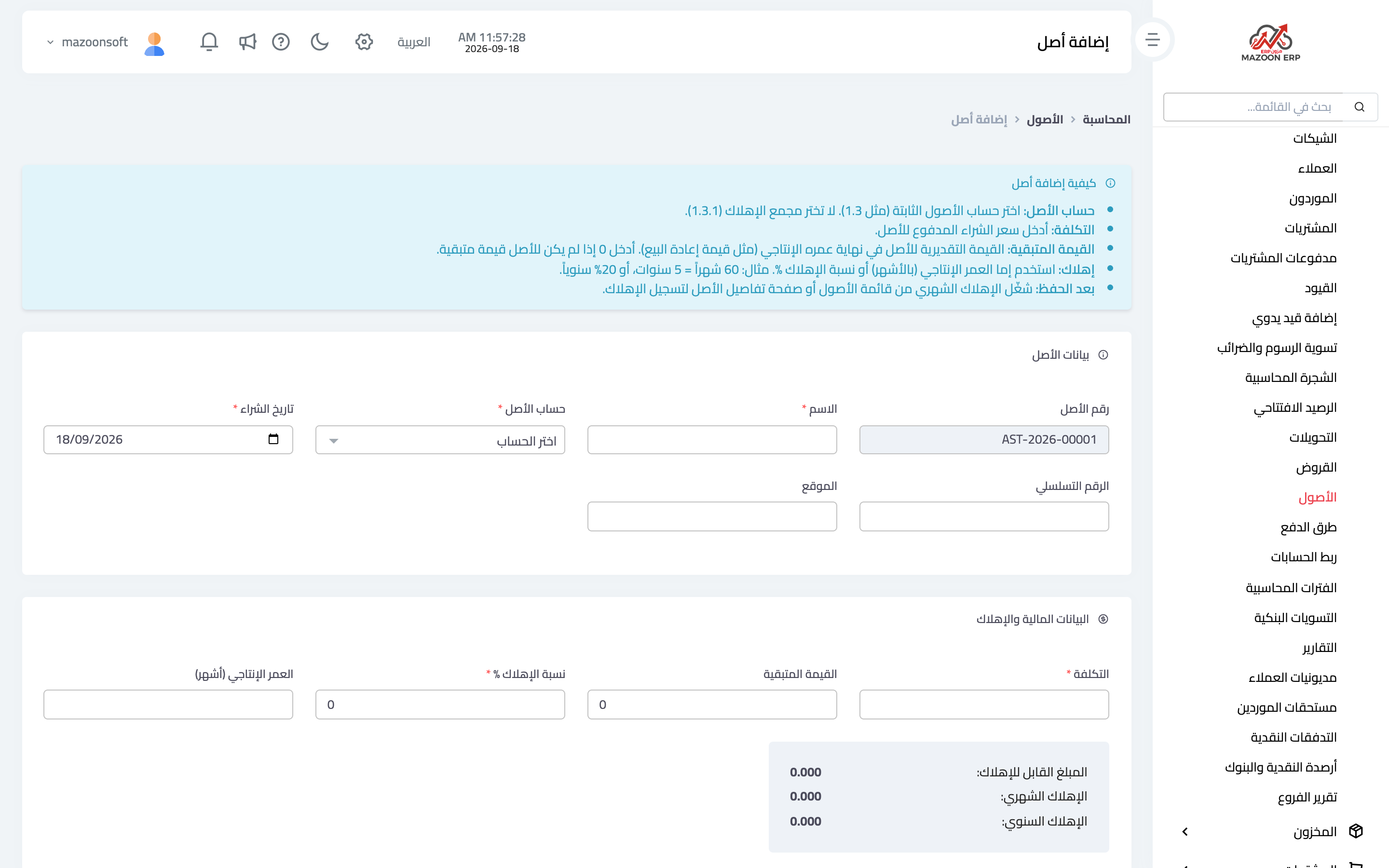
The Assets card — image 3 — lists your assets and their book values. To add one — image 4 — you enter:
- Asset number, description and location.
- Asset account — choose the fixed assets account (e.g. 1.3), not accumulated depreciation (1.3.1). This is the most common mistake on this screen.
- Cost — the purchase price actually paid.
- Residual value — the expected value at the end of its useful life (its resale value); enter zero if there is none.
- Annual depreciation rate — the system shows the depreciable amount, the annual depreciation and the monthly depreciation as soon as you enter it.
After saving, the system records the periodic depreciation entries, so the asset's book value stays current on the balance sheet without monthly intervention from you.
Mistakes worth avoiding
- Recording an asset purchase as an operating expense — it inflates the month's expenses and understates your assets.
- Selecting the accumulated depreciation account instead of the asset account when adding it.
- A depreciation rate that does not fit the asset; check your company policy or ask your accountant before entering it, because changing it later requires adjustments.
Screenshots
Try what you just read on your own data
Open a free 7-day trial — no credit card, with your own company link in minutes.