
Delivery notes, receipt vouchers and sales returns
Three documents surround the invoice: a delivery note records goods leaving, a receipt voucher records money arriving, and a sales return handles what comes back.
Delivery notes
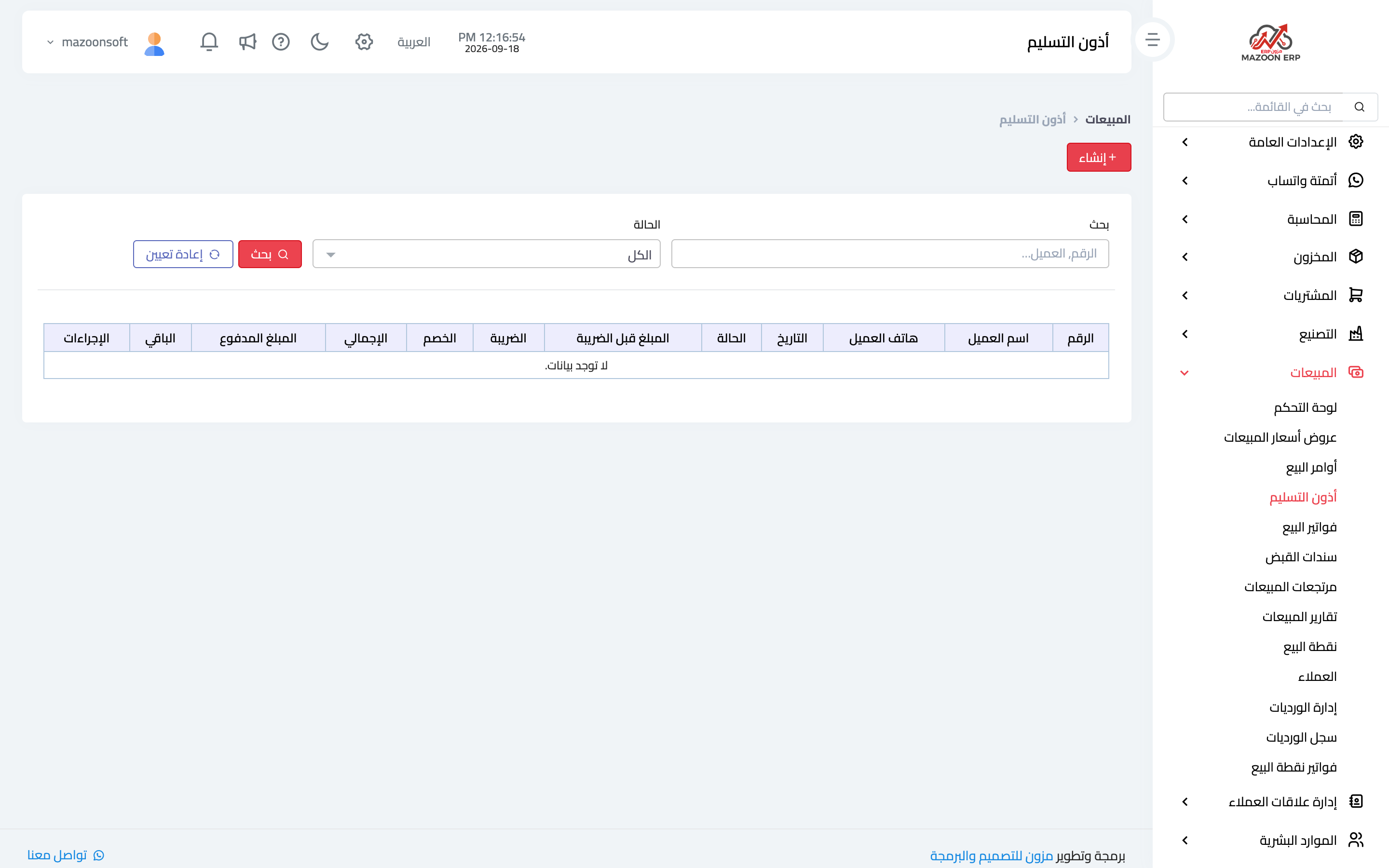
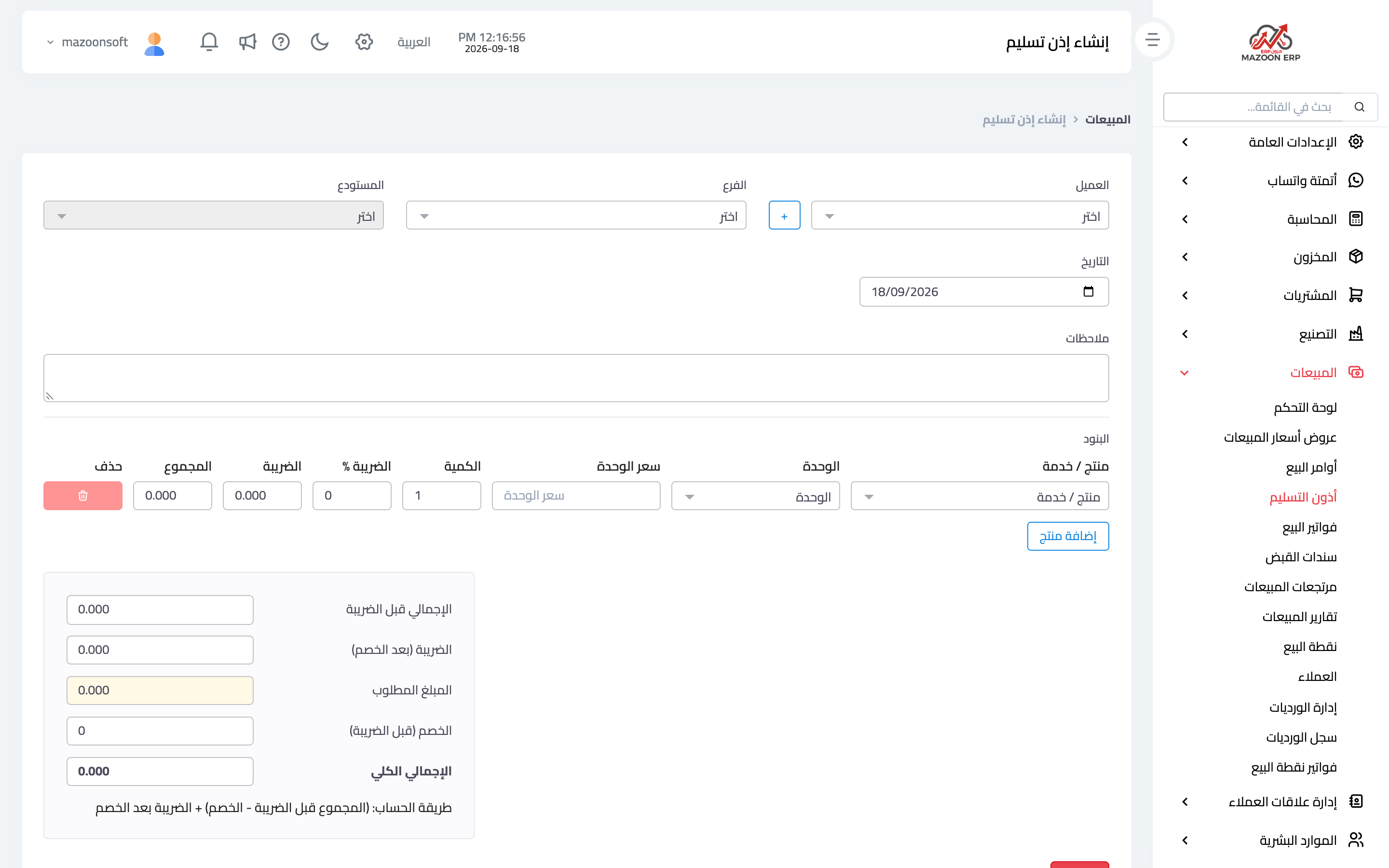
A delivery note is what the recipient signs on handover. From the sales dashboard open the Delivery Notes card — image 1 — then Add as in image 2: customer, the related sales order or invoice, warehouse, the items and quantities delivered, and the recipient's details.
Its value shows most in credit sales and staged delivery: you know what was actually handed over and what remains, and you keep a signed document that settles any later dispute about receipt.
Receipt vouchers
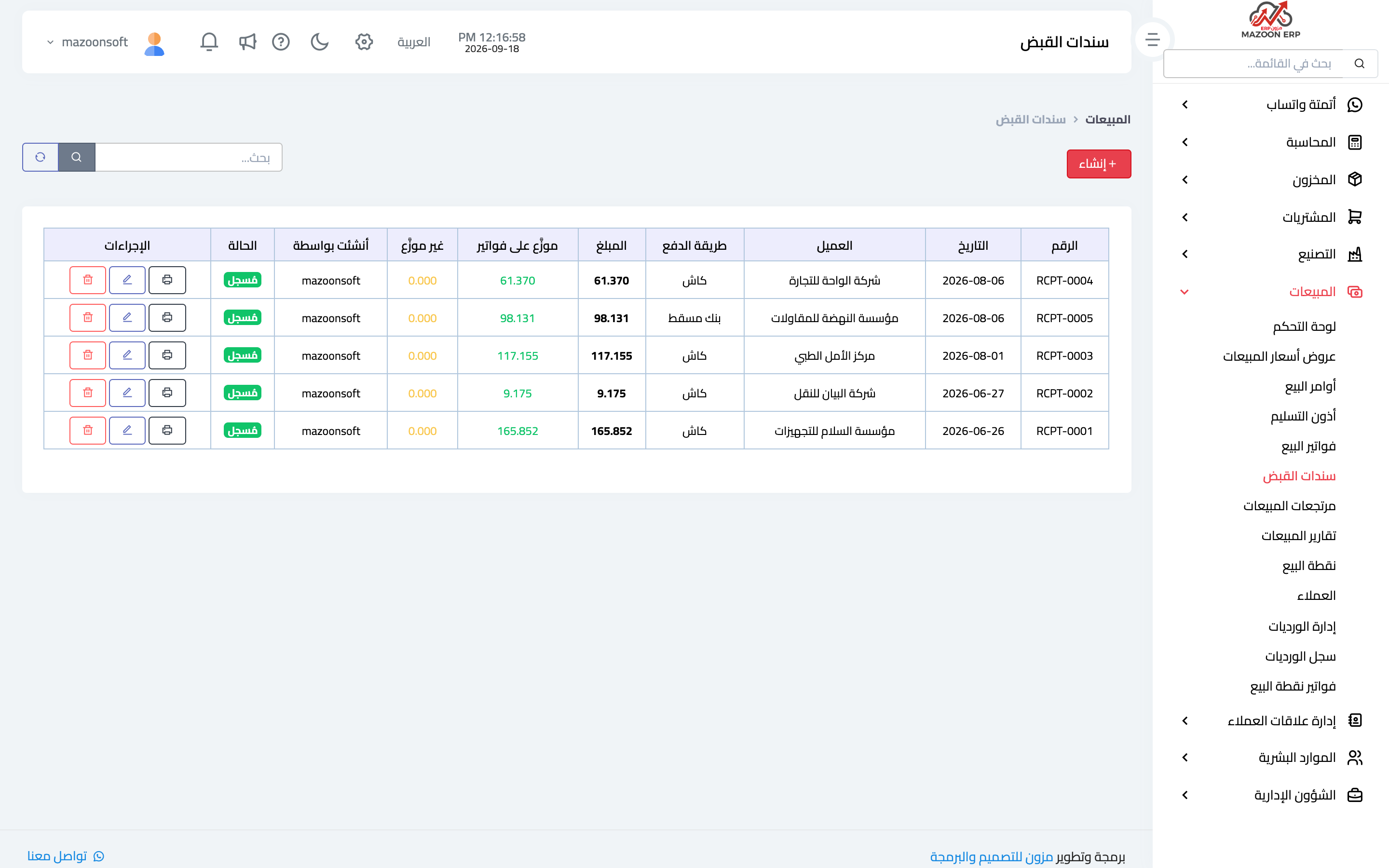
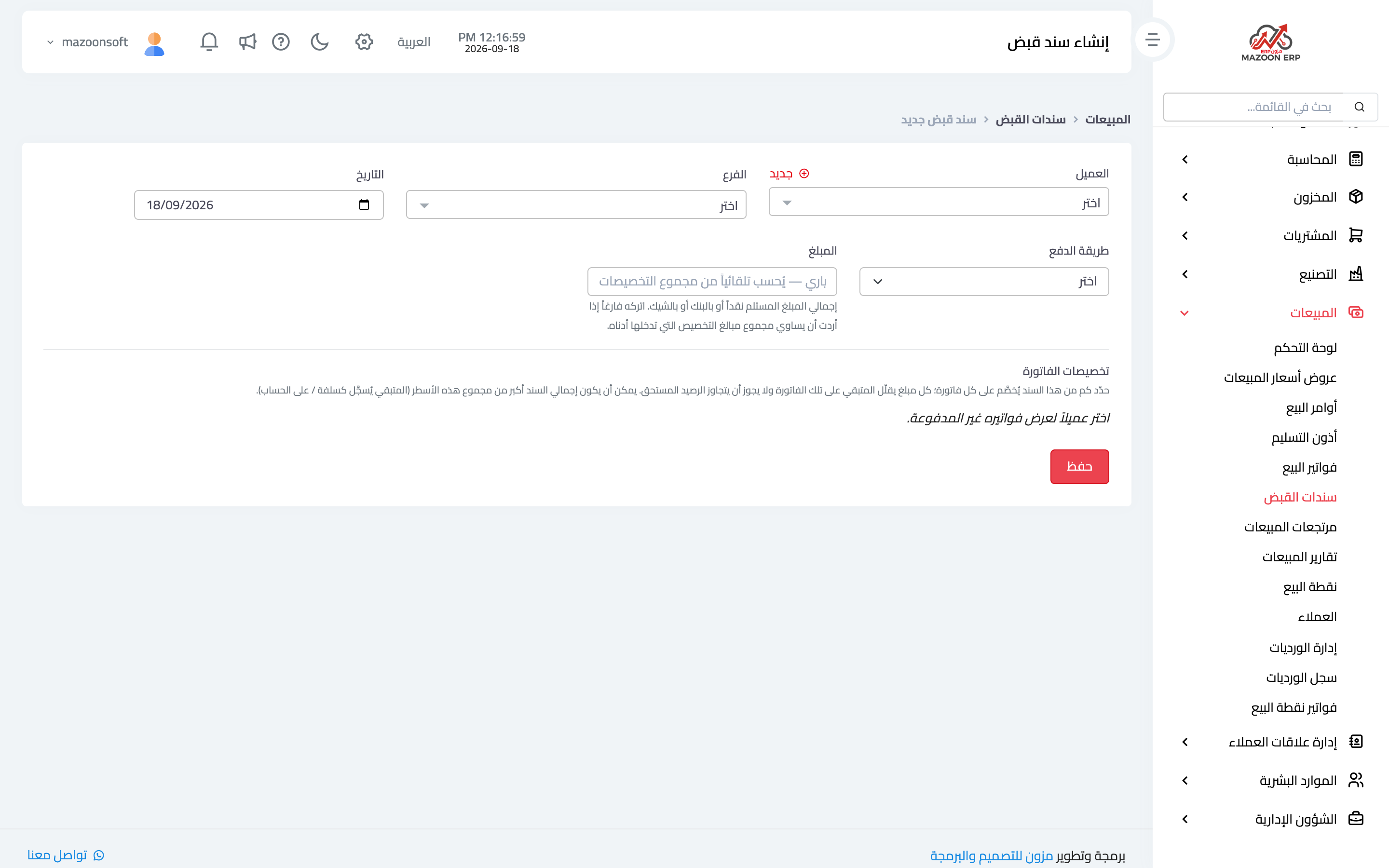
The Receipt Vouchers card — image 3 — shows what has been collected from customers. To record a collection press Add as in image 4:
- Customer — their unpaid invoices appear.
- Amount, payment method and date.
- Allocation across invoices — which invoice this money settles, and by how much.
- An optional reference such as a transfer or cheque number.
Allocating a collection to its invoices is what keeps receivables and aging correct. An unallocated collection shows as a credit balance for the customer while their invoices stay open — the single biggest cause of "this statement is wrong" complaints.
Sales returns
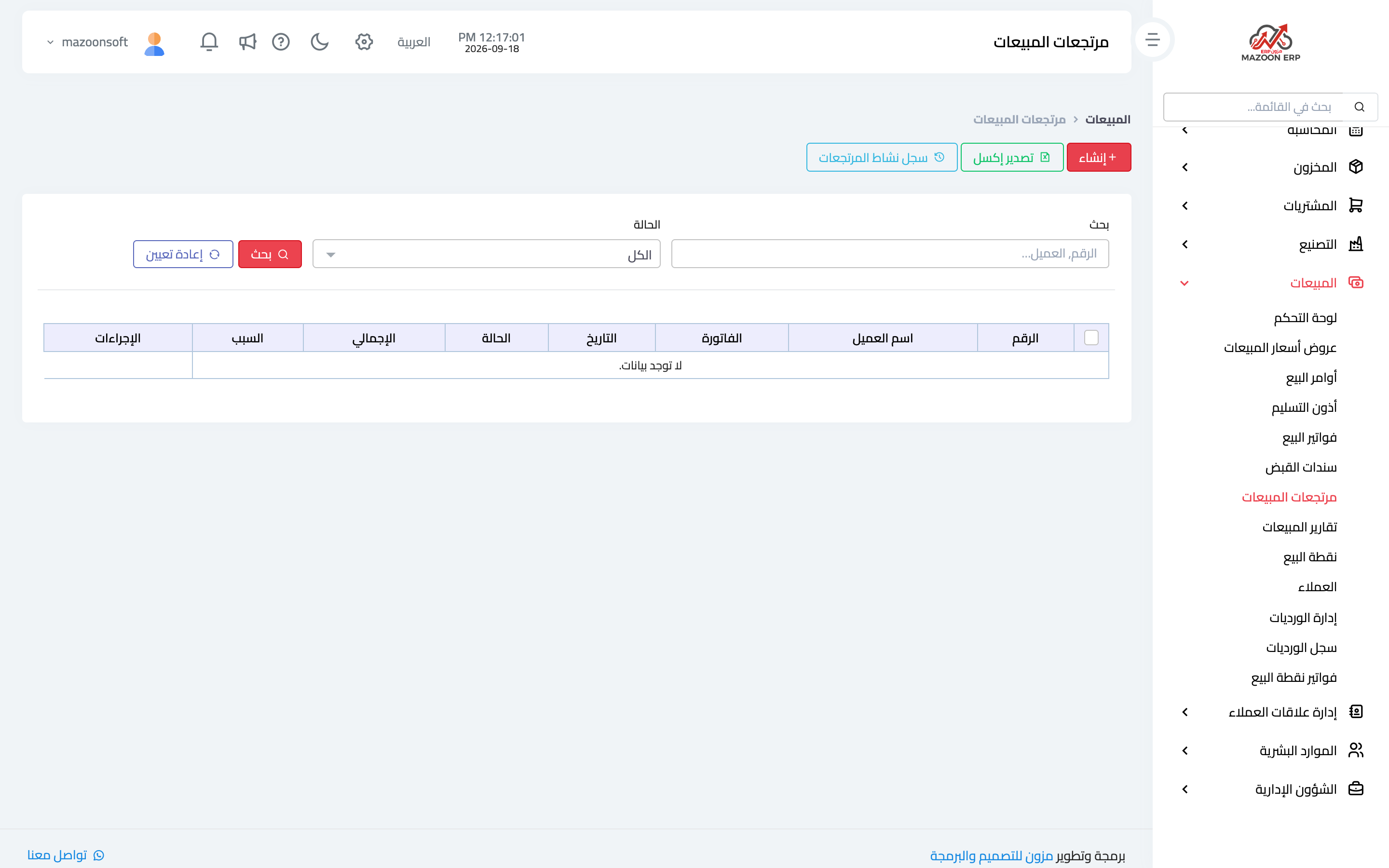
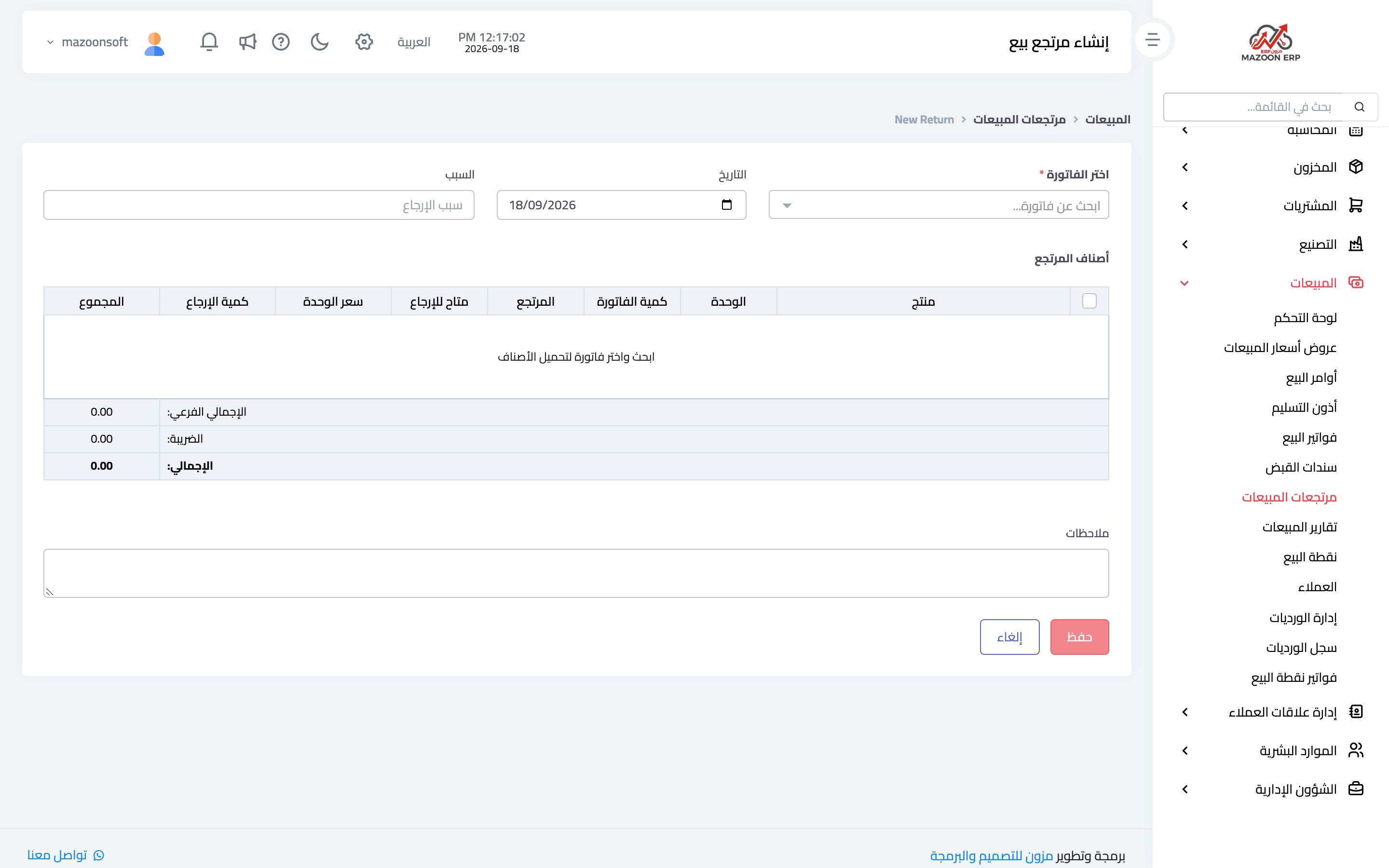
When a customer sends goods back, record a sales return. From the Sales Returns card — image 5 — press Add as in image 6: search for the original invoice, then choose the items and quantities returned, the reason, and how the money is refunded if it is a cash refund.
On approval: quantities go back into stock, an entry reduces revenue and the customer's balance, and the return appears linked to its invoice.
Two important warnings
- Never handle a return by editing the invoice or with a stock adjustment: the first breaks the link, the second fixes stock and leaves the customer's account wrong.
- An invoice with a return against it cannot be edited until the return is removed — deliberately, to keep the lines consistent.
The right order for the common case
- Approve the invoice.
- Hand over the goods with a delivery note.
- Collect the money with a receipt voucher allocated to the invoice.
- If anything comes back, record a return against that same invoice.
Screenshots
Try what you just read on your own data
Open a free 7-day trial — no credit card, with your own company link in minutes.