
From proposal to project and its phases
An engineering consultancy does not sell a product but its engineers’ time, which is why its module rests on one idea: a project is split into phases, and each phase carries a share of the value that falls due when it is delivered.
The dashboard
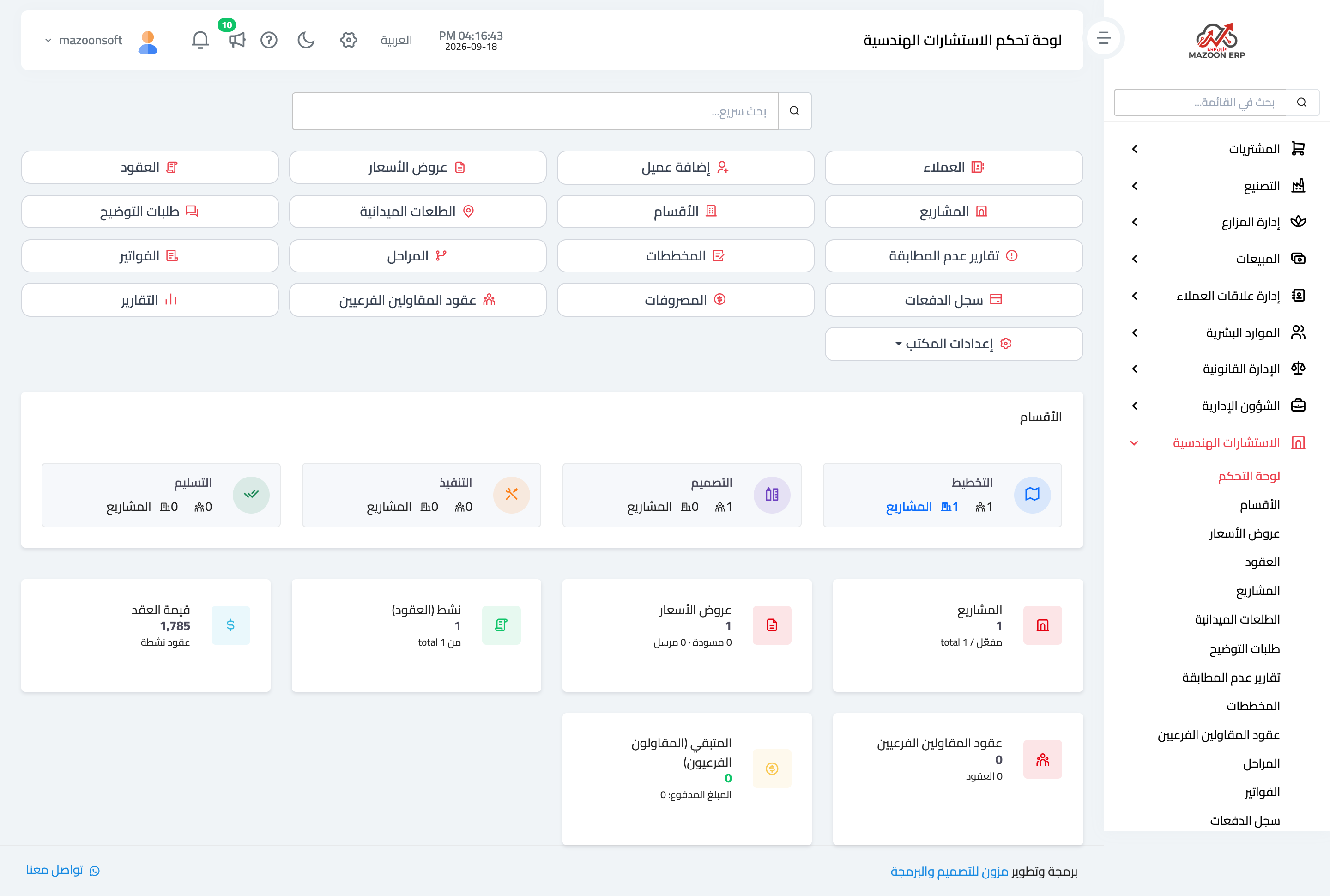
Open Engineering Consultancy → Dashboard, as in Figure 1: the number of projects and their statuses, outstanding proposals, invoices and collections, and the phases falling due.
Departments and project types
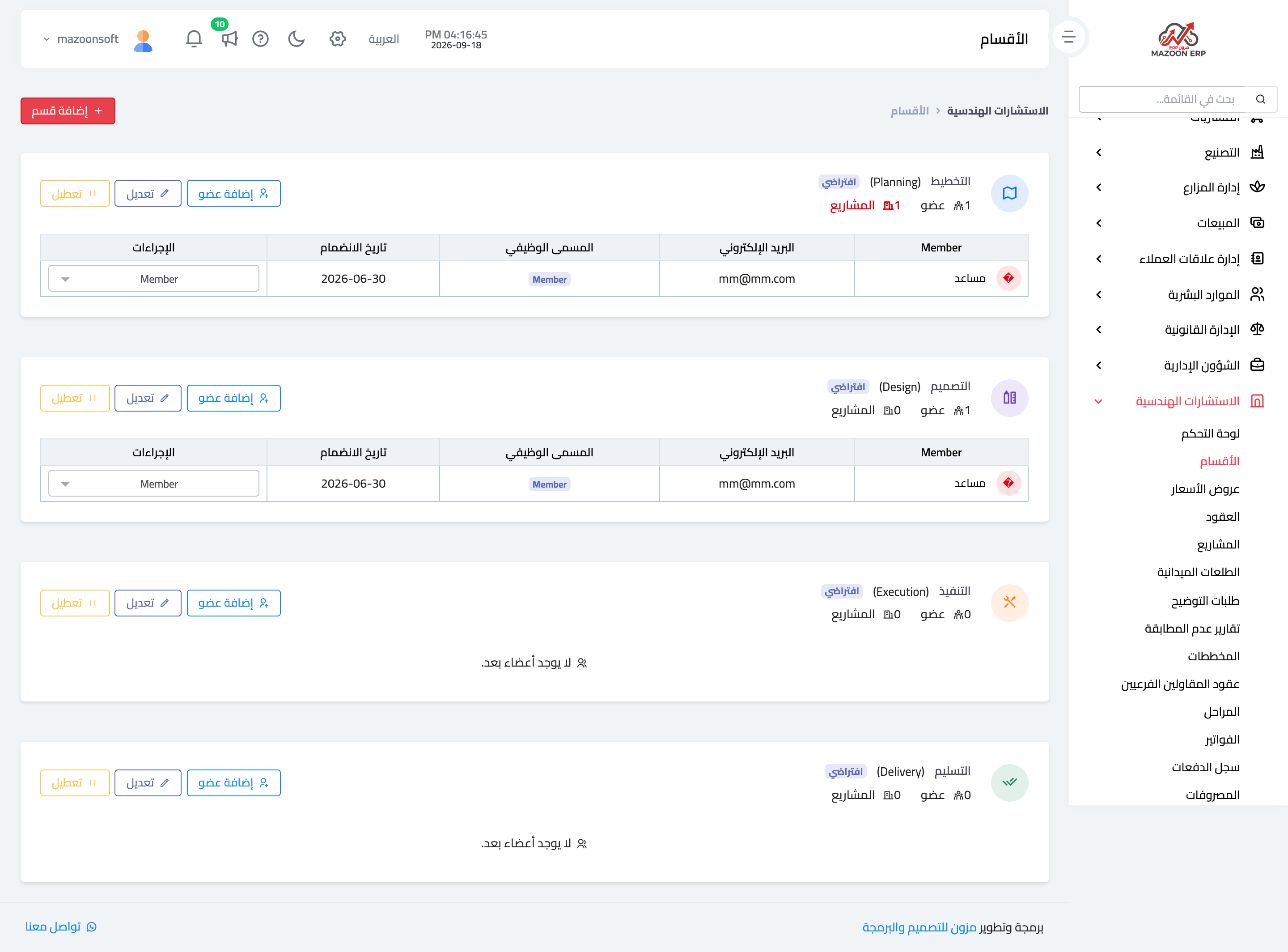
Before the first project, set up the departments — Figure 2 — the office’s technical sections: architectural, structural, MEP, supervision. Engineers are assigned to each, and a project moves between departments as it progresses.
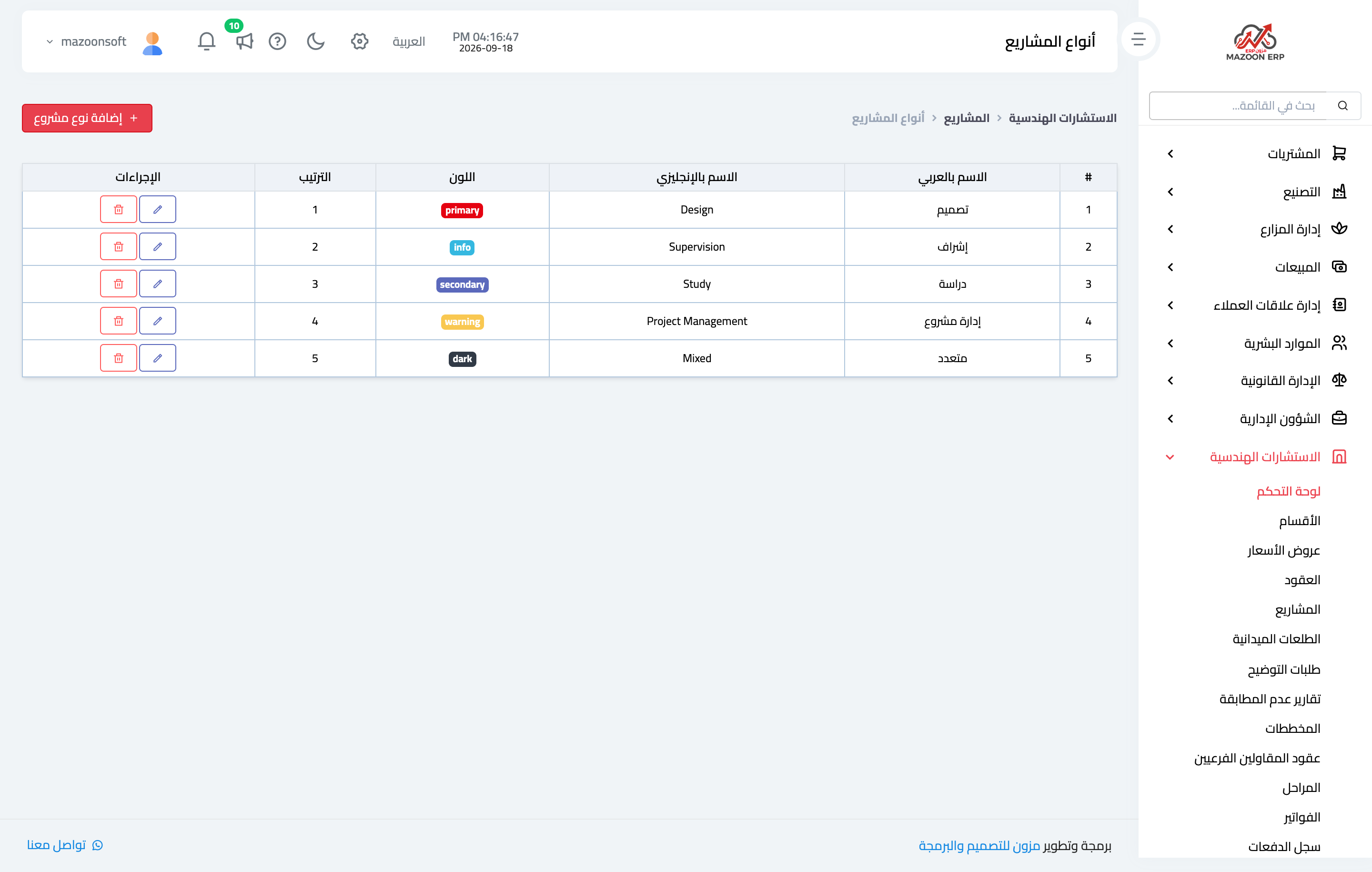
Project types — Figure 3 — classify the work: design, supervision, study, survey. From them you learn which type earns most.
The proposal
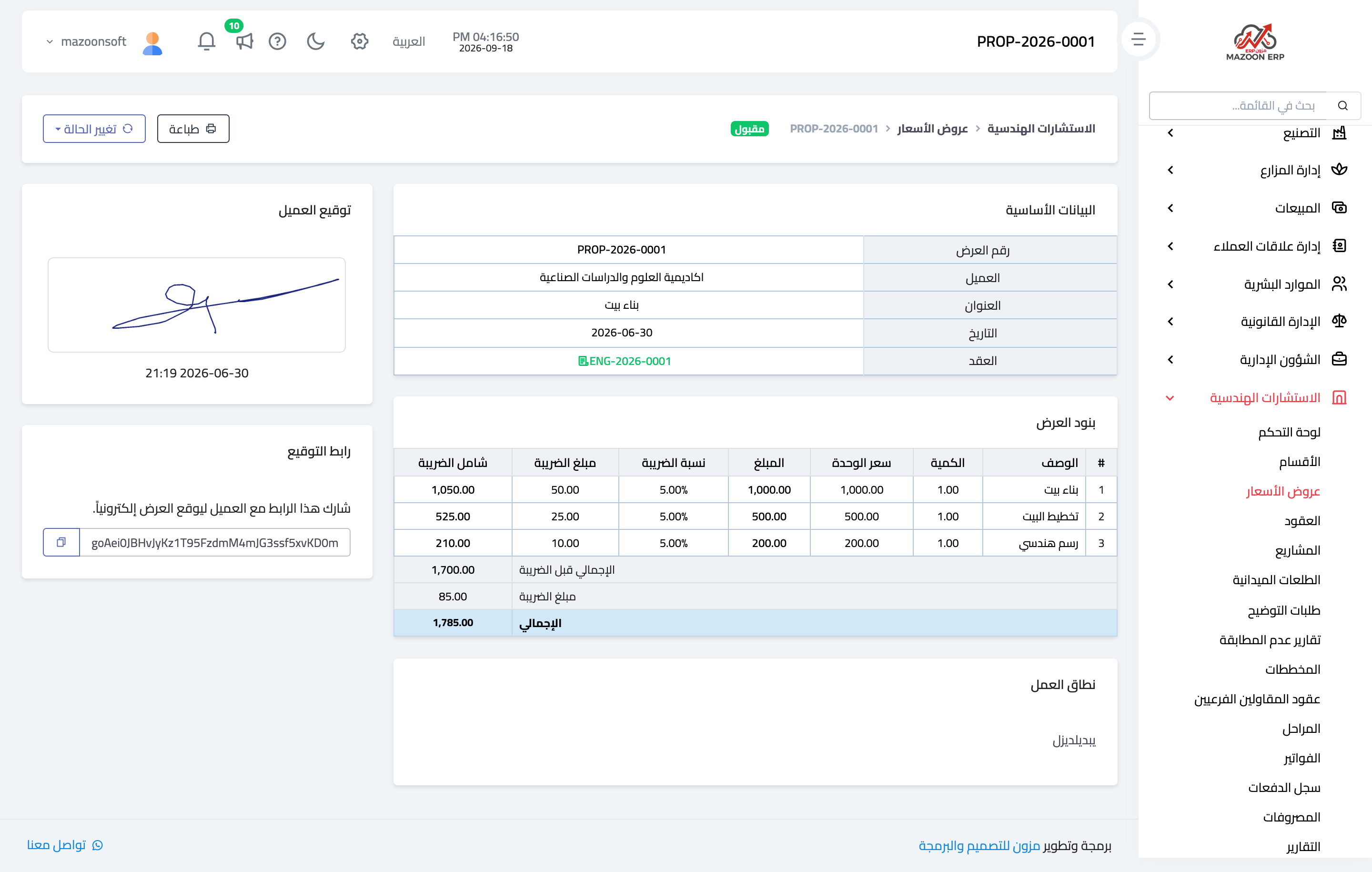
Everything starts from the proposal — Figure 4: the client, a description of the work, its priced items, and a validity period. The client can sign it from the signing page on their phone.
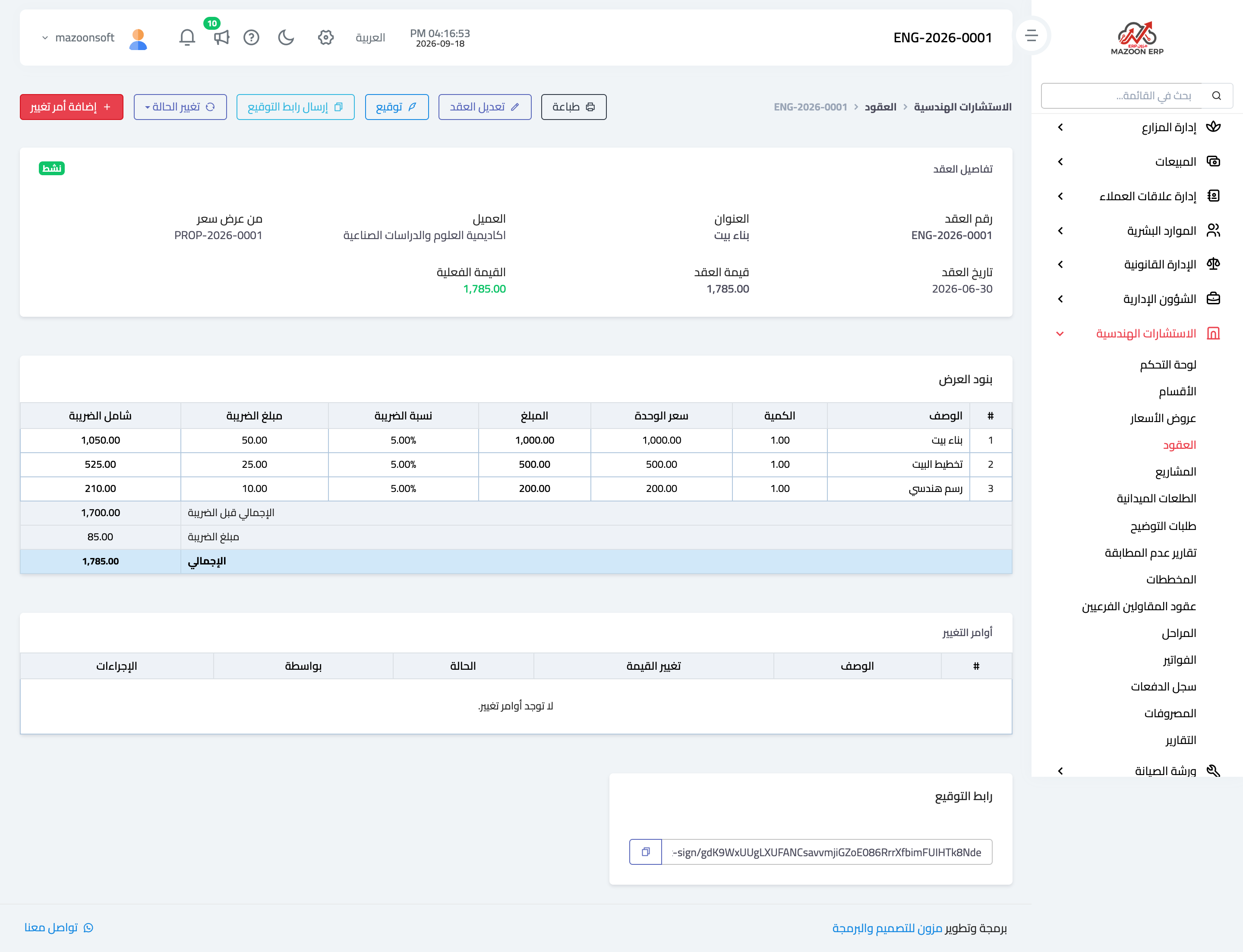
Once accepted, it converts into a contract — Figure 5 — carrying the items across, and the proposal stays linked to the contract that came from it.
The project
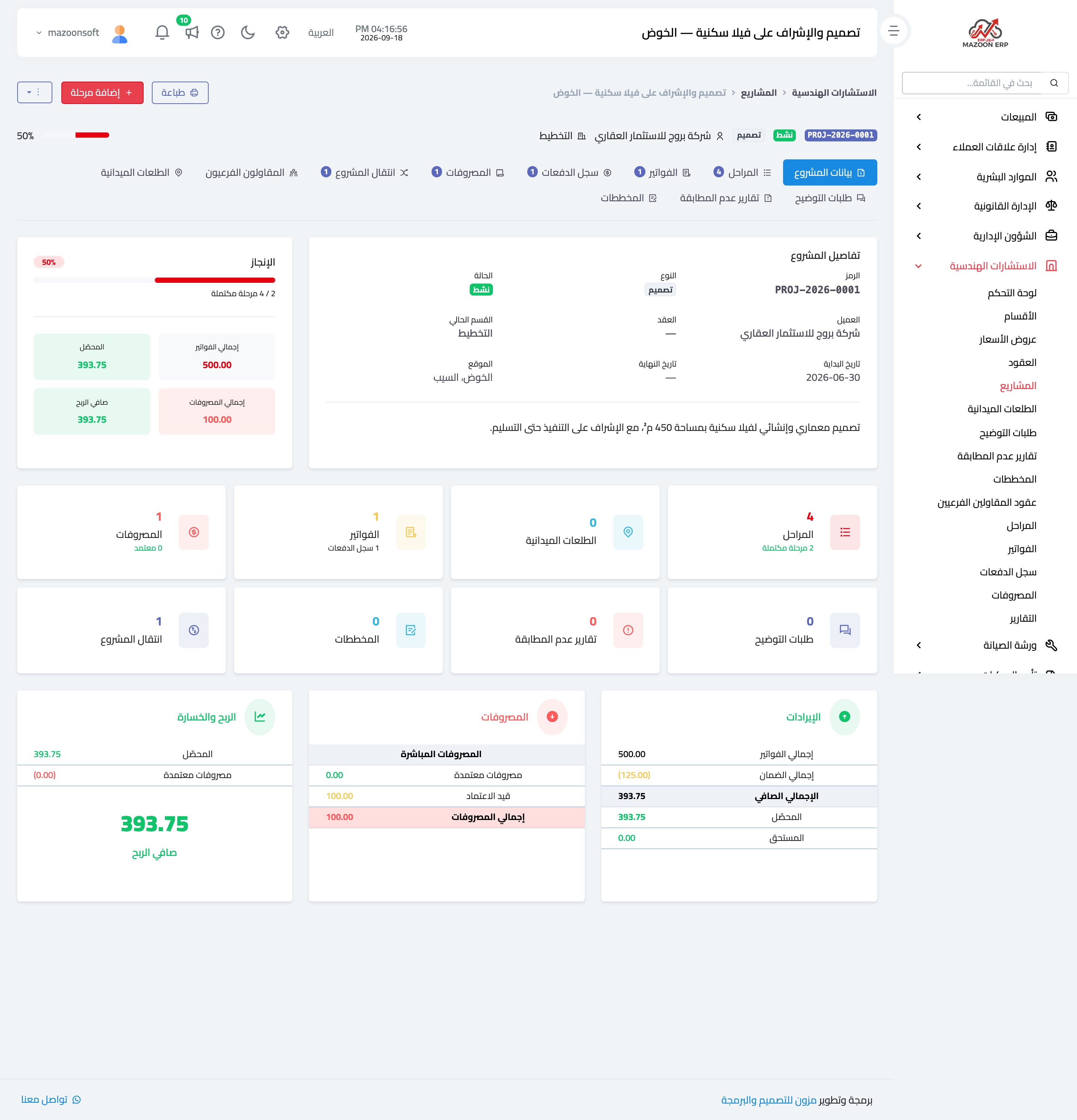
From the contract, a project is opened — Figure 6 — with its code, type, status, location, and the department currently working on it.
The project page is the centre of the whole module, and it holds:
- A progress bar — a percentage computed from the completed phases, not from your estimate.
- A financial summary — total invoices, collected, expenses, and net profit — the most important figure on the screen, because a large project can still lose money.
- Tabs covering everything in flight: phases, invoices, payment log, expenses, the project’s handoff between departments, sub-consultants, site visits, RFIs, non-conformance reports, and drawings.
Phases
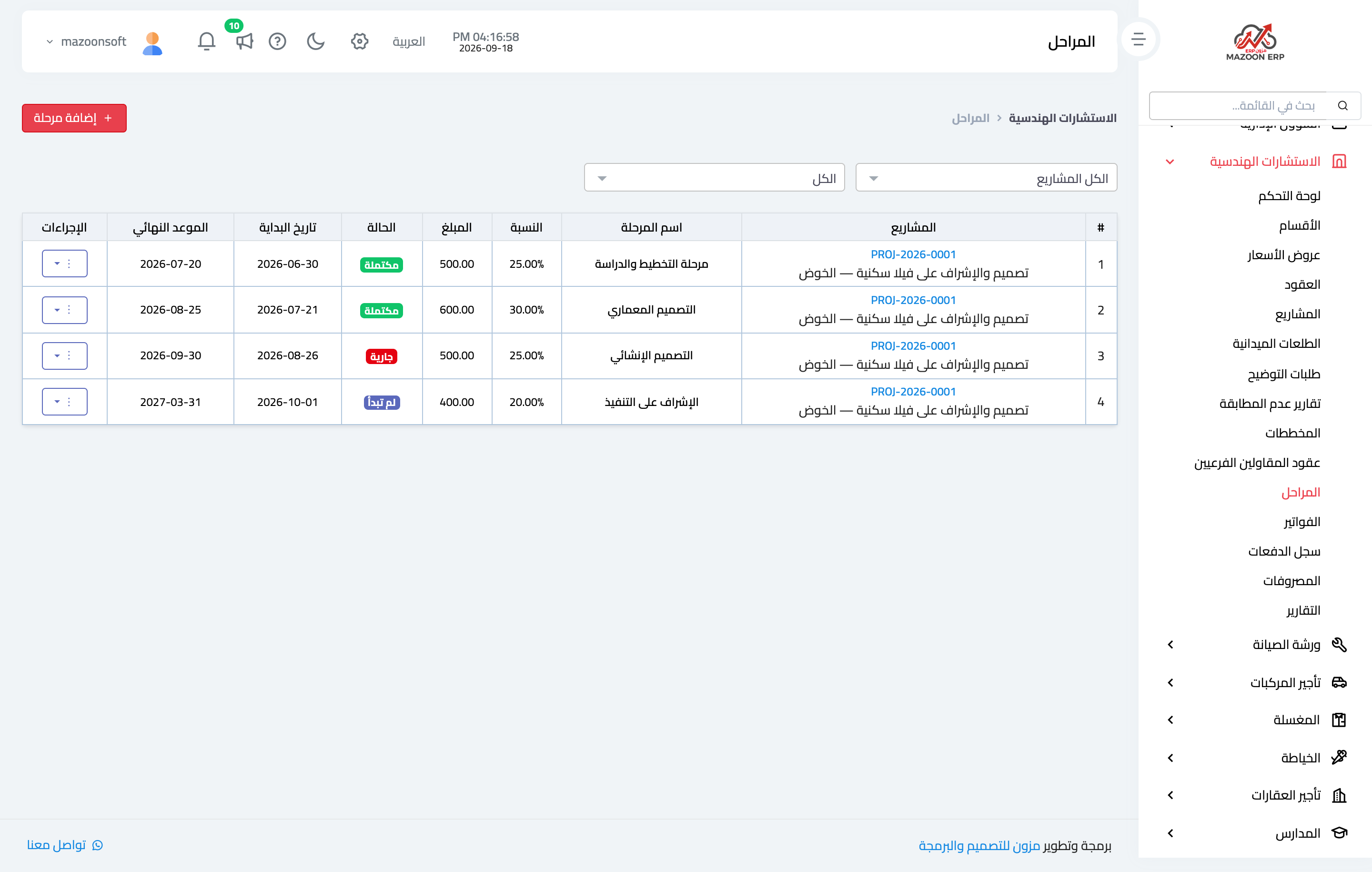
A phase — Figure 7 — has a name, an order, a share of the project value, an amount, start and due dates, and a status: pending, in progress, or completed.
The percentage is where the value lies: the phases’ shares add to 100%, and completing a phase means its payment falls due — so collection stops being a negotiation and becomes the result of documented delivery.
Notes
- Split the project into phases at creation, not a month later; the phases are what the system builds the progress percentage and payment schedule on.
- Make the shares add to exactly 100%; a shortfall makes the progress bar misleading.
- Watch the project’s net profit, not only its revenue; expenses and sub-consultants eat the margin quietly.
Screenshots
Try what you just read on your own data
Open a free 7-day trial — no credit card, with your own company link in minutes.